
When and how you can access EPF money before retirement without jeopardising your long-term retirement savings.
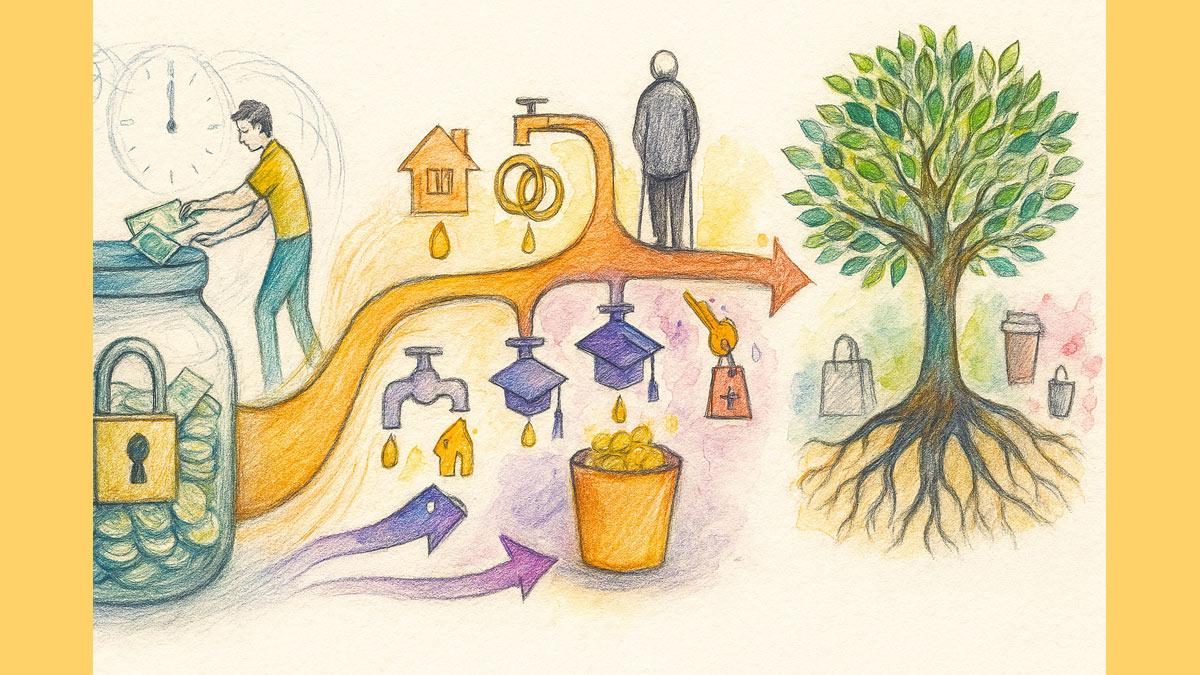
In Part 4, we saw how EPS turns part of your employer contribution into a lifelong monthly pension, while EPF accumulates as a retirement corpus. But what happens if you need money before retirement?
This part explains EPF withdrawals and advances, why rules exist, and how to access funds without jeopardising your long-term retirement savings.
Two ways to access EPF:
- Final withdrawal: After leaving a job or at retirement (lump sum)
- Advances/partial withdrawals: For specific purposes before retirement
Tip: Think of EPF as a locked savings jar. You can only break it open completely at retirement (final withdrawal), but you can take small portions out for emergencies or life events (advances).
What qualifies for an advance
EPFO allows partial withdrawals for certain life events:
| Purpose | Maximum allowed | Notes |
|---|---|---|
| Housing (buying or building a home) | Up to 90% of PF balance | Can include outstanding home loan principal |
| Medical treatment | Full or partial as needed | For serious illness of self or family |
| Marriage of self/children/siblings | Up to 50% of own contribution | One-time per person/event |
| Education | Up to 50% of own contribution | For higher education of self/children |
| Repaying home loan | Up to 90% | Must provide loan documents |
| Unemployment | 75% after 1 year of unemployment | Only once between jobs |
| Retirement | 100% after age 58 | Lump sum including interest |
Key point: Advances are tax-free if conditions are met, and no interest is charged.
Final withdrawal:
- Allowed after leaving service for 2 months or more, or at retirement (58+)
- Includes: Employee + employer EPF contributions plus interest
- EPS cannot be withdrawn as a lump sum unless you have less than 10 years of service (withdrawal benefit)
Worked example: Housing advance
Suppose Anita earns a basic + DA of Rs 20,000/month:
- EPF balance after 5 years = Rs 3,00,000
- Wants to buy a house: EPFO allows up to 90% of PF balance
- Advance allowed = 90% × Rs 3,00,000 = Rs 2,70,000
She can use this for the home while leaving the remaining Rs 30,000 intact to continue earning interest.
Worked example: Medical advance
Suppose Rahul's father needs surgery costing Rs 1,50,000 and his own contribution is Rs 2,00,000:
- Rahul's own EPF contribution = Rs 2,00,000
- EPFO allows withdrawal up to the full contribution for medical emergencies
- Amount withdrawn = Rs 1,50,000, no tax, no interest penalty
Things first-time employees should check:
- UAN activation and KYC linking: Allows easy online withdrawal
- Purpose-specific documents: Medical bills, home purchase papers, marriage proofs
- Employer contribution vs employee contribution: Only your own contribution + interest may be used in some cases
- Impact on corpus: Taking frequent advances reduces the power of compounding
The takeaway
EPF is both a retirement pot and an emergency safety net:
- Use advances wisely for genuine needs
- Final withdrawals remain your main retirement corpus
- Understand limits and rules to avoid unnecessary reductions in your EPF or EPS benefits
Tip for beginners: Treat EPF as a 'core savings fund': Don't tap into it for minor expenses -- only for major life events or emergencies.
Part 1: Payslip To Pension To Long-Term Wealth: How EPF Works
Part 2: EPF Secrets Revealed: Where Your 12% Goes
Part 3: EPF@8.25%: Is It Really Worth It?
Part 4: How EPS Turns Part Of Your PF Into Lifelong Income
You can ask your personal finance questions to rediffGURUS HERE









 © 2025