
The Travel Photographer of The Year Awards winners have been chosen and they're a stunning selection celebrating the beauty of our planet and all its inhabitants. Photographers from 142 countries submitted over 20,000 jaw-dropping pictures that were shot on everything from high-end professional cameras to mobile phones, in categories including 'faces, people, cultures'; the natural world and the beauty of light. The winning images can be seen at the TPOTY exhibition, which is free, and will be on show at LondonBridgeCity next Spring. Rediff.com was kindly granted permission to publish 25 of the 150 winning and shortlisted images. Scroll down to see our picks of the bunch.

The celebrations in China will be second biggest in the world after India.

These images from across the globe tell that it is a crazy world out there.

The seventh Tibet Work Forum was held in Beijing on August 28 and 29. Delhi should be deeply concerned, at a time India faces a precarious situation in Ladakh, because the TWF also defines China's western border policies, observes Claude Arpi.

Here's your weekly digest of bizarre moments from around the world.

'The COVID-19 virus has the power to quietly enter your body, without causing pain via symptoms, because it craftily manipulates your pain response.'

Here's your weekly digest of odd, crazy moments from around the world.

China's ruling Communist Party has cracked down on Tibetans who planned to attend the Kalachakra Puja in Bodh Gaya. But the Tibetan people have dared the Communists by listening to the Dalai Lama's sermons on the Internet and sharing videos on social media.

The pictures tell the story of the grand success of the first International Yoga Day.

Important for Chinese President Xi Jinping will be Zhao's discussions on the issues of Tibet and the Dalai Lama and his assessment of the likely results of India's coming national elections, notes former senior RA&W officer and China expert Jayadeva Ranade.

Samdong Rimpoche's visit to China materialised against the backdrop of strained India-China relations consequent to the face-off between Indian and Chinese troops at Doklam, says former RAW officer Jayadeva Ranade.

The government will also evacuate Indians on Friday from China's Wuhan city, the epicentre of the deadly Coronavirus, which has spread to at least 17 countries already.

'The majority of transmission will be via people who are within two metres of one another.' 'The closer you are, the more likely that you'll be infected.'

'Chinese pressure on Taiwan is unlikely to ease till Beijing feels that stability is being restored in the Sino-US relationship,' says former RAW officer Jayadeva Ranade.

Donald Trump is believed to be the first US President or President-elect to have spoken to a Taiwanese leader since 1979, when the US severed diplomatic ties with Taiwan after its recognition of the People's Republic of China, points out former RA&W officer Jayadeva Ranade.

China is expected to unveil its investments in India during President Xi Jinping's visit to New Delhi, scheduled for the third week of this month.

'China's deep involvement in the stability and economic and political success of Pakistan actually produces some elements of congruence with India's core interest in a stable and productive relationship with Pakistan.' 'It is not far-fetched for us to pursue that congruence and with ingenuity work out with China a formula that also satisfies our formal position on PoK,' argues Ambassador Kishan S Rana.

The news of the week gone by that shaped the world

The Siang is a dramatic river that flows through a beautiful land. Rafting on it is a rare pleasure the state offers tourists, says Ajai Shukla.

The battle against militants fighting for separation of China's volatile Xinjiang province, bordering PoK and Afghanistan, is getting "tougher, fiercer and crueler than ever" due to the revival of pan-Islamic extremist groups, top Chinese leaders from the province said.

In a major breakthrough in China's worst terrorist attack at the Kunming railway station, police on Monday captured three militants from the restive Xinjiang province who fled the scene of slashing rampage that killed 33 people and injured 143 others.

It is important to note that slowdown in activity is really confined to a selected few regions within China.

There are still a few lingering issues towards the progress of India-China bilateral relations, the approach for dealing with each other seems to be quite different. With Modi-Xi bonhomie strengthening, it seems that India and China are ready to recalibrate their approaches towards each other, says Sana Hashmi.

'Islamic State has declared that the liberation of Islamic Xinjiang from China is an objective. Beijing may well find that Pakistan is unable to assist in any meaningful way,' says China expert Jayadeva Ranade.

In bilateral interfaces relations with China have also to be given due weight, opines Premvir Das

As of now, in the case of China's border dispute with India, China is not likely to lose much if it does not resolve the dispute. In fact, the unresolved border dispute has much to offer to China, says Sana Hashmi.

'Why assail the Tibetan leader at a time when many in China realise that the Buddhist monk is the best bet if Beijing is seriously trying to find a solution to the Tibetan issue?' asks Claude Arpi.

India has undermined its own credibility.
'The issue of the larger homeland of Nagalim, the dream of the Nagas to hold sway over swathes of Manipur, Assam and Arunachal Pradesh, is just that, a dream.' 'The NSCN has been told categorically that the government is not going to concede on this issue.'

The chaos on its stock markets, a fierce battle between the old and new guard in the Communist Party and the restive border provinces of Tibet and Xinjiang forebode tough times ahead for China, says Claude Arpi.

'The intrusion in Chumar, during and beyond the Chinese president's visit, is unprecedented and has qualitatively changed the tone of the India-China relationship,' says Jayadeva Ranade, a member of the National Security Advisory Board.
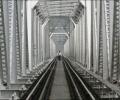
India has planned 14 strategic railway lines in areas bordering China, Pakistan and Nepal, but most of these projects are stuck for want of funds. Anusha Soni reports
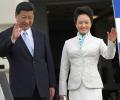
'India and China have to make concrete progress with regard to the border issue, addressing the trade deficit, and facilitating people-to-people interactions. This has to happen in the next two, three years.' China expert Tansen Sen tells Sheela Bhatt/Rediff.com how India and China can take their relations to the next level.

The developments in Af-Pak region, particularly the fall out of Pak political paralysis, would make President Xi Jinping's task a little more complicated, says Colonel R Hariharan.
