
Cognizant has announced the launch of Technoverse Hackathon 2026, a national platform for engineering students to demonstrate AI-powered problem-solving skills in various industries. The hackathon aims to bridge academic learning with real-world applications and promote innovation.

'There is not a single job role that doesn't require upskilling these days as technology is changing rapidly.'

Oracle has partnered with the Uttar Pradesh State Skill Development Mission (UPSDM) to provide free digital skills training in AI, cloud, cybersecurity, and data science to 300,000 students and professionals by 2029, aiming to enhance employability and build a future-ready workforce.

AI is no longer a tool only for software engineers and technology teams.

A new Accenture report reveals that nearly half of all global cybersecurity positions remain vacant, primarily due to a critical shortage of professionals with both technical expertise and essential business acumen. The report highlights a significant gap between the skills required for modern cybersecurity and what the labour market currently offers, exacerbated by poor retention and underinvestment in upskilling.

A Deloitte survey reveals that Indian Gen Z and millennial professionals are rapidly adopting AI tools in the workplace, surpassing their global counterparts in usage and confidence, while also facing financial pressures and shifting workplace expectations.

TCS, India's largest IT firm, is aiming to become the world's leading AI-led technology services company. CEO K Krithivasan highlights the company's strategy, including upskilling its workforce and executing nation-scale projects in India.

'People are now searching online for ways to spend their time offline. That is the intersection.'

IT services giant Cognizant is embarking on a significant AI-led restructuring programme, Project Leap, involving an investment of up to $320 million, which will lead to workforce reductions across geographies and a strategic shift towards AI capabilities to boost productivity and margins.

India's newly formed Artificial Intelligence Governance and Economic Group (AIGEG) is set to advocate for a unified legal framework for AI companies, including developers of large language models and chatbot systems, alongside broader operational rules.

Employees with artificial intelligence skills are likely to see better salary increments in the coming years, especially in technology, GCCs, and BFSI sectors, according to TeamLease Edtech.
Employees with artificial intelligence skills are likely to see better salary increments in the coming years, especially in technology, GCCs, and BFSI sectors, according to TeamLease Edtech.

'Policy consistency combined with timely and calibrated reforms are expected to ensure that India not only maintains macroeconomic stability, but also emerges as a globally competitive and inclusive economy.'

Foreign universities are unlikely to gain major ground in India's higher education market in the near term, as students and families continue to prioritise return on investment over brand value in a highly price-sensitive sector.

Ajay Kela, CEO of Wadhwani Foundation, highlights India's significant opportunity to lead in the diffusion of technology, creating national-scale use cases that reach millions of end-users. He also discusses the role of deep-tech startups and SMEs in job creation and the importance of upskilling initiatives.

Those looking to reskill or upskill are signing up for courses covering the fundamentals of AI and machine learning, design basics, GenAI use cases for software development, and coding in various languages.

Learners in India prefer to pursue newer courses, such as Gen AI by building apps and code using the technology, along with learning about it.
Cognizant's Chief AI Officer, Babak Hodjat, highlights India's unique position in AI enablement due to its strong technology foundation and large pool of digitally skilled people. He emphasises the continued importance of developers in the age of AI and Cognizant's focus on becoming an 'AI builder' company.
Cognizant's Chief AI Officer, Babak Hodjat, discusses India's unique position in AI enablement due to its strong technology foundation and skilled workforce, emphasising the continued importance of developers in the age of AI-generated code.

Vertex Group has launched its 'Responsible AI Lab' with a Rs 100 crore investment in research and development, focusing on ethical, transparent, and accountable AI solutions for businesses.

Andhra Pradesh is set to launch India's first indigenously built, open-access quantum computers, marking a significant step towards building a sovereign quantum hardware ecosystem. The initiative aims to position the state as a global hub for quantum technology and enable applications in various sectors.

Karnataka is prioritizing the AVGC sector in its AI-driven creative economy, emphasizing IP creation, responsible AI adoption, and large-scale skilling, according to Minister Priyank Kharge.
Education experts are advocating for the integration of artificial intelligence (AI) education in schools, emphasizing the need for age-appropriate implementation, data privacy awareness, and the use of vetted AI tools within secure school environments.

55% Indians fear that their skills could become partially or fully obsolete within the next five years.

The Budget reflects a clear focus on strengthening India's long-term prospects by leaning on nation-building sectors such as infrastructure, manufacturing, and technology while maintaining fiscal responsibility.
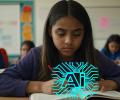
As AI becomes central to upskilling, a growing number of learners -- from seasoned professionals to school students -- are eager to explore and experiment with technology.

A new survey indicates that Indian employers are planning to increase hiring in the April-June quarter, driven by strong business confidence and domestic demand. The survey also highlights the impact of AI adoption on workforce strategy and the challenges of talent scarcity.

Concerns have emerged about the impact of AI adoption on young workers, particularly those seeking their first job in high-skilled occupations.

Netherlands opener Max O'Dowd says his team is focused on winning its T20 World Cup opener against Pakistan, unconcerned by any perceived pressure on the Pakistani side.

'The reality is that every one of us will be pushed to learn and relearn faster than ever before. Some people will rise to that challenge. Some may not. But the opportunity itself is massive,' says Noshir Kaka, senior partner, McKinsey.

A key industry leader acknowledged the India IT services sector faces a "painful" transition due to AI, but emphasized the industry's resilience and ability to adapt through reinvention and focusing on complex enterprise technology.
A key industry leader acknowledged the India IT services sector faces a "painful" transition due to AI, but emphasized the industry's resilience and ability to adapt through reinvention and focusing on complex enterprise technology.

Amid growing concerns over artificial intelligence (AI) disrupting jobs, top technology industry leaders have a clear message for employees -- "stay calm and upskill".

rediffGURU Pankaj Vyavahare, career counsellor and life coach, explains how you can survive in the age of AI.

"If you're young, focus on your job and your career. Learn five to 15 useful AI tools. Because the older generation in many organisations won't adopt them as quickly. They won't experiment as freely. They won't move as fast. And if you become AI-enabled, you become more productive. More valuable. More relevant," says Info Edge founder Sanjeev Bikhchandani.
Artificial Intelligence (AI) is placing professionals who rely on cognitive skills at the highest risk of job replacement, a fundamental change from previous technological shifts, MeitY Secretary S Krishnan said on Thursday.

For MSMEs the transition could mean higher wage bills and tougher compliance -- unless strong handholding follows reports Auhona Mukherjee.

'We frequently discuss AI, but we're waiting for other countries to develop solutions rather than creating intellectual property ourselves.' 'We haven't yet produced comprehensive AI solutions developed in India for global markets.'

'Given that the population is almost evenly split, the Indian economy cannot grow without women participating in the workforce.' 'While women's participation has increased, it is still well below 40 per cent,' says Kartik Narayan, CEO of the professional networking and jobs platform, Apna.

These practical truths can dramatically improve chances of getting hired in 2026, says Sonica Aron, founder and managing partner of Marching Sheep.
