
Sri Lanka's National People's Power of President Anura Kumara Dissanayake on Friday swept the parliamentary elections by winning a two-thirds majority, and also dominating the Jaffna electoral district -- the heartland of the nation's Tamil minority.

The 73-year-old United National Party was appointed as the prime minister by President Gotabaya Rajapaksa after they held closed-door discussions on Wednesday.

The 225-member Parliament will elect the new president by a secret vote on July 20, Speaker Mahinda Yapa Abeywardena said on Friday.

Sri Lanka is going through the worst economic crisis since independence in 1948. A crippling shortage of foreign reserves has led to long queues for fuel, cooking gas and other essentials while power cuts and soaring food prices heaped misery on the people.
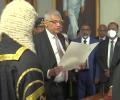
Wickremesinghe is the first Sri Lankan president to be elected by Parliament following a vote.

Ranil Wickremesinghe was on Wednesday elected as Sri Lanka's new President by Parliament, in a rare move that could provide continuity for ongoing discussions with the International Monetary Fund for a bailout for the cash-strapped nation but a development likely to anger anti-government protesters who have been demanding his resignation from office for weeks.

Parliament met for a brief special session on Saturday to announce the vacancy in the presidency following the resignation of Rajapaksa.

After nearly two days of political deadlock, the stakeholders are engaged in prolonged talks to try and appoint a successor to Mahinda Rajapaksa.

'India has given assistance that we required, otherwise we would not have been able to survive this far.'

During the 13-minute special session, Dhammika Dassanayake, ecretary general of Parliament, announced the vacancy for the post of president.

Sri Lanka's main Opposition party Samagi Jana Balawegaya (SJB) on Tuesday handed over to the parliamentary Speaker motions of no-confidence against the Sri Lanka Podujana Peramuna (SLPP) coalition government and embattled President Gotabaya Rajapaksa, even as the government announced the appointment of a cabinet sub-committee to look into the proposal for a new Constitution.

Sri Lanka's Acting President Ranil Wickremesinghe on Monday imposed emergency giving him sweeping powers ahead of the key election on July 20 to pick a new President as he urged the political parties to put aside differences and form an all-party government, with the Opposition dubbing his decision as an 'undemocratic draconian act'.
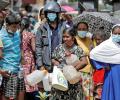
New Delhi has a chance to rid itself of its image as the bully in the subcontinent by helping a neighbour tackle problems that India, for once, has no role in creating. It should grab the opportunity with both hands, suggests Aditi Phadnis.

From Sri Lanka's most popular political family to its most despised -- going by the voices on the streets calling for the Rajapaksas' ouster -- what went wrong for the clan? Veteran Sri Lanka watcher N Sathiya Moorthy offers an insight.

Prime Minister Narendra Modi congratulated Rajapaksa and said he looks forward to further deepen relations between the two nations.

The two brothers led a decisive campaign that helped end the island nation's three decade long civil war against the Liberation Tigers of Tamil Eelam.
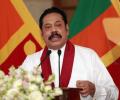
Rajapaksa's move signalled that he would contest the snap polls, to be held on January 5, under his own party banner and not that of Sirisena's SLFP.

The president has agreed to call a parliamentary session on November 5, officials at Rajapaksa's office said.

Mahinda Rajapaksa completed 50 years of parliamentary politics in July this year. He was elected as a Member of Parliament at the young age of 24 in 1970. He has since been elected president twice and has been appointed prime minister thrice.

The SLPP, led by prime minister Mahinda Rajapaksa, has won in 145 constituencies, bagging a total of 150 seats with its allies, a two-thirds majority in the 225-member Parliament, according to the results announced by the election commission.

Unofficial results indicate that the SLPP would comfortably win at least 17 out of the 22 districts on offer.

India said it will continue to extend its developmental assistance to the friendly people of Sri Lanka.
Lanka is witnessing a political crisis since October 26 when President Sirisena sacked Wickeremesinghe and replaced him with Rajapaksa.
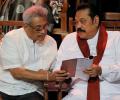
President Rajapaksa and Prime Minister Rajapaksa will transform Sri Lanka's political landscape after Thursday's electoral triumph, predicts N Sathiya Moorthy, veteran Colombo watcher.

Sirisena dissolved Parliament hours after a close aide of the President said that there will be no snap elections or a national referendum to end the current crises.

The 74-year-old leader, who describe himself as "a rebel with a cause", earlier served as the country's president from 2005-2015, becoming South Asia's longest-serving leader. He was also prime minister for a brief period in 2018.

Rajapaksa informed the lawmakers of United People's Freedom Alliance that he has resigned from the post.

Though dubbed as the 'war hero', the role of Rajapaksa in ending the conflict with the LTTE with the death of its supremo Velupillai Prabhakaran in 2009 is quite divisive as he stands accused of violating human rights, a charge he vehemently denies.
Political analysts said Sirisena's move to install Rajapaksa as the prime minister could lead to a constitutional crisis as the 19th amendment to the Constitution would not allow the sacking of Wickremesinghe as the premier without a majority.

Polls opened at 7 am local time and would close at 5 pm with some 12,845 polling stations being set up throughout the country for 15.9 million voters, who will choose a successor to President Maithripala Sirisina.
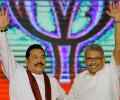
Delhi finds itself between the rock and hard place in the coming Sri Lankan election, points out Ambassador M K Bhadrakumar.
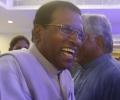
Maithripala Sirisena, Sri Lanka's president-elect, was a low-profile cabinet colleague of longtime president Mahinda Rajapaksa until he switched sides to become joint opposition candidate and emerge as the proverbial dark horse in the presidential polls.

Ranjith Madduma Bandara, a senior politician from Wickremesinghe's United National Party was sworn in on Thursday morning as the new minister in charge of the police.

Sri Lanka's former top General Sarath Fonseka, who quit following a spat with President Mahinda Rajapaksa, on Sunday announced that he would be the joint candidate of opposition parties in the presidential polls slated for January 26 next year.
Sri Lankan opposition leaders on Wednesday handed over a letter to a delegation of Members of Parliament from the Indian state of Tamil Nadu that is in Colombo, complaining that they were not allowed by the government to visit the relief camps for nearly three lakh displaced Tamils.

Reacting to the apex court's ruling, sacked Prime Minister Wickremesinghe said, "We trust that the President will promptly respect the judgment of the courts.
Sri Lanka's former premier Ranil Wickremesinghe has rubbished the government's claim that the Liberation Tigers of the Tamil Eelam rebels are on the verge of being brought down to its knees saying there are still 15,000 armed Tamil tigers left.

The SC ordered a halt to preparations for snap elections on January 5.

Mahinda Rajapaksa recovered from his 2015 electoral losses, went to the people and campaigned about the injustice done to him. Without attempting to be subtle, he underscored his image of the Sinhala Buddhist warrior a la Dutugemunu, the king of Sri Lanka (164 BC to 140 BC) who led the military campaign against the invading warlord Elara.

Sri Lanka President Maithripala Sirisena sacked Prime Minister Ranil Wickremesinghe and appointed former strongman Mahinda Rajapaksa as the new premier. Sirisena's move has triggered a constitutional crisis in the country. Here are some points about the unfolding crisis and the role of key players:
 © 2026 Rediff.com - Investor Information - Advertise with us - Disclaimer - Privacy Policy - Sitemap - Feedback - About us - Terms of use - Grievances