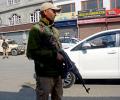
Lieutenant Vinay Narwal, an Indian Navy officer, was shot dead by terrorists while on holiday with his wife in Pahalgam, Jammu and Kashmir. The attack took place just days after his wedding and the Navy confirmed his death in a statement. At least 26 people, mostly tourists, were killed in the attack on Tuesday.
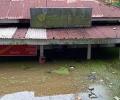
Seven rivers, including the Brahmaputra, were flowing above the danger level, even as the Regional Meteorological Centre (RMC) in Guwahati predicted heavy to very heavy rainfall at isolated places in the state.

Top military officials from India and Pakistan highlighted their views at the Shangri-La Dialogue in Singapore, billed as Asia's premier defence forum, amid heightened tensions between the two sides following last month's military confrontation.
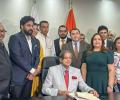
'Shashi Tharoor is destroying the history of India.' 'He is distorting facts about the Congress party.'

Acting Director General of Police of Himachal Pradesh, Satwant Atwal Trivedi, on Tuesday said that 15 Russian tourists were reportedly stranded in Kasol, and Police are trying to establish contact with them.
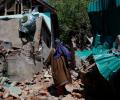
Authorities in Kashmir have launched a massive crackdown on terrorists and their sympathisers in the aftermath of the Pahalgam terror attack, razing homes of the ultras, raiding their safe havens and detaining hundreds of overground workers for questioning, officials said on Saturday.

In the letter issued, considering the last night attacks by Pakistani forces in Jammu and Jaisalmer regions, the provision also authorises the use of local authority funds for such emergency measures, giving them precedence over other financial obligations.

'I want to say to my Muslim friends that if they want to free Islam from the curse of terrorism, they have to embrace spirituality and yoga helps that. Yoga promotes serenity.'

'He's gonna inspire billions of girls and boys.'

The Union Home Ministry has asked several states to conduct mock drills on May 7 amid rising tensions with Pakistan following the Pahalgam terror attack. The drills will include operationalising air raid warning sirens, training civilians on civil defence, and rehearsing evacuation plans. Prime Minister Narendra Modi has been holding high-level meetings as India considers countermeasures against the April 22 attack that killed 26 civilians.
With general government debt now approaching three-quarters of GDP, and only incremental reform efforts visible, Pakistan risks prolonging its economic stagnation unless fundamental governance, regulatory, and industrial overhauls are undertaken.

Assam's opposition AIUDF MLA Aminul Islam was arrested on Thursday on sedition charges for allegedly defending Pakistan and its complicity in the Pahalgam terror attack, Chief Minister Himanta Biswa Sarma said. The AIUDF has distanced itself from the legislator's comments, stating that the views were his own and not of the party. Islam was arrested from his residence in Nagaon district. Sarma said no attempt to directly or indirectly support Pakistan through any means, including on social media, will be tolerated and the police have strict directions to act against such persons immediately. Assam Police said the AIUDF legislator has been arrested for a "misleading and instigating statement which went viral and had the potential to create an adverse situation ". A case has been registered at Nagaon Sadar police station under various sections of the Bharatiya Nyay Sanhita. Meanwhile, AIUDF president Badruddin Ajmal said the views expressed by Islam are his personal opinion.
