
The new UGC regulations mandating all higher education institutions to form "equity committees" to look into discrimination complaints and promote equity were notified on January 13.

'What has changed is that the new regulations are backed by a clear enforcement framework. They have real consequences and, for the first time, make compliance unavoidable.'

'If you have 270 bodies and each body is fragmented into 10 parts, you cannot do (so many) DNA tests and even if you do it will be a long procedure.'

The Supreme Court of India has assured the creation of a robust mechanism to address the alarming number of suicides occurring in Indian Institutes of Technology (IITs) and Indian Institutes of Management (IIMs). The court was informed that 18 suicides had taken place in these institutions over the past 14 months. The court has also directed the University Grants Commission (UGC) to finalize draft regulations aimed at combating caste-based discrimination in educational institutions.

The Supreme Court of India has announced its intention to establish an effective mechanism to address caste-based discrimination in educational institutions throughout the country. The court directed the University Grants Commission (UGC) to draft regulations to prevent such discrimination and to provide data on institutions that have implemented equal opportunity cells as mandated by the 2012 UGC equity regulations. The court's decision stems from a public interest litigation filed in 2019 highlighting the prevalence of caste-based discrimination in higher education institutions and its tragic consequences, including the suicides of students like Rohith Vemula and Payal Tadvi.

The Congress leader from Gujarat said the Dalit community has given a call for a nationwide candle march on February 19 in support of Solanki, who was a first-year student of B.Tech (chemical) course.

A bench of Justices AS Bopanna and MM Sundresh asked the UGC to furnish the details of steps taken on a plea by the mothers of Rohith Vemula and Payal Tadvi.


The Comet Media Foundation, which conducts media-related events and workshops requires an event manager.
Media Foundation is organising a film appreciation series introducing the main currents in world cinema in Mumbai.

'The BJP and RSS were working on the ground to define who is an illegal immigrant.'

Sukanya Verma celebrates the acting legend.

'If we keep losing such institutions, we will soon become a city and culture of short-term memory.' 'Nothing to remind us of the years gone by and eventually with nothing to remember.'

'Our preparation is based on ICMR projections, whatever preparations we have to make.' 'If they project around 70,000 is the maximum number of hospital cases by mid-May or May 30, we are preparing accordingly -- how many people will need hospitalisation.'

On its 25th anniversary, Sukanya Verma lists 10 things she still loves about Mohra.

This week was the first time Peter and Indrani appeared in court no longer married, footloose and fancy free once again, even if in jail.

The close-onto four years (since November 2015) Peter has spent in Arthur Road jail, central Mumbai, in judicial custody, have taken their toll, lending him a bit of a melancholy stoop, a laborious gait and a tired face, turning him prematurely into a much older man than his nearly 64 years. Vaihayasi Pande Daniel/Rediff.com reports from the Sheena Bora murder trial.

Sukanya Verma's super-filmi week was high on drama.
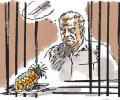
He was getting fruits, but no implement to cut them with. He told the judge, sadly: "I have tried and it is very difficult, your honour." His statement quickly brought up the imagery of Peter trying to cut a pineapple with his teeth or a papaya with a pen or a toothbrush.

Vaihayasi Pande Daniel reports from the Sheena Bora murder trial.

He had no airs about his talent, he did not intellectualise it, he just lived and breathed acting.
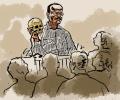
As Indrani, Sanjeev Khanna and Peter pass cupboard no 6 -- where the skull is stored -- what thoughts pass through their mind?
 © 2026 Rediff.com - Advertise with us - Disclaimer - Privacy Policy - Sitemap - Feedback - About us - Terms of use - Grievances