
Population Foundation of India welcomes the digitisation of the Census but emphasises the need for inclusivity, data security, and addressing the under-reporting of women's contributions.

Renault India has launched the all-new Renault Duster, featuring a turbo petrol engine and advanced features, with dispatches underway nationwide.

The new Renault Duster with hybrid engine has an edge over its rivals despite having no diesel engine while the styling also appeals with its butch looks, says Somnath Chatterjee.

EV manufacturers point out that converting a regular petrol car into a flex-fuel vehicle requires only about Rs 17,000-25,000 per unit, whereas developing an EV demands vastly greater investments in research, battery development, and localisation.
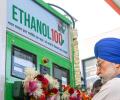
As of now, no firm has launched a flex-fuel vehicle in India, as these models are more expensive than comparable petrol-run vehicles.

Maruti Suzuki, India's largest producer of small cars, stands to benefit the most.

A deep split has emerged within India's auto industry over the proposed CAFE exemption for small cars, with only Maruti Suzuki and Renault backing the move in the final SIAM vote.

'If the targets become unscientific and unjust, Then, just to meet CAFE-III regulation, a small car -- which produces a very low absolute carbon dioxide -- will have to be discontinued.'
The move offers flexibility in compliance but also places penalties squarely on the designated manager of such a pool.

Maruti Suzuki will introduce eight SUVs over the next five years taking its overall model range to 28 as it aims to regain 50 per cent market share in the domestic passenger vehicle segment, Suzuki Motor Corporation Representative Director and President Toshihiro Suzuki said on Wednesday.

Electric vehicle (EV) manufacturers breathed a sigh of relief after the GST Council on Wednesday night retained the concessional 5 per cent rate on EVs, though they now face competition from small petrol and diesel cars, which will attract a lower 18 per cent levy.

Maruti takes a leap in terms of technology with features like ADAS, a 360-degree camera, ventilated seats, a powered tailgate, audio system with Dolby Atmos and much more.
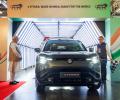
Japanese automaker Suzuki Motor Corporation will invest Rs 70,000 crore in the next five to six years in India to strengthen its operations in the country, its representative director and president Toshihiro Suzuki said on Tuesday. Prime Minister Narendra Modi on Tuesday kicked off exports of Maruti Suzuki India's first electric vehicle e VITARA to 100 countries and also inaugurated the production of lithium-ion battery cells for strong hybrid electric vehicles at its facility in Gujarat.

Maruti Suzuki India on Wednesday expanded its product range in the country with the launch of all-new 'Victoris' as it looks to enhance its presence in the robustly growing mid-sized SUV segment.
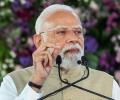
A day before US President Donald Trump's additional 25 per cent tariff kicks in, Prime Minister Narendra Modi on Tuesday made a vehement pitch for swadeshi and Make in India that should help create jobs in the country.

In terms of safety, the Victoris has scored 5 stars in both GNCAP and BNCAP tests and that's a first for Maruti, observes Somnath Chatterjee.
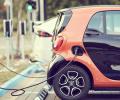
Despite the benefits of hybrid technology, a lack of government backing and few launches have kept the segment from gaining ground.
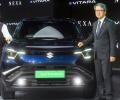
MSIL, which currently has a subscription service that allows customers to lease its petrol-run and strong hybrid vehicles on a flexible, long-term basis without ownership commitments, will introduce a leasing service as well.
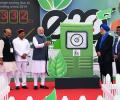
'We are not asking for incentives, but at least taxation can be aligned such that the rupee tax on consumers remains the same.'

Amid slowing volume sales among India's major automakers, Toyota Kirloskar Motor (TKM) has defied the trend with strong growth, driven by demand for hybrid vehicles and a reliable product line up. The company expects this momentum to continue in 2025. "The overall response to our cars has been fabulous. So, we foresee the same momentum in 2025 as well," Sabari Manohar, vice-president, sales-service-used car business, TKM, said.

After a successful tie up in traditional ICE and strong hybrid models, Suzuki and Toyota are now set to take their partnership to the next level: the electric vehicle segment. Both the Japanese auto giants recently announced a plan to produce Suzuki eVX-based SUV which will be sold under Toyota brand across the globe. This electric SUV, bearing Toyota's logo, will go for production at Suzuki Motor Group (SMG) facility in Hansalpur, Gujarat beginning the spring of 2025, marking the first EV launch for both companies in India.
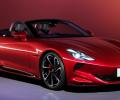
The Cyberster is currently sold in the UK for about Rs 63 lakh and is expected to be priced between Rs 65 lakh and Rs 70 lakhs.
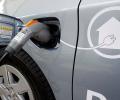
At a time when consumers increasingly embrace green mobility solutions, it is not electric cars but hybrids that are taking the lead, as automotive sales data indicate. Since January, 64,097 electric cars have been sold compared to 266,465 hybrids, according to data from the ministry of road transport and highways' Vahan dashboard. Hybrid car sales have surged from 4.42 per cent of the 4.1 million cars sold in calendar year 2022 to 7.2 per cent this year.

The first luxury car will be launched in the first quarter of 2025 and the company is planning to open 12 'MG Select' showrooms in the next six months.
Traversing from being just vehicle manufacturers to mobility solutions providers amid a raging debate over which eco-friendly technology must be incentivised, the Indian automobile industry is driving in the new year under the shadow of a slowdown in sales with the post-pandemic pent-up demand in distant memory. The shift in the auto industry -- where advanced technologies like autonomous driving, vehicle intelligence, connected features and electrification are quickly gaining traction -- will be reflected in the upcoming Bharat Mobility Global Expo in which India's flagship Auto Expo has been clubbed to be held from January 17-22, 2025 in Delhi-NCR.
At a time when consumers increasingly embrace green mobility solutions, it is not electric cars but hybrids that are taking the lead, as automotive sales data indicate. Since January, 64,097 electric cars have been sold compared to 266,465 hybrids, according to data from the Ministry of Road Transport and Highways' Vahan dashboard. Hybrid car sales have surged from 4.42 per cent of the 4.1 million cars sold in calendar year 2022 to 7.2 per cent this year.

The new Duster will go head-to-head with popular models like Hyundai Creta, Kia Seltos, Volkswagen Taigun, Skoda Kushaq, Maruti Suzuki Grand Vitara, Toyota Urban Cruiser Hyryder, MG Astor, etc in the highly competitive mid-size SUV segment.
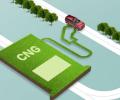
Maruti Suzuki India (MSIL) will hold discussions with the Centre and state governments on how the production of compressed biogas (CBG), which can be used in vehicles that run on compressed natural gas (CNG), can be expanded in the country, its majority shareholder Suzuki Motor Corporation (SMC) said. The demand for CNG vehicles has been rising significantly in the country. MSIL sold 145,000 CNG vehicles in the first quarter of 2024-25, marking a 28.3 per cent year-on-year (Y-o-Y) growth.
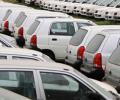
Leading automakers Maruti Suzuki, Hyundai and Tata Motors reported decline in wholesales in August as the companies curtailed vehicle dispatches amid drop in demand and to cut inventories at dealer level. Market leader Maruti Suzuki India said its total domestic passenger vehicle wholesales were at 143,075 units last month as compared to 156,114 units in the year-ago month, registering a dip of 8 per cent. Sales of mini segment cars, comprising Alto and S-Presso, declined to 10,648 units last month as against 12,209 units a year ago.

Car sales are experiencing a challenging phase with around Rs 60,000 crore worth of inventory lying unsold with dealers.

Japanese auto major Honda Cars on Thursday unveiled its new offering for the Indian market -- City e:HEV sedan, marking its foray into the mainstream strong hybrid electric vehicle segment in the country. The company, which is present in India through a wholly-owned subsidiary, has commenced the bookings of the model and plans to introduce it in the market next month. As per the company, the model, an extension of its City model range, would feature self-charging two-motor strong hybrid system connected to a 1.5 litre petrol engine, entailing a peak power of 126 PS and fuel efficiency of 26.5 km per litre.
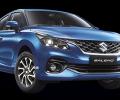
Maruti Suzuki India (MSI) will keep consolidating its existing product line-up, including hatchbacks, while bolstering presence in the fast growing SUV segment to power its way back to 50 per cent market share in the domestic passenger vehicle market, as per a senior company official. The country's largest carmaker, which has seen its market share drop to 43.38 per cent in FY22 from 47.7 per cent in FY21, aims to bring in multiple SUV products with focus on new technologies like hybrid powertrains in order to enhance fuel efficiency, making them comparable or better than diesel-powered models that are currently being sold in the market, especially by its Korean rivals. With no intention of making a comeback in the diesel segment, MSI is also focusing on increasing its play in the CNG segment to bring in additional volumes.
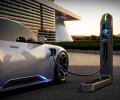
At Prestige Polygon Towers in Chennai's Teynampet, hectic preparations are on for a mega global investors' meet under the aegis of Guidance Tamil Nadu (the state investment promotion agency) scheduled for January 2024. Asked about the key focus areas of the meet, the agency's managing director and chief executive officer, V Vishnu, said the state was betting big on electric mobility. This is no surprise, given that the state has signed electric vehicle (EV)-related memorandums of understanding (MoUs) with several companies in the recent past that may bring in investments worth around Rs 33,000 crore with the potential to create over 43,000 job opportunities.

Buying a car, particularly a diesel-powered one, is set to pinch the customers' pockets even more from the next financial year, as the second phase of Bharat Stage VI (BSVI) emission norms kicks in. The rules require cars to be compliant with real driving emission (RDE) norms, which measure pollutants emitted by cars while they are being driven on the road, unlike in a laboratory test. The norms may increase the cost of producing diesel vehicles by nearly Rs 75,000 to Rs 80,000, and petrol-powered ones by Rs 25,000 to Rs 30,000, analysts said.
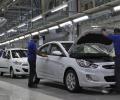
Domestic passenger vehicle sales could touch a record level of nearly 40 lakh units this year on strong demand and companies finding ways to enhance production despite semiconductor shortage, a senior Maruti Suzuki India official said on Monday. Even as the chip shortage issue has improved compared to a year back, the industry is estimated to have a pending order of around 7.5 lakh units of passenger vehicles with Maruti Suzuki India (MSI) alone having around 4.18 lakh units, company senior executive officer, marketing and sales, Shashank Srivastava told PTI. "I think it would be slightly below 4 million (units mark).

'In terms of semiconductors, challenges do remain in the pan industry, but I think we are much better than where we were a year or so back.'

'If the government does its job of vaccinating all the population with the booster dose, and also monitoring the virus, and we do our job of wearing a mask and avoiding crowded places, we will be free of this virus in a few months.' time.'
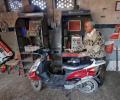
The new scheme may link the incentives to the battery power - higher the power, higher the incentive and most electric two-wheelers running on Indian roads use low power and fast charging batteries.
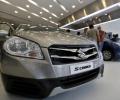
Around 23 per cent of all units sold by the company in the domestic market currently are diesel cars.
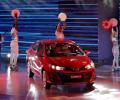
The narrowing gap between petrol and diesel prices, an uncertainty around the future treatment of vehicles and low resale price of diesel cars are some of the apparent reasons for the strategy shift
 © 2026 Rediff.com - Advertise with us - Disclaimer - Privacy Policy - Sitemap - Feedback - About us - Terms of use - Grievances