Ultratech Cement was the top gainer in the Sensex pack, surging 4.37 per cent, followed by Tata Steel, IndusInd Bank, L&T, Reliance Industries, SBI, HDFC, HDFC Bank, Axis Bank, ONGC and ITC.

Going by the strict criteria set, only Maharashtra, Tamil Nadu, Gujarat, Karnataka, Uttar Pradesh, Andhra Pradesh, Madhya Pradesh, and Haryana qualify for such extra borrowing, as of now.
'I expect a demand stimulus in the Budget. 'There has been such a shock to the economy that such a stimulus would be needed.'

The NCEAR has indicated some improvement in the fourth quarter of the current financial year.

Minutes of the MPC meeting show Das felt economy needs more monetary stimulus as inflation outlook remains uncertain.

Will 2022 be a year of contrasting narratives -- one filled with caution and the other with continued optimism?
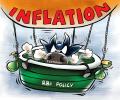
'While intensification of fuel prices and broad-based domestic cost pass-through pressures is a downside risk, core inflation is expected to strengthen further as demand recovers to pre-Covid levels,' the ministry said on Friday.

Observing that there is liquidity overhand of Rs 13 lakh crore in the system, RBI Governor Shaktikanta Das said on Friday that the exceptional measures undertaken during pandemic will be dealt in sync with macroeconomic developments to preserve financial stability. Since the onset of the pandemic, the Reserve Bank has maintained ample surplus liquidity to support a speedy and durable economic recovery, he said while announcing the outcome of the Monetary Policy Committee (MPC) meeting. The level of surplus liquidity in the banking system increased further during September 2021, with absorption under fixed rate reverse repo, variable rate reverse repo (VRRR) of 14 days and fine-tuning operations under the liquidity adjustment facility (LAF) averaging Rs 9 lakh crore per day as against Rs 7 lakh crore during June to August 2021, he said.

'When there is so much anxiety, the Government of India should assure people on the vaccine issue and help the states demanding more supply that they will be provided the required quantities.' 'Any Centre-state conflict at this point of time is counter-productive and enhances people's anxieties that should be avoided.'

'The answer for a quicker boost to growth is simple -- run a much larger deficit, use the resulting public resources to ensure adequate price support for agriculture, subsidise wage costs of MSMEs and accelerate public sector construction-intensive activities,' advises Nitin Desai.

India will soon make available many more COVID-19 vaccines to other countries after two Made-In-India jabs have already been introduced to the world, Prime Minister Narendra Modi said on Thursday while emphasising the country's global responsibility in fighting the pandemic.

With a revival in demand and consumption, FMCG companies are looking forward to 2022 with positivity and hopes of sustaining a healthy growth trend across both rural and urban markets while gearing up to cater to the ever-increasing digitally active consumers and tackle the challenge of higher commodity prices. Health and wellness and convenience are going to remain key trends and FMCG companies are strengthening their core brands, driving premiumisation across their portfolios with targeted innovations as consumers are gravitating towards trusted brands looking for quality, purity and hygiene, in continuation of the trend that started since the pandemic last year. FMCG makers are accelerating digitalisation and are investing in building capability in e-commerce and Direct-to-Consumer channels, identifying it as a key vector of their growth as the threat of a possible third wave is still not away.

With nearly 100 countries closing national borders during the past month, the movement of people and tourism flows have come to a screeching halt. The contraction could be even higher if governments fail to provide income support and help boost consumer spending.
"We see the Indian economy rebounding from our projected 6.1 per cent growth this fiscal year to something like 7 per cent in the next fiscal year (2020). We see the factors that will support growth, including monetary policy stimulus, working their way through the pipeline," Jonathan Ostry, Deputy Director, Asia Pacific Department at the IMF, told reporters.
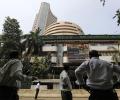
Kotak Bank was top loser among Sensex stocks, dropping by 3.28 per cent. HDFC Bank declined by 1.86 per cent, HDFC by 1.28 per cent and ICICI Bank by 0.99 per cent. SBI fell 0.5 per cent while Bajaj Finance by 0.72 per cent. Larsen & Toubro dropped 0.16 per cent.

We have our own problems for sure and they are not trivial, but for now, our economy is in not too bad a shape, our politics is as personality-driven and authoritarian as that of most countries in the world. We must make the best of what we have and not be excessively unhappy looking at the grass on the other side of the septic tank which may not be greener after all!, observes Shreekant Sambrani.
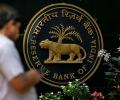
RBI said aggregate demand during the year so far suggests that the shock to consumption is severe, and it will take quite some time to mend and regain the pre-COVID-19 momentum.

Finding resources for a fiscal stimulus could be difficult and it could jeopardise macroeconomic stability, says CEA.

'Tax cuts will have only marginal effects in the short run and significant positive effects in the medium term,' says Shankar Acharya, former chief economic adviser to the Government of India.

'In the overall global portfolio, India's weighting has come down in the past seven months.'

The government may have to resort, eventually and however unwillingly, to printing money, abandoned as policy and practice in the 1990, predicts T N Ninan.
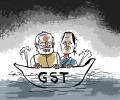
Even with the Rs 20,000 crore distributed among states, it will still be a fraction of what they have been demanding in financial support and clearance of pending dues.

In a base case, the consultant said that sales could drop 25 per cent to 1.96 lakh units this year from 2.61 lakh units in 2019 across seven major cities -- Delhi-NCR, Mumbai Metropolitan Region, Kolkata, Chennai, Bengaluru, Pune and Hyderabad.

'Pant was scared of... well, nothing actually'

Both have been robustly muscular leaders who began as immensely charismatic politicians conveying an impression that they were makers of history, raring to go. Both have been hyperactive on the world stage. But in the final analysis, Abe is departing on a sombre note, unceremoniously and apologetically, observes Ambassador M K Bhadrakumar.

Highlights of Economic Survey 2020-21, tabled in Parliament by Finance Minister Nirmala Sitharaman on Friday.

For deciding which vehicles are to be scrapped, the setting up of fitness centres and regulating them would be a humongous task.

'A bold, progressive step forward,' Kotak Mahindra Bank CEO Uday Kotak said of Nirmala Sitharaman's corporate tax breaks.

IndusInd Bank, Kotak Bank, ICICI Bank, Sun Pharma, Bajaj Finance and Ultratech Cement were prominent gainers. NSE Nifty rose 176.65 points to 14,867.35.

Market participants are hoping for a few tweaks on the taxation front which will encourage consumers and businesses to spend.
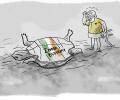
S&P Global Ratings on Wednesday said the second wave of COVID infections poses downside risks to India's GDP and heightens the possibility of business disruptions. The second wave brings in uncertainty and a drawn-out COVID outbreak will impede India's recovery, it said.
ONGC was the top loser in the Sensex pack, shedding 4 per cent, followed by Bharti Airtel, SBI, IndusInd Bank, NTPC, Sun Pharma and ITC. On the other hand, Bajaj Finance, Bajaj Auto, Reliance, Bajaj Finserv and Asian Paints were among the gainers.

The government will seek Parliament's approval for Rs 37,000-crore additional spending on infrastructure development in the second batch of supplementary demands for grant. Earlier this month, Finance Minister Nirmala Sitharaman had announced additional budget of Rs 25,000 crore as capital expenditure (capex) on roads, defence, water supply, urban development and domestically produced capital equipment. Besides, the central government approved issuance of a special interest-free 50-year loan to states of Rs 12,000 crore for infrastructure development.

ONGC was the top loser in the Sensex pack, shedding around 5 per cent, followed by SBI, Axis Bank, ICICI Bank, Bajaj Auto and Maruti. On the other hand, IndusInd Bank, HUL, Dr Reddy's, NTPC and Reliance Industries were among the gainers.
The BJP hailed teh package, saying it reflected the government's commitment towards creating jobs and stimulating the economy.

HDFC was the top gainer in the Sensex pack, rallying over 7 per cent, followed by HCL Tech, M&M, HDFC Bank, Tata Steel, SBI, Bajaj Finance and Infosys. On the other hand, Axis Bank, Asian Paints, HUL, Titan and IndusInd Bank were among the laggards.

'Today, there is no easy money to be made after the run-up in equities.'

Of the cash outgo, Rs 64,598 crore is for enhanced expenditure on fertiliser subsidy under Atmanirbhar Bharat Abhiyan 3.0 and Rs 20,466 crore for the capital outlay in defence services.

Moody's Investors Service on Tuesday lowered India's GDP growth forecast for the 2020 calendar year to 5.3 per cent, on coronavirus implications on the economy. Moody's had in February projected a 5.4 per cent real GDP growth for India in 2020. This too was a downgrade from 6.6 per cent earlier forecast.

India's GDP is estimated to contract by a record 7.7 per cent during 2020-21 as the COVID-19 pandemic severely hit the key manufacturing and services segments, as per government projections released on Thursday. Amid overall decline in economic activities, some respite was provided by the agriculture sector and utility services like power and gas supply, which have been projected to post positive growth during the current fiscal ending March 2021.
 © 2026 Rediff.com - Advertise with us - Disclaimer - Privacy Policy - Sitemap - Feedback - About us - Terms of use - Grievances