
Finance Minister Nirmala Sitharaman on Saturday unveiled the budget for fiscal 2020-21, vowing to boost income of Indians and their purchasing power, in a bid to revive domestic economic growth that has slumped.

Markets are assuming that by the second half of 2021, the world will be approaching some type of normalcy, points out Akash Prakash.

What worked for the markets was favourable global investor sentiment and encouraging flows into the emerging markets following stimulus measures taken by central banks.

Gandhi also called upon the government to immediately put money into the hands of the poor and provide a financial package to the industry to help revive the economy.

In her fourth tranche of the economic package, she said commercial mining will be done on revenue sharing mechanism instead of the regime of fixed rupee/tonne.

Axis Bank was the top gainer in the Sensex pack, rising around 3 per cent, followed by Sun Pharma, Reliance Industries, ONGC, HDFC, ICICI Bank, Kotak Bank and Bharti Airtel. On the other hand, Infosys, IndusInd Bank, HCL Tech, Nestle India and Tech Mahindra were among the laggards.

'The situation is quite terrifying as you have no job creation and there will be loss of jobs.'
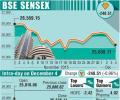
The 30-share Sensex ended at 25,638.11, down by 248 points.

There are overvaluation and excesses in many pockets of the market. This is most obvious in the IPO market, where loss-making companies have inflicted large losses on investors, observes Debashis Basu.

Investment consulting firm Millwood Kane International said on Tuesday that investments in gold gave gains of nearly 28 per cent in rupee terms during 2020 and will remain in focus for investors in the coming year. "The yellow metal has had a phenomenal year with gains of nearly 28 per cent in rupee terms. "After a double-digit gain in 2019, this will be the second year in a row that gold will be posting a stellar rise," said founder and CEO Nish Bhatt.

In the Sensex pack, HDFC, ONGC, Bharti Airtel, Titan, Asian Paints, Mahindra and Mahindra and TCS were the prominent gainers. On the other hand, ICICI Bank, IndusInd Bank, NTPC, UltraTech Cement, Tech Mahindra and SBI were among the major laggards. On the other hand, HCL Tech, Tech Mahindra, HUL, Bharti Airtel and ICICI Bank were trading in the red.
The windfall from RBI may be used to trim borrowing, help fund Rs 3.3 lakh crore capex plan, capitalise banks and provide fiscal stimulus to some stressed sectors, experts and economists said.

'There is lack of demand because people have no jobs, and no income.' 'Lakhs of people have lost their jobs and they have no income which has led to no demand in the market.'

UltraTech Cement was the top gainer in the Sensex pack, rising around 3 per cent, followed by TCS, Reliance Industries, HCL Tech, Infosys and Kotak Bank. Nifty rose for the sixth consecutive day, up 37.20 points or 0.28 per cent to 13,392.95.

Bharti Airtel was the top gainer in the Sensex pack, rising around 3 per cent, followed by HUL, HDFC, ITC, IndusInd Bank, SBI, Sun Pharma, ONGC, Tech Mahindra, L&T and Asian Paints. On the other hand, Kotak Bank, Nestle India, Tata Steel, Bajaj Finance and HDFC Bank were among the laggards.

Olympics organisers must replan the Games without running up huge additional costs. IOC President Thomas Bach said his organisation faces several hundred million dollars in supplementary costs.

Finance Minister Nirmala Sitharaman will present the much-awaited 2022-23 Union Budget on February 1. While there has been strong recovery in some sectors, touch services like hospitality, tourism and leisure continue to suffer after two Covid-19 waves. Household savings have been hit due to increased spending on health care. Consumption has still not reached pre-pandemic levels.

The ongoing consolidation in equities would improve return prospects during the second half of 2021, an American brokerage said on Tuesday. Leading indicators relating to fundamentals including growth, stability, government policy and RBI policy, and corporate earnings are "generally positive" about equity returns, analysts at Morgan Stanley said. It can be noted that since the start of the second wave of COVID-19 infections, which also coincided with inflation worries in the US, there has been an uneasiness within investors. From its levels on March 10, the markets are down by nearly 3 per cent despite the late surge over the last two trading sessions.

'In 2022, active management, long-short strategies, multi-asset strategies, and asset allocation strategies need to be considered to meet long-term investment goals.'

Economic growth is likely to plummet to a multi-decade low of 1.6 per cent in fiscal year 2020-21 due to the Covid-19 pandemic and ensuing measures like lockdowns and social distancing, an American brokerage said on Wednesday in one of the bleakest forecasts on GDP yet. Indian policymakers have not been aggressive enough in their response till now to the crisis, and will need to eventually intensify their efforts, economists at Goldman Sachs said.

Giving a clear indication on unveiling a package in the interim budget to stimulate industrial demand, the government said on Thursday it is not restrained by the Constitution from announcing urgent policy intervention in the run-up to the Lok Sabha elections.
Moody's Investors Service on Friday projected India's growth at zero per cent for the current fiscal and said the negative outlook on sovereign rating reflects increasing risks that GDP growth will remain significantly lower than in the past. The outlook also partly shows weaker policy effectiveness to address economic and institutional issues, it noted in the update to its November 2019 rating forecast.
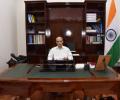
The finance minister is ready to present a second financial package. The Centre has ruled out a mega stimulus and will rely on targeted, incremental packages. Industry is clamouring for a bailout, the liquidity upheaval in capital markets is nowhere close to being sorted out, and all budgetary forecasts now stand irrelevant, reports Arup Roychoudhury.

83% of the CEOS plan to hire more in the new year.

S&P Global Ratings on Thursday said the Indian economy is projected to grow at 11 per cent in the current fiscal, but flagged the "substantial" impact of broader lockdowns on the economy. In its report on Asia-Pacific Financial Institutions, S&P said the control of COVID-19 remains a key risk for the economy. New infections have spiked in recent weeks and the country is in the middle of a second pandemic wave.

After several years of downgrades to the country's medium-term growth outlook, the estimates are likely to be upgraded now, Credit Suisse said in a report. The country's economy is showing signs of bottoming out, it said. According to the report, the consensus forecasts of GDP growth for FY2022 over FY2020 stopped falling after October 2020 (currently at (-) 1 per cent). Analysts at Credit Suisse expect these estimates to be revised upwards.

Foreign portfolio investors (FPI) remained net buyers in Indian markets in October so far, pumping in a net Rs 17,749 crore in the month as better than expected quarterly results, the opening of the economy, and resumption of business activities kept investors' interest intact. In equities, FPIs invested a net sum of Rs 15,642 crore and the debt segment saw an inflow of Rs 2,107 crore during October 1-23, the depositories data showed. The total net investment during the period under review stood at Rs 17,749 crore.

India's economy will do well once vaccination reaches a critical mass as pent up demand, global recovery and easy financial conditions will boost activities, RBI's Monetary Policy Committee (MPC) member Ashima Goyal said on Tuesday.

The managing director of Bajaj Auto was in a dialogue with Congress leader Rahul Gandhi, as part of a series on India's COVID-19 response and the lockdown initiated by the Congress and aired on the party's social media platforms.

Stating that COVID-19 has not yet been contained in India, the rating agency in a statement said the government stimulus package is low relative to countries with similar economic impacts from the pandemic. "The COVID-19 outbreak in India and two months of lockdown -- longer in some areas -- have led to a sudden stop in the economy. That means growth will contract sharply this fiscal year (April 2020 to March 2021)," it said. "Economic activity will face ongoing disruption over the next year as the country transitions to a post-COVID-19 world."

The main purpose of the meeting is to assess their views on reforms that are required to attract long-term capital into the country.

'The force of reforms. The force of investment. The force of formalisation. The force of digital and green technology. And the force of youth and entrepreneurship. I am convinced that these 5 forces will propel India's rise over the next several decades,' predicts Kumar Mangalam Birla, chairman, Aditya Birla group.


Finance Minister Nirmala Sitharaman cut fuel subsidies while slapping additional fuel taxes on unblended transport fuels in the latest Union Budget. The former will hit the rural poor, households that secured a subsidised LPG connection under the Pradhan Mantri Ujjwala Yojana (PMUY), a programme that was partly instrumental in helping the Bharatiya Janata Party (BJP) win the 2019 general elections. The latter will pretty much hurt the entire population after it kicks in from October. That's what it looks like. Or, perhaps, it's not as it appears to be, at least on the subsidy front.

In an interaction with former Congress chief Rahul Gandhi on the impact of lockdown on India's economy, Rajiv Bajaj, MD, Bajaj Auto, said India tried to implement a hard lockdown which was still porous and ended up with the worst of both worlds.

S&P Global Ratings on Thursday cut India's growth forecast for the current fiscal to 9.5 per cent, from 11 per cent earlier, and warned of risk to the outlook from further waves of COVID pandemic. The agency lowered the growth outlook saying that a severe second COVID-19 outbreak in April and May led to lockdowns imposed by states and sharp contraction in economic activity. "We forecast growth of 9.5 per cent this fiscal year from our March forecast of 11 per cent," S&P said.

The government has been waiting for the expansion by the private sector, Finance Minister Nirmala Sitharaman said while reminding India Inc of various measures including corporate tax rate cut, policy consistency, ease of doing business, among others to facilitate investment.

Shares of Reliance Industries climbed around 3 per cent to hit a record closing high of Rs 2,060.65. SBI, ICICI Bank, Tech Mahindra, ITC and Kotak Bank were among the other winners. NSE Nifty advanced 82.85 points, or 0.74 per cent, to close at 11,215.45.
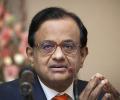
Chidambaram said he would count every additional rupee the government infuses into the economy and examine what the poor, hungry and devastated migrant workers get after walking hundreds of kilometres to their home states.

Indian PC shipments for the third quarter of CY21 touched a total of 4.5 million, making it India's biggest-ever single quarter. To put this in perspective, it is bigger than the total yearly consumer shipments in 2019, a year before the pandemic hit. As a result, many brands also reported their biggest quarter of PC shipments.
 © 2026 Rediff.com - Advertise with us - Disclaimer - Privacy Policy - Sitemap - Feedback - About us - Terms of use - Grievances