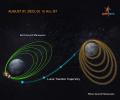
The Propulsion Module (PM) of Chandrayaan-3 has been moved from an orbit around the Moon to an orbit around Earth, the Indian Space Research Organisation (ISRO) has said, terming the operation a unique experiment.

A NASA spacecraft has detected deposits of glass on Mars.

Aditya-L1, the first space-based Indian observatory to study the Sun, is getting ready for its launch soon, ISRO said on Monday.

The mission objectives of Chandrayaan-3 are to demonstrate a safe and soft landing on the lunar surface, to demonstrate rover roving on the Moon, and to conduct in-situ scientific experiments.

ISRO on Monday said a two-way communication between the Chandrayaan-2 orbiter and Chandrayaan-3's Lunar Module has been established.
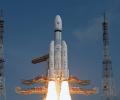
The test vehicle development flight (TV-D1) will be conducted at the Satish Dhawan Space Centre in Sriharikota in Andhra Pradesh to test the crew module that is scheduled to house Indian astronauts during the human spaceflight late next year.

NASA's SpaceX Crew-6 mission departed for the International Space Station from the Kennedy Space Center in Cape Canaveral, Florida, USA, on March 2, 2023.

The soft landing of the spacecraft is planned for late August. The mission is expected to be supportive to future interplanetary missions.

Indian Space Research Oganisation (ISRO) on Sunday said it has successfully performed the first earth-bound manoeuvre of the country's maiden solar mission, Aditya L1, from ISRO Telemetry, Tracking and Command Network (ISTRAC) in Bengaluru.

ISRO made efforts to re-establish communication with rover Pragyan and lander Vikram after they were put into sleep mode in September following the onset of night on the moon.
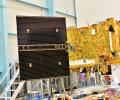
Aditya-L1 spacecraft is designed for providing remote observations of the solar corona and in situ observations of the solar wind at L1 (Sun-Earth Lagrangian point), which is about 1.5 million kilometres from the earth.
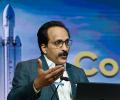
His statement came a day after the ISRO successfully launched its TV-D1 test vehicle ahead of the human space flight mission Gaganyaan.

'Techfest', an annual science and technology event organised by the Indian Institute of Technology Bombay in Mumbai.
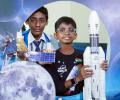
Mainstream American newspapers, many of which had been sceptical of India's space mission and sometimes even made fun of it through cartoons, noted the great Indian achievement.

"Indeed, a satisfying feeling," K Radhakrishnan who as the then Chairman of Indian Space Research Oranisation (ISRO) led the Mars Orbiter Mission (Mangalyaan) team said on achieving the milestone.
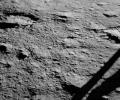
Speaking to PTI, Somanath said, "(The lander landed) perfectly in the intended site. The landing location was marked as 4.5 km x 2.5 km -- I think on that space, and the exact centre of that was identified as the location of landing. It landed within 300 metres of that point. That means it is well within the area identified for landing."

Minutes after taking off from a launch pad in South Texas, the rocket appears to have exploded above the Gulf of Mexico.

Somanath thanked all those who prayed for the mission's success, and ISRO veterans like A S Kiran Kumar , the space agency's former chief.

India scripted history as the ambitious third Moon mission of the Indian Space Research Organisation (ISRO) touched down on the Moon's south pole, propelling the country to an exclusive club of four and making it the first nation to land on the uncharted surface.

Around 23 minutes after lift-off, the primary satellite got separated and it was followed by six other co-passenger satellites, which were deployed into the intended orbits sequentially, ISRO said.

Despite exploding three minutes into the flight, SpaceX described the mission as a success -- because the spacecraft had gotten off the launchpad and fulfilled the primary purpose of the test-flight.

Scientists expect to get new information about the past, present and future of the Sun after analysing the data that will be collected by India's first solar mission Aditya-L1, scheduled to be launched by Indian Space Research Organisation (ISRO) on September 2.
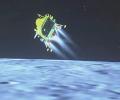
Despite the chill in bilateral ties, Pakistan's media on Thursday gave front-page coverage to India's historic moon landing while a former minister even called it a 'great moment' for Indian Space Research Organisation.

The Luna-25 spacecraft crashed into the Moon after it spun into an uncontrolled orbit, Russia's Roscosmos space agency said on August 20.

Scientists at ISRO used the orbiter high resolution camera onboard the Chandrayaan-2 orbiter to study the lunar surface hours before and after the soft-landing of Vikram lander on the moon on August 23.

ISRO chairman S Somanath on Monday said instead of a success-based design in Chandrayaan-2, the space agency opted for a failure-based design in Chandrayaan-3, focused on what all can fail and how to protect it and ensure a successful landing.

An entire nation waited, praying and hoping fervently, as the countdown to touch down on the moon wound to a slow close on Wednesday with many thousands gathering in schools, places of worship and elsewhere and scientists doing last minute checks to ensure Chandrayaan-3 makes a soft landing on the lunar south pole.
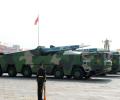
China might one day be able to launch a surprise nuclear attack on the United States, the second highest-ranking American military officer has warned as he shed new details of Beijing's hypersonic weapons test in July, which sent a missile around the world at more than five times the speed of sound.
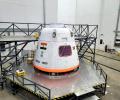
Modi gave these directions during a meeting to review the preparedness of the Gaganyaan mission and the first demonstration flight of the crew escape system test vehicle scheduled for October 21.

Planet Nine, if it exists, is somewhere between 6-10 times the mass of Earth, and it may have an orbit that takes it around the sun once every 1,500 Earth years or more.

Besides the scientists at the Indian Space Research Organisation, officials at the European Space Agency are also involved in tracking the lander module of the Chandrayaan-3 mission which is minutes away from making a soft landing on the surface of the moon, a senior scientist said on Wednesday.

After the historic success of its Chandrayaan-3 lunar mission, Indian Space Research Organisation (ISRO) is going full throttle with its plans to send Indian astronauts for the first time to the Moon by 2040, ISRO Chairman S Somanath said.

'You declare a date, time and place for the landing two months in advance and exactly at that moment, it touched on the moon.'

The test vehicle development flight (TV-D1) is aimed at testing the crew module that will carry Indian astronauts during the human spaceflight late next year.

Half a century after America's National Aeronautics and Space Administration stopped sending rockets to the moon, NASA's unmanned Artemis I mission lifted off from launch complex 39-B at Cape Canaveral, Florida, November 16, 2022.
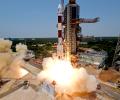
The successful launch of Aditya-L1 - the country's maiden mission to study the Sun - is expected to garner increased investor interest in the Indian space sector and trigger more funding for private players. Several private sector players, including Larsen & Toubro (L&T), MTAR Technologies, and Ananth Technologies, have played a pivotal role in the Indian Space Research Organisation's (Isro's) solar observatory mission. Aditya-L1 on Saturday set off on a 125-day journey on a PSLV-C57 rocket, in its attempt to study various elements relating to the nearest star from the halo orbit around Lagrange point 1 (L1) of the Sun-Earth system, which is about 1.5 million km from Earth.

The race to the uncharted south pole of the Moon is quickening with India's Chandrayaan-3 and Russia's Luna-25 gearing up for lunar landings next week, each mission holding significant implications beyond the thrilling competition in the skies.

ISRO Chairman S Somanath had recently said the most critical part of the landing will be the process of reducing the velocity of the lander from 30 km height to the final landing, and the ability to reorient the spacecraft from horizontal to vertical direction. "This is the trick we have to play here," he said.
A mission to study the Sun, and launching a climate observation satellite, a test vehicle as part of Gaganyaan human space flight programme and an Indo-US synthetic aperture radar.

As India's first solar exploration satellite reached space, four Kerala public sector undertakings, including Keltron, have reason to be delighted as they too have contributed to this achievement by the country. Various products indigenously developed and manufactured by the four PSUs - Keltron, Steel and Industrial Forgings Limited (SIFL), Travancore Cochin Chemicals (TCC) and Kerala Automobiles Ltd (KAL) - have been used in the Aditya L1 mission. This milestone achieved by the PSUs was highlighted by state Industries Minister P Rajeev in a Facebook post.
