
Stock markets rebounded on Friday with the benchmark Sensex closing higher by 316 points after heavy buying in banking and metal shares amid optimism over trade deal progresses and India's participation in Pax Silica.

Prime Minister Narendra Modi urged industry and start-ups to focus on quality and make excellence a benchmark in manufacturing. He also lauded the start-up ecosystem and greeted the nation on National Voters Day and Republic Day.

'Decisions on talent and rewards have shifted as employees and companies are operating in a buyer's market across most skill categories.'

'The day that the market realises that they've overspent (on AI) and there's a sudden collapse in the capex, then India can start outperforming again.'
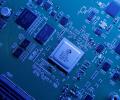
Tata Sons will likely choose Singapore as a "key partner" for its semiconductor plans, a senior minister from the city-state said on Friday. Speaking to reporters after a meeting with Tata Sons chairman N Chandrasekaran earlier in the day, Singapore's minister for home affairs and law K Shanmugam said semiconductors was a "big discussion" point during the meeting. "If they (Tatas) want to, they can do business with anybody in the world.

The Tata Sons board has deferred a decision on the re-appointment of Natarajan Chandrasekaran as Chairman, signaling potential differences within the group. Concerns were raised about losses in certain group companies and the listing of Tata Sons.
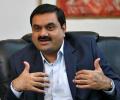
Chip giant Qualcomm chief executive Cristiano R Amon and billionaire Gautam Adani on Monday discussed role of AI, semiconductors and edge appliances across markets in the fast changing global technology space. The two leaders met in Mumbai on Monday morning to discuss India's potential around semiconductors, AI and mobility, according to a social media post by Adani. While Qualcomm is big on designing and manufacturing semiconductors and wireless telecommunications products, Adani group had in 2022 bought a small quantity of fifth generation or 5G spectrum for private captive network deployment in ports, logistics and power generation among others.

While the leadership issues may get sorted in the upcoming board meetings of Tata Trusts and Tata Sons, listing of the holding company of the Group on stock exchange should potentially resolve the bigger question on ownership and control

Assam Chief Minister Himanta Biswa Sarma has strongly criticised the Congress party for including the issue of singer Zubeen Garg's death in its election manifesto, calling it a 'sin' and accusing the party of exploiting the singer's memory for political gain.
India Inc on Sunday hailed the Union Budget 2026-27 as a 'structural shift' in the country's technology landscape, noting that the government is moving beyond fragmented pilots to build foundational layers where AI serves as a 'horizontal enabler' for the entire economy.

'There are certain sovereign AI domains where we must build capabilities using our own data, our own language models, and make our own attempts at global models.'

Foreign brokerages have started to cut their year-end targets for the Nifty 50 index amid the ongoing West Asia conflict.

India has joined the US-led 'Pax Silica' alliance, aimed at building a resilient supply chain for critical minerals and artificial intelligence, marking a significant step in strengthening bilateral ties and fostering economic security.

Scientists at the GraphIN 2026 conference in Kochi highlighted graphene's potential in water purification, discussing graphene-based membranes and nanocomposites for removing pollutants and improving desalination.

The question is whether the clocks allow enough time for two deeply mistrustful sides to get there, and whether the surface calm holds long enough for the paddling to produce something before the ceasefire ends on April 22, notes Prem Panicker in his must read blog on the Iran War.

The initial public offering (IPO) market in India last year was hot, with companies raising over $22 billion in 2025. But half of the 350-plus companies that listed on the stock exchange last year traded below their offer price, according to a new research report released by HSBC Global Investment Research - a sobering fact despite what otherwise looked like a rush of companies eager to list on the bourses.

An Indian AI Research Organisation official says India has adopted a balanced and pragmatic approach to AI regulation, avoiding the extremes of the US and EU models.

Barely 45.45 per cent of South Koreans achieve the recommended nightly rest, highlighting a growing wellness concern. Data from PlushCare places South Korea and several nations in the Middle East among seven nations where people consistently fall short of the expert-advised 8-9 hours of sleep each night, reflecting how modern routines are reshaping global rest patterns.

The Budget emerges as a measured, credible and forward-looking policy document that reinforces India's commitment to remaining a stable, reform-oriented economy amid an increasingly fragmented global landscape, says A Balasubramanian.

Capex, infrastructure development, and prudent fiscal management are the key focus areas in the Budget, says Nilesh Shah.

'When it comes to enterprise context, there is a big lag between how fast technology is evolving and how it is getting deployed at the end of the day. That is where the challenge is going to be.'

The Indian government informed Parliament that India and the US are engaged in negotiations for a mutually beneficial multi-sectoral bilateral trade agreement. The two countries also cooperate on strategic, economic, and defense matters, managing divergences through high-level dialogues.

There is record underperformance and under-ownership. Some of this is cyclical and will turn on its own. However, we also need to regain our growth credentials. For this, both the government and companies have a role to play, as do investors, points out Akash Prakash.

Over 100 Indian institutions offer semiconductor design curricula, but hardly any of them focuses on manufacturing and process technology, a top official from global memory and storage major Micron Technology said on Thursday. There is significant global demand for such chip engineers, its president and chief executive Sanjay Mehrotra said at the 10th Vibrant Gujarat Global Summit in Gandhinagar. "While more than 100 Indian institutions provide a semiconductor design curriculum, hardly any focus on semiconductor manufacturing and process technology.

'Given that India underperformed emerging markets by 28 per cent in 2025, the worst performance in over 30 years, the timing of the sharp STT hike could have been better.'
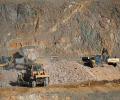
Western Coalfields Limited (WCL) has discovered significant concentrations of rare earth elements and critical minerals in its mines in Maharashtra, potentially transforming waste material into revenue-generating resources and diversifying the company's business.

Tata Electronics' Rs 91,000 crore semiconductor fab in Dholera, Gujarat, in partnership with PSMC, will generate over 20,000 direct and indirect skilled jobs in the region and construction of the mega unit is expected to begin this year, according to a statement on Thursday. The planned unit - India's first commercial fab, marks Tata Electronics' entry into the global semiconductor industry. Tata Electronics said it is "proud to lead India's entry into global semiconductor fabrication".

The United States, which entered this war in expectation of a short, sharp win along the Venezuela model, is now preparing for deeper involvement in a conflict it does not fully control, without the allies it typically relies on, against an adversary that is not behaving as expected, in a global environment that is already absorbing economic shock. Prem Panicker continues his must read daily blog on the Gulf War.

This year's Economic Survey and the Union Budget were more closely followed for more reasons than one.

Prime Minister Narendra Modi virtually laid the foundation stone for a Rs 27,000-crore semiconductor assembly and test facility in Assam's Morigaon district on Wednesday. Chief Minister Himanta Biswa Sarma, who was present at the event organised at the site of the facility in Jagiroad, said today is a landmark day for Assam and the North East. "Hon'ble Prime Minister Shri Narendra Modi Ji is laying the foundation stone for the Rs 27,000 crore Tata Semiconductor Assembly and Test facility at Jagiroad," the chief minister posted on 'X'.

The Budget reflects a clear focus on strengthening India's long-term prospects by leaning on nation-building sectors such as infrastructure, manufacturing, and technology while maintaining fiscal responsibility.

Modi inaugurated the Semicon India 2025 in Delhi, in the presence of Chief Minister Rekha Gupta, and Union Minister of Commerce and Industry Jitin Prasada.

Investors and startup executives are calling for extending the period for an entity to be recognised as a startup from 10 to 15 years for deep-tech companies.

'When a technology is this fundamental, a country should have its own version of it, rather than relying on whether someone else chooses to build it for you.'

In the 15 Union Budget presentation days of the Narendra Modi government since it came to power in 2014, the BSE benchmark Sensex has ended in negative territory eight times.

Benchmark stock indices Sensex and Nifty dived sharply by nearly 2 per cent on Sunday after Finance Minister Nirmala Sitharaman proposed a hike in the Securities Transaction Tax (STT) on derivatives. Reversing the early gains, the 30-share BSE Sensex plunged sharply by 2,370.36 points or 2.88 per cent to slide below the 80,000-mark at 79,899.42 in afternoon trade as the finance minister announced a hike in STT on futures contracts to 0.05 per cent from the current 0.02 per cent.
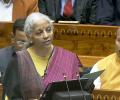
Budget 2026 sticks to fiscal discipline, shuns populist measures despite five key state elections coming up, but ends up rattling stock markets with a higher transaction tax on derivatives trading.

This is the first Budget in my memory of Budgets over the last half a century which has embraced upfront, enthusiastically and emphatically, technology, modernity and fiscal sobriety, notes Shreekant Sambrani.

The government's Budget announcements providing tax holiday for data centres, setting up of city economic regions (CERs) and funding to improve infrastructure in Tier-II and -III cities may give an indirect boost to India's realty sector, said industry executives.

'The world now realises that semiconductors are not just important for national security, but also for economic prosperity.'
