
'It appears to be a combination: A glacier breaking away, and a dam-like formation downstream reaching capacity and releasing water suddenly.'

Sumit Sarkar was never intellectually dismissive of the Hindutva project. He took it with deadly seriousness for he grasped the challenge it posed to the aspirations and ideals of the anti-imperialist movement that generated multiple imaginings of freedom and ways to attain it, recalls Pradeep Kumar Dutta.

Indian stock markets, including the Sensex and Nifty, experienced a significant tumble in early trade, driven by escalating tensions in West Asia that pushed crude oil prices close to the USD 100-per-barrel mark, alongside selling in IT stocks and fresh foreign fund outflows.

OpenAI's chief scientist, Jakub Pachocki, has issued a stark warning about the accelerating pace of artificial intelligence, stating that "no one is prepared" for its rapid rise and potential consequences. He highlights concerns over autonomous AI agents taking unintended actions and calls for international coordination, voluntary slowdowns, and robust safety measures to ensure human control and alignment with human values as machine intelligence surpasses human capabilities.

'He didn't touch upon the core questions raised by the nine employee associations.'

Infosys Chairman Nandan Nilekani stressed the need for India to develop population-scale tokenisation infrastructure capable of handling billions of transactions, rather than merely focusing on issuing tokens. He highlighted the importance of interoperability, liquidity, and high volumes for tokenisation to expand across various asset classes and use cases.

Indian benchmark indices, Sensex and Nifty, experienced declines in early trade due to elevated crude oil prices, escalating US-Iran hostilities, and renewed concerns over a potential US interest rate hike.

IIT-Kanpur has developed an AI-powered "Family Score" system to identify households needing welfare support using existing government data. This system, demonstrated in collaboration with the Andhra Pradesh government, aims to provide a faster and more cost-effective alternative to traditional surveys for assessing socio-economic conditions and ensuring targeted welfare delivery.

'How will this woman find her? And how does that affect her, because it's not a biological relationship.'

Researchers at Delhi's Indraprastha Institute of Information Technology have developed 'MutAIverse', a generative AI platform designed to decode DNA damage and identify potential causes of cancer. Tested on head and neck cancer patients in Guwahati, the platform successfully traced exposure to smokeless tobacco as a contributing factor. This innovation aims to shift focus from just diagnosis to understanding causative factors, potentially aiding in prevention and protection.
India's Engineering Research and Development (ER&D) sector is projected to exceed USD 100 billion in revenue by 2030, driven significantly by the integration of Artificial Intelligence (AI) into engineering workflows. This growth, highlighted by Nasscom, positions India as a critical global engineering hub, necessitating focus on talent development and strategic partnerships.

'Modi had his own cricket team in his school days. He was a good cricketer.'

Digital money is gradually starting to behave like software. It's no longer inert -- sitting passively in accounts. In the not-so-distant future, your money could become 'smart' and 'active,' understanding your preferences, paying your bills automatically, optimising your returns, and managing your risks -- all without you having to manage the details.

Newly listed companies Vedanta Aluminium Metal, SBI Funds Management and Manipal Health Enterprises have entered the Rs 1 trillion mcap list since March 2026.

India's proposal to link BRICS payment systems, including central-bank digital currencies (CBDCs), was notably absent from the grouping's New Delhi Declaration, despite being a key agenda item for India's chairmanship. This omission leaves the 16-year effort for trade in local currencies without a settled payment architecture, with the declaration only 'acknowledging' the work of the BRICS Payment Task Force.

Researchers at IIT-Guwahati have developed an inexpensive and efficient catalyst for producing hydrogen from water, a crucial step for the National Green Hydrogen Mission and the transition to sustainable energy. The catalyst uses nickel salt and an anthracene-based organic molecule, offering a cleaner alternative to fossil fuel-derived hydrogen.

Analysts predict that the Indian stock market's sentiment this week will be primarily influenced by the domestic GDP data announcement, crude oil prices, and the crucial US non-farm payrolls report.
Researchers at IIT Indore have developed a non-invasive technique to detect early signs of oral cancer using saliva and a swab sample. This method is economical, quick, and aims to make early screening more accessible, especially in rural areas, offering an alternative to painful biopsies. The findings, published in the British Journal of Cancer, show distinctive molecular changes before the disease becomes clinically obvious.

The highlight of the successful BRICS Summit was its ability to deliver a joint statement that all members, including Iran and the United Arab Emirates, embroiled in the war in West Asia, signed.

US-based real estate agent franchise firm Century 21 is set to enter the Indian market, estimated at around $600 billion, with a franchise-led business model. The company aims to connect Indian buyers with international properties and NRIs with Indian real estate, projecting 1,500 offices and 30,000 agents within five years.

India is set to launch Bharat Vecto, its first certification tool for assessing the fuel efficiency and CO2 emissions of medium and heavy commercial vehicles, by December, with a full launch targeted for the Bharat Mobility Global Expo in February 2027.

'Regulations give a particular minimum amount of shares to be given in the OFS or IPO -- without which one cannot do the IPO.' 'We got that number on the day of filing of updated DRHP -- sufficient for us to go live with the IPO.'

Foreign portfolio investors (FPIs) turned net sellers in the first week of September, withdrawing Rs 7,443 crore from Indian equities, driven by rising crude oil prices, increasing US bond yields, and a strong dollar.
A new study from The Rockefeller University reveals that short, intense sprints significantly alter a quarter of measured plasma proteins, far more than moderate exercise. These protein changes are linked to a lower risk of cardiovascular and metabolic diseases, including obesity and type 2 diabetes, and even slower biological aging. The findings suggest that high-intensity exercise triggers profound molecular adaptations crucial for health.

In recent years, China and Russia have pushed for de-dollarisation within BRICS, which India has resisted. One reason is that India does not want to hurt its relationship with the United States, and another is the fear of China controlling trade because the renminbi is considered the strongest currency in the bloc today.
The ACSEL Technology Forum, a Karnataka government Centre of Excellence in AI, has launched Tathyakosh.in, a digital public good designed to make India's extensive public data more accessible. This platform consolidates over 1.5 million datasets from 458 sources, addressing the challenge of fragmented data discovery across various government and research portals. It aims to benefit researchers, startups, and technology teams in sectors like healthcare, agriculture, and financial inclusion by providing a structured and discoverable data infrastructure.

A Kishore Kumar song, a birthday cake, a prince's break from protocol to thank his driver, a Persian painting on the ceiling of the presidential residence -- the BRICS Summit had many memorable moments.
The benchmark Sensex plummeted 813 points to a three-month low, with the Nifty settling below 23,450, as escalating tensions in West Asia drove crude oil prices above USD 100 per barrel, leading to widespread selling in IT, FMCG, financial services, and oil & gas shares.

The Ladakh Marathon, known for its extreme high-altitude route and dramatic landscape, has become a significant attraction for distance runners worldwide. Despite not actively seeking sponsors, the event has garnered strong corporate backing due to its unique vision and the allure of Ladakh. Organisers prioritise runner safety and experience, acknowledging the psychological and physical challenges of racing at such elevations, where oxygen levels are significantly lower.
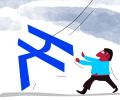
The Indian rupee experienced its sharpest single-day decline in eight weeks, settling at 94.83 per dollar, primarily due to escalating crude oil prices and persistent risk-off sentiment driven by heightened geopolitical tensions and limited foreign inflows.

India's current account deficit could widen to 1.7 per cent of GDP, or about $71 billion, if crude oil prices stay above $90 a barrel for a significant part of the second half of FY27.
A study conducted on older adults in India suggests that the health of the brain's white matter wiring can help mitigate the cognitive effects of gray matter loss, supporting overall cognitive health. Researchers found that healthier superficial white matter is linked to stronger language skills and may act as a source of resilience against cognitive decline.

The Indian Council of Medical Research (ICMR) has informed the National Green Tribunal (NGT) that its nationwide study investigating cancer-causing chemicals in car interiors is projected to be completed by May 2027. This study follows a media report highlighting the presence of flame retardants like TCIPP, TDCIPP, and TCEP in car cabin air, which are considered potential carcinogens.

'If he settles on something, there are fifty considerations behind it -- the pros and cons, all of it.'
A recent study published in npj Aging reveals that epigenetic clocks, which estimate biological age by measuring DNA methylation, capture various aspects of aging biology, including immune system changes, metabolism, and cell communication. Researchers also developed new gene-expression-based clocks that show stronger predictive power for age-related diseases and mortality.
Indian physicist Deepak Dhar, a professor at ICTS-TIFR in Bengaluru, has been awarded the prestigious 2026 Dirac Medal for his significant contributions to statistical mechanics. He shares the honour with three other physicists for their work on understanding complex systems, with applications in diverse fields like biology, finance, and AI. Dhar is particularly recognised for his "sandpile model" and has previously received the Padma Bhushan and Boltzmann Medal.

Nagaland Governor Nand Kishore Yadav has advocated for increased use of technology, especially drones and geospatial systems, to enhance governance and create employment opportunities for the state's youth. During his visit to the Nagaland GIS and Remote Sensing Centre and Drone Centre of Excellence, he highlighted the broad applications of drone technology and the importance of skill development. The centre is actively training youth in various drone-related courses, aiming to meet the demand for drone pilots in the Northeast.

Chinese President Xi Jinping addressed the BRICS summit, urging the bloc to play a significant role in achieving peace and tranquillity in West Asia and the Gulf region. He highlighted BRICS' growth over two decades, its efforts in tackling global challenges, and its steadfastness in safeguarding the interests of the Global South. Xi called for opposing the Cold War mentality, strengthening multilateralism, and promoting cooperation in emerging domains like AI, as China prepares to chair the next summit.
An independent study reveals that while Geographical Indication (GI) registration has boosted the identity of Kerala's traditional handloom products, it has not uniformly translated into economic benefits across weaving clusters. Challenges include an ageing artisan population, competition from powerloom products, rising raw material costs, and inadequate marketing.

TeamLease EdTech Founder and CEO Shantanu Rooj states that the AI-driven world transition is irreversible, with regulation and cost being crucial factors determining its speed and depth. He emphasizes that while AI will transform jobs, not eliminate them, continuous learning, domain expertise, and adaptability will be key for individuals and businesses to thrive in this evolving landscape. Rooj also highlights the need for universities to adapt their curricula to prepare a future-ready workforce.
