
The scandal stemming from longtime USA Gymnastics doctor Larry Nassar's sexual abuse of young female athletes could take a financial toll on the sports federation for years, sponsorship executives said.

PepsiCo's India-born CEO Indra Nooyi has been ranked third most powerful businesswoman by Fortune, the only Indian-origin woman on the 2014 list topped by IBM Chairman and CEO Ginni Rometty and General Motors CEO Mary Barra.

HUL, the country's largest FMCG company, saw sales volume fall by 4% for the December quarter.
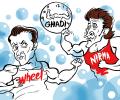
Nirma detergent brand has shed its affordable tag for a more premium positioning against Surf, as rival Ghadi consolidates its position as a mass-market player.

Growth in cities has lagged villages as consumers troubled by persistently high inflation have cut spending in the past two years.

It's debatable whether going back in time -- twice in a span of four years -- by bringing back a once-proven leader at the top is the correct thing to do when Infosys desperately needs to be made future-ready.

Will the warning shots from giants like Unilever and P&G break digital growth?

HUL, UltraTech, Asian Paints, L&T, HDFC Bank top global valuation charts

Berkshire has owned P&G stock since P&G bought Gillette Co in 2005. Buffett had invested in Gillette since 1989.

IT shares lost ground tracking a sell-off in tech stocks on Nasdaq on Friday

India on track to be third largest consumer economy by 2025.

One of the reasons for the failure, say industry experts and financial analysts, is that Emami strayed too far from its core with sanitary napkins.

Inviting private sector in Indian Railways is a good idea.

Nirma has jumped into the ongoing cricket spectacle - IPL - as the principal sponsor for the Virat Kohli-led Royal Challengers Bangalore to raise awareness and recognition for the cement brands it acquired after its purchase of the erstwhile Lafarge India's assets in 2016

In the 1970s, when the detergent world stood on the cusp of a change, Indian consumers first learnt the difference between Sasti cheez aur acchi cheez (a cheap product and a good product) from the sparkling white saree-clad, Lalita ji.
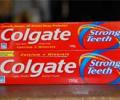
The oralcare major has kept its ears firmly to the ground, pushing products into the hinterland and is holding fort in urban India with innovation for continued volume growth.

It is all about a C and C model -- of choices and consequences -- for women. Women make choices about their lives and for each of them there will be consequences, Shell India Lubricants MD Mansi Madan Tripathy tells Jyoti Mukul.

Digitally driven businesses have cut short the time to market significantly.

For the traditionalists, wars on Twitter and Facebook smack of immaturity.

EduBridge is emerging as a strong player in training unemployed youth.

Many corporations extended benefits to same-sex couples well before the law was overturned.
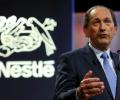
Nestle is sure to go for a relaunch of the noodles soon enough with an advertising blitz,

Rajat Gupta, 70, the first Indian managing director of McKinsey and who of 17 months in US prison for insider trading, gets ready to tell his side of the story. And he is less than complimentary about Preet Bharara, then the famous crusading US attorney for the Southern District of New York. "The jury, the press and the public saw only... a 'cropped picture', he says. For someone whose life story was a model of the Great American Dream - an Indian of modest means who rose to the highest circles of politics and business, mingling with the White House and Davos crowd - his indictment in 2012 marked a stunning fall from grace. Many ascribed it to the hubris of the rich and powerful, says Kanika Datta.

Apple Inc's embrace of wireless charging for its new Watch may be a defining moment for a technology that's languished for years amid competing standards and consumer confusion.

'India missed the software products revolution (and now is in danger of missing the platform revolution), complacent that we are the software experts of the world based on IT services prowess,' points out Rajeev Srinivasan.

Users seem to like the idea too: in a recent survey by technology consultancy IHS, 83 per cent were interested in wireless charging; in China, the figure was 91 per cent.

To tackle the resultant inflation, the Indira Gandhi government had imposed price controls on manufactured products, including soaps and vanaspati, in 1973.
