
The government has not taken any decision to privatise Air India, however, it was close to finalising a short-term strategy to strengthen the burgeoning civil aviation sector, including slashing taxes on jet fuel.
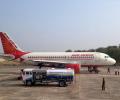
Air India will no longer enjoy a priority in allocation of international traffic rights. This follows its takeover by Tata Sons in January. The Directorate General of Civil Aviation has dropped a clause which gave Air India an advantage over other private airlines in the amended rules issued on April 19.

'Air India's privatisation is acceptable as long as its control does not pass on to a foreign entity,' says A K Bhattacharya.
From highways connecting once-remote regions to aviation networks carrying millions, India's infrastructure story is one of transformation.

With general elections on the horizon, the government's privatisation bandwagon has almost but stalled as a government wary of being accused of selling family silver opts for minority stake sales on stock exchanges over outright privatisation. The result -- the divestment target for current fiscal year is again likely to be missed. Big ticket privatisation plans such as that of Bharat Petroleum Corporation Ltd (BPCL), Shipping Corporation of India (SCI) and CONCOR are already on the backburner and analysts feel meaningful privatisation can happen only after April/May general elections.
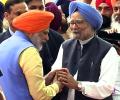
Whether it was the MGNREGS or the NFSA or the Aadhaar-based DBT scheme for cash transfer, the Modi government has built on the basic architecture created by the Singh government. Policy makers in the Modi government, instead of discarding them as products of the previous political regime, worked on them, expanded their scope and reach, and used new tools to improve their performance, explains A K Bhattacharya.

Kushinagar is the final resting place of Gautama Buddha where he attained Mahaparinirvana after his death and is among the most important pilgrim spots for Buddhists.
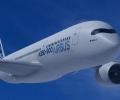
Planemakers have started pitching their latest aircraft to a privatised Air India which has been acquired by salt-to-steel conglomerate Tata Sons. European aerospace major Airbus on Monday said that it is in talks with the airline to sell its long haul aircraft Airbus A350-900. The wide-body aircraft is capable of flying non-stop between India and United States- one of the most popular and revenue generating routes.

There is no reason for keeping an entire ministry with a total staff strength of 2,300, just for the oversight of a few aviation sector laws and regulatory bodies, notes A K Bhattacharya.
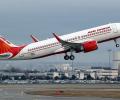
India's largest public sector bank State Bank of India (SBI) will support Tata group's bid for soon-to-be-privatised Air India by subscribing to Tata Sons debentures or funding the special purpose vehicle (SPV) set up by Tata Sons for the acquisition. Bankers said the credit rating of Tata group's holding company is "AAA" signifying high safety and a combination of Air India with its existing airline businesses would make it a formidable player - leading to a duopoly market with IndiGo. It would also open many business opportunities, including in the retail segment, an official said.

Never before has the need for creating an ambience for economic policy reforms been as critical as it is now, points out A K Bhattacharya.
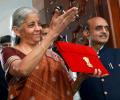
At the customary post-Budget media interactions, Finance Minister Nirmala Sitharaman and her topmost bureaucrats touched upon a number of issues. The minister said the government taxing income from digital virtual assets did not give them legitimacy and that issue was being dealt separately in the planned cryptocurrency Bill. She also expressed confidence that the Budget targets were achievable.

This was a joke narrated by Civil Aviation Minister Ajit Singh when he reiterated his 'personal' view on privatising Air India.
Loss-making government carrier Air India should be partly privatised, as private investors would focus on maximising profit and, in turn, solve the carrier's operational issues, a study commissioned by the corporate affairs ministry has said.
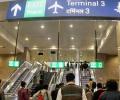
With better utilisation of slots, foreign flying rights, and greater international connections, the operator of India's largest airport feels a privatised Air India will bring commercial benefit to Delhi airport and help it revive quicker from the pandemic shock. Delhi is the largest hub for Air India, with most of its long-haul flights to the US and Europe being operated from here. The airport plans to give its most modern terminal 3 (T3) exclusively to the Tata Group.

Changing tracks helps. But, not taking the beaten path isn't always helpful. This is the story of two of India's biggest privatisations - Air India and Bharat Petroleum (BPCL). Nearly two decades after the last privatisation, a landmark divestment concluded this year when the loss-making national carrier Air India was sold to the Tatas.
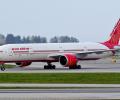
They say better late than never. For the Tatas, the original owners of Air India, bringing back the airline to its fold is worth the wait even if the attempt to privatise the bleeding national carrier by successive governments has taken over two decades. While many airlines have come and gone from the Indian skies since the time when the first move was made to privatise Air India to date, the salt-to-software conglomerate has never let the love affair with aviation, more so with Air India that its former chairman Jehangir Ratanji Dadabhoy Tata (JRD) had, to go off the radar. It is said that Tata group executives used to complain in private that JRD -- the pioneer of the Indian aviation industry -- spent more time worrying about Air India than the Tata group when he was heading both the entities.
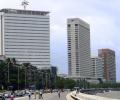
With over Rs 55,000 crore debt, Air India management has been trying to pare burden by monetising non-core real estate properties.
"The strategic divestment transaction of Air India successfully concluded today with transfer of 100 per cent shares of Air India to M/s Talace Pvt Ltd along with management control," DIPAM secretary Tuhin Kanta Pandey said in a tweet. A new board, led by the strategic partner, takes charge of Air India, he added.
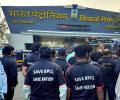
In 2017, a consortium led by Russian state oil company Rosneft agreed to buy Essar Oil for $12.9 billion in India's biggest foreign acquisition of a homegrown company. Rosneft's buyout of Essar's assets was meant to herald a wave of energy investments in India - over six decades after Esso, Caltex and Shell invested in India's refining sector in the 1950s. But the government has tripped up in its efforts to sell Bharat Petroleum Corporation Ltd (BPCL), formerly Burmah Shell, a blue chip public sector company. Bidders include a couple of global funds and resources firm Vedanta.

The biggest let down for India's aviation sector has been the failure of the government to privatise Air India, says Anjuli Bhargava.

Two aborted missions, three different ministers, multiple rule changes and two decades later, Indian taxpayers will no longer have to pay Rs 20 crore per day to keep the loss-making Air India flying. While opposition Congress expectedly attacked the decision as selling the family silver, DIPAM secretary Tuhin Kanta Pandey said what Tata is getting is not a cash cow but an airline which is bleeding where money needs to be pumped in to refurbish obsolete aircraft and dust up strangled ones while being unable to touch any employee for one year and only be able to resize staff after paying a VRS. "It won't be a very easy task there. Only advantage is they (new Air India owner) are paying the price which they think they can manage. "They are not taking the excessive debt accumulated to fund years of losses. We are continuing it as an ongoing concern.... This process has also saved huge amount of taxpayers money going forward," Pandey told PTI.
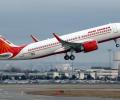
'The Modi government is trying hard to see if it could be sold to a private airline.' 'But it appears there are no takers.' 'If no buyer comes forward by June, the government will close down Air India,' predicts A K Bhattacharya.

... if high oil prices persist or stock prices correct sharply.

Till such time that a new governance framework comes into being, the progress of reforms in health, education, land, labour, electricity and agriculture could remain fraught with problems, agitations and delays, observes A K Bhattacharya.

Strengthening the portfolios of the home minister and the finance minister is a message that should not be missed, points out A K Bhattacharya.
With six airports handed over to the Adani group for 50 years, the government is now all set to hand over another 25 airports to private players in a bid to 'monetise' them. Official figures reveal that since 2017-18, the government has spent and will be spending Rs 14,500 crore on significantly revamping infrastructure at most of these airports before handing them over to private players. The Airports Authority of India (AAI), which operates these airports for the government, has spent billions of rupees in building new terminal buildings, runways, reinforcing taxiways, upgrading aircraft landing systems, radars and a host of other heavy duty and capital intensive infrastructure works.

The government has begun consultations on relaxing the eligibility criteria for allowing Indian carriers to fly abroad, Rajya Sabha was informed.

'The target for next year is unlikely to be more than that of this year. The more you divest in any cycle, the less your potential pipeline for the next,' said an official. 'The first two issues we want to tackle and complete in FY20 are Air India and Hotel Ashok.'
"For an airline, the most important asset are the pilots. They are a mature lot who understand that strikes will not help anyone, that planes have to fly; only then will the money come."

'There is merit in appointing people with ability and energy, then leaving them to do the job.' 'The Modi government would have had a better record if it had stuck to this formula from the beginning,' argues T N Ninan.
Cash-strapped Air India should be run by professionals even if the government partially off-loads its stake to investors to keep it off-the-ground, a top global aviation professional has said.

In 2010, Ratan Tata had spoken of how he had to abandon plans to launch an airline because he refused to pay bribes to secure the necessary approvals.
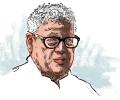
Despite the Congress having nearly four times as many members in the Rajya Sabha as the TMC (48 to 13), Derek O'Brien has been informally leading the coordination of Opposition parties, rallying other parties to demand a discussion on electoral reforms and to protest the government's disinvestment plans, report Rahul Jacob and Archis Mohan.

Initiated move to privatise Air India, but reports on poverty and cast census remained unfinished
Let it gradually pull itself out of international routes and focus on linking remote towns and cities.

In the case of Air India, even competition could not compete with the government.
If the Modi government's approach to economic policy making is any indication, expectations of a sudden spurt in economic reforms after the assembly election results appear to be grossly misplaced.

Does the Union government or the RBI see itself as Krishna beheading Shishupal and what will constitute the 101st or indeed the past many sins for which a Sudarshan Chakra will have to be used? More importantly, what are those sins?

After helping the government in policymaking since October 2014, Chief Economic Adviser Arvind Subramanian is returning to academics and will be teaching at Harvard Kennedy School on a visiting position. In an interview to Dilasha Seth and Somesh Jha, he says the ease of doing business agenda needs to move forward and India must try to integrate with the global value chains. Edited excerpts.
 © 2026 Rediff.com - Investor Information - Advertise with us - Disclaimer - Privacy Policy - Sitemap - Feedback - About us - Terms of use - Grievances