
Despite the recent electoral reverses, Rahul is getting ready to walk the fire once more. The question is whether he will get burned or burnished in the process, says Saroj Nagi.

The retrospective tax decision reversing the January 2012 Supreme Court verdict in the Vodafone case has often been cited as the reason for foreign investors losing confidence in India as an investment destination.

He said the UPA had left the economy in a dire state, with Consumer Price Index and food inflation at double digit, Wholesale Price Index inflation around 6-7 per cent and growth prospects were limited.

The government now ends its mandate with reaffirmation in the vote-on-account of the same goals, for which it claims to have a clear line of sight.

'The government must make clear once and for all that promotions in the Indian Army are not the right of individuals, but a privilege given in accordance with role and function.'

'For now, the AAP is the conversation,' Lord Meghnad Desai tells Rediff.com's Sanchari Bhattacharya. 'Everyone is talking about the 'Delhi model'. They have made so much difference. They have changed politics.'
Binu Alex, co-founder and editorial director of www.commodityonline.com, in an interview to Syed Firdaus Ashraf/Rediff.com, says demand-supply imbalance arising out of the government's inability to preserve the crop for non-harvesting season is the root cause behind the price rise.

Ministers in the Narendra Modi government have been busy making presentations on their 100 days of work. But what these presentations do not mention is that decisions by ministers have been few, with plenty of papers and files moving to the Prime Minister's Office, which is increasingly emerging as a centralised clearance point, even for routine and ordinary issues. Though policy paralysis was a term used freely for the United Progressive Alliance regime, questions are now being raised about pending decisions across ministries and whether at least some ministers have turned redundant.

Dhruv Shirpurkar's parents never let go of their faith in God while standing with him in his battle against a rare disorder that left him 85 per cent disabled and bound to a wheelchair.

How will the return of a majority government at the Centre, the new India-US friendship and the Mangalyaan triumph change India?
C K Ranganathan, CMD of the $12.50 billion CavinKare, in an interview with Shobha Warrier/Rediff.com, says though he sees signs of improvement everywhere, the Modi government has a long way to go to make the country business friendly
'2017-2018 will be one of the best years for the country.' 'The wheel has finally started moving in the right direction. It should pick up momentum in the next 8 to 9 months to have a positive impact on the economy'
'You have a chance to use this massive mandate to push through life changing reforms, transform India into a superpower because our nation's biggest strength are its people, and we the people are the most hardworking industrious and entrepreneurial the world has ever seen.' 'Arm us with a society which lives without fear, a governance where business can be conducted smoothly without greasing palms, instill in this great nation a sense of pride once again. Let this nation be bigger than you and the party.' Suparn Verma's impassioned appeal to Narendra Modi.

India needs to have a re-look of whole gamut of its relations with major powers and also prepare for a more turbulent neighbourhood. But such is the tyranny of Indian status quo mindset that any talk of re-look at nuclear doctrine or foreign relations is treated as blasphemy, says Colonel (retd) Anil Athale.

'I was brought up in a Brahmin Hindu family. I was brought up in places where the majority was Muslim, in Rampur, Uttar Pradesh. There was a mosque next to my house, but I never saw communal tension.' 'I am not worried. This country's religious roots are very strong. They know how to take care of themselves.'

The fiscal deficit of the Centre remains a worry, running at over 6.5 per cent of GDP in April-September 2014, mainly because of revenue shortfalls from exaggerated projections in the government's July Budget and despite the relief on subsidies from lower oil prices.

There are unprecedented political implications of identification based on 'biological attributes of an individual', such as employed by Aadhaar, warns Gopal Krishna.

Friendlier government policies, greater demand and better supply of coal have fuelled investor interest.

From early indications, the Modi government's foreign policy seems to be pragmatic and reciprocal, says K G Suresh.

The fragmentation of politics and the pressures of coalition management have contributed to a near-secular rise in budgetary social expenditures and spending on subsidies since 1991, leaving little fiscal space for government-led capital investment.
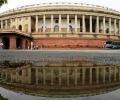
Citing rising prices, slowdown in growth and depreciation of rupee among the problems facing the economy, the opposition members said in the Lok Sabha that they feared the repeat of the 1991 crisis when the country had to mortgage gold as it failed to meet short-term debt obligations.
.jpg)
The toxic brew of fiscal populism, crony capitalism and bad economic management has ensured the collapse of economic growth, industrial stagnation, stubbornly high consumer inflation, declining savings and investment, shrinking employment opportunities, and a dangerously vulnerable external financing situation.

Nobutaka Kitajima, chief investment officer -- equity, LIC Nomura Mutual Fund, tells Business Standard the reaction to the Fed's statements has been overdone and the current downturn has punished certain stocks much more than their inherent economic worth and business potential.

'It has also underestimated the striking force of the Opposition. It has been complacent and paralysed. That may be due to the compulsions of coalition politics and the arrogance of a party which looked at itself as entitled to rule,' says political scientist Christophe Jaffrelot.

'The diplomat's arrest has led to a major diplomatic spat, the likes of which I have not seen in my nearly three decades of covering the US-India relationship, says Aziz Haniffa. 'The knee-jerk reaction by the powers-that-be in Delhi was myopic to say the least.'

'Anti-incumbency, especially in Maharashtra; the BJP's success in creating a new social coalition; and the sheer force of the party's campaign which overwhelmed its opponents,' argues Praful Bidwai, brought the BJP victory in Haryana and Maharashtra, not the Modi effect.

The uproar over 'dams' following the Uttarakhand disaster is ill-informed & potentially counter-productive, says Anand Sankar

Here's why you should kick the butt right now before one of these smoking-related ailments make you its next victim

In the first part of an exclusive interview with Sheela Bhatt/Rediff.com on the eve of the first year of the Narendra Modi-led NDA government, BJP President Amit Shah talks about the government's achievements and the controversy over the land ordinance.

Away from the cricket field, it was a year in which Sania Mirza was unarguably the biggest success story with her staggering 10 titles on the Tour -- two of them Grand Slams.

Rediff.com digs into its archives, tracking down Dr M R Rajagopal's sincere efforts of changing lives and changing the way India looks at palliative care.

Rahul's time is not now, only Sonia Gandhi can lead the Congress into the 2014 final, says Saisuresh Sivaswamy.

Under threat from the Maoists, and jailed by the police, AAP's Soni Sori plunges into the election for all she holds dear. Aman Sethi reports

'The blood that runs in the veins of our family can never be anti-national.' 'They called Kanhaiya a traitor for questioning the Indian Army. Do they know that our cousin was killed by militants in Manipur while serving with the CRPF?' Archana Masih/Rediff.com travelled to the land of Lal Salam, Lal Sitara and comrades to find out what moulded India's most talked about student leader, Kanhaiya Kunar.

A theory that is doing the rounds is that with election nearing, this depreciation of the rupee will allow politicians of all hues to bring back their ill-gotten wealth.

The year 2014 has been an eventful one for India. The country got a new government and a new state, broke new frontiers in various fields and of course its share of controversies.

Prime Minister Manmohan Singh lauded the Central Bureau of Investigation as it completed 50 years during an address to senior officers at the at international conference on 'Evolving common strategies to combat corruption and crime.'

'We have a common way of looking at the world, a common way of thinking, and a common set of values that predispose us to be partners. And our interests overlap greatly,' Dr Ashton B Carter, America's next defence secretary, told Aziz Haniffa/Rediff.com in an exclusive interview.
