'Terrorism is merely a symptom of a deeper disease in Pakistan's body politic,' says Colonel Anil A Athale (retd).

'Pakistan will try to escalate covert operations through terrorism,' says Dr Shalini Chawla.

The State Department and the White House too said that the US expects Pakistan to take decisive action against terrorists operating from its soil.

The United States, which spends billions monitoring adversaries like Al Qaeda, North Korea and Iran, pays an equal amount of attention on ally Pakistan and has ramped up surveillance of its nuclear arms, according to a report.
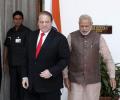
India'Prime Minister Narendra Modi has been congratulated for his speedy diplomacy and his talks with Pakistani counterpart Nawaz Sharif. However, academic Christine Fair and former Pakistan ambassador to US Husain Haqqani dismiss the meeting, calling it merely a photo-op and an exercise in futility. Aziz Haniffa reports.
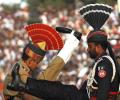
'Despite Modi's high-flown rhetoric about good-neighbourly relationships in South Asia, he lacks a road map how to proceed -- be it with Bangladesh or with Sri Lanka and Pakistan... But a deeper question arises here: Did he duck on his own accord or under the diktat from the RSS, asks Ambassador M K Bhadrakumar.

Indian Ambassador to the United States Dr S Jaishankar told Rediff.com's Aziz Haniffa that it was "a very nice meeting and President Barack Obama was extremely cordial."
.jpg)
Modi government has taken some interesting policy decisions in the 100 days since the time he met President Pranab Mukherjee to present his claim as Prime Minister of the world's largest democracy, says Tanmaya Nanda.

'There cannot be any compromise on that. After all, all instrumentalities of the State have been made to serve it. Why was the Constitution made? It was made to serve the cause of India.'

'US counter-terrorism policy was encouraging and emboldening the Indians to deal with the problem of Pakistani-supported terrorism once and for all.' 'The US had been trying to browbeat Pakistan into doing what it wants, with very limited success.'
 © 2026 Rediff.com - Advertise with us - Disclaimer - Privacy Policy - Sitemap - Feedback - About us - Terms of use - Grievances