
Tyre stocks have been on a tear over the past six months, with average returns exceeding 45 per cent. Except for Apollo Tyres, which has seen a slight correction in the last month and a half, limiting its gains to 16 per cent, listed peers such as MRF, CEAT Tyres (formerly Cavi Elettrici e Affini Torino), and JK Tyre & Industries have delivered returns exceeding 30 per cent during this period. Production-related constraints and sluggish demand in Europe, where sales are expected to remain flat, coupled with high valuations, have contributed to Apollo Tyres' underperformance. The tyre sector's gains can be attributed to robust growth trends driven by the replacement market, which constitutes more than two-thirds of sales.
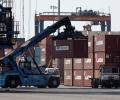
The commerce ministry on Friday held consultations with key stakeholders, including shipping lines, exporters, container firms, and other departments, to assess the impact of the Iran-Israel conflict on India's overseas trade, an official said. The meeting was chaired by Commerce Secretary Sunil Barthwal.
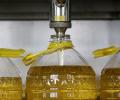
The government has reduced the tariff value for import of edible oil, including palm oil, by up to $112 per tonne, a move which experts said can lead to lower domestic prices. The Central Board of Indirect Taxes and Customs (CBIC), through a notification, has cut the tariff import value of crude palm oil by $86 per tonne, and of RBD and crude palmolein by $112 per tonne each. It also reduced the base import price of crude soyabean oil by $37 per tonne. The changes in tariff value of edible oil are effective from Thursday (June 17).

'We need to be very vigilant as we are passing through some fraught times.'
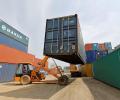
After registering a positive growth for two months, India's exports slipped into negative territory again, contracting 2.17 per cent year-on-year to $38.73 billion in May due to a fall in global petroleum prices, while trade deficit narrowed at $21.88 billion during the month.

From the Sensex pack, Asian Paints, NTPC, Reliance Industries, Tata Steel, Bajaj Finserv, Hindustan Unilever, Sun Pharmaceuticals, Adani Ports & SEZ, Axis Bank, Tata Consultancy Services, Titan and Bajaj Finance were the major gainers. Tech Mahindra, Kotak Mahindra Bank, Zomato, Tata Motors, and IndusInd Bank were the laggards.

'With the US having entered the war, raising the risks of a wider conflict, those impacts could be even more damaging.'

The RBI on Wednesday slashed key interest rate by 25 basis points, for the second time in a row, to support a shuttering economy hit by reciprocal tariffs imposed by the US. Following the rate cut, the key policy rate eased to 6 per cent providing relief to home, auto and corporate loan borrowers.

From the Sensex firms, Tech Mahindra, Tata Steel, Tata Motors, Titan, HDFC Bank, IndusInd Bank, Infosys and Kotak Mahindra Bank were among the biggest laggards. On the other hand, Adani Ports, Mahindra & Mahindra, Power Grid, Eternal and Hindustan Unilever were among the gainers.
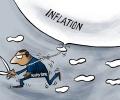
'Deposit and lending rates have started to fall considerably. It is likely to spur investment and consumption of durables.'

India, the world's third-biggest oil consumer, has conveyed to OPEC countries its concern over high oil prices that are threatening to impact the nascent economic recovery after the devastating pandemic. New Oil Minister Hardeep Singh Puri has made phone calls to key OPEC nations to convey the desire for an affordable price for consumers. After calling his counterparts in Qatar and the UAE, he called Organization of the Petroleum Exporting Countries (OPEC) kingpin Saudi Arabia on Thursday evening.

'The market's nervousness ahead of anticipated US tariffs has led to a significant downturn in Indian equities.'

The rise in consumer price index (CPI) inflation could see the Reserve Bank of India (RBI) in an extended pause mode as regards interest rates, and in turn, keep the market rally in check, believe analysts. Signs of inflation cooling off in the US, however, is likely to provide some cushion as the expectations of a change in stance by the US Fed as regards interest rates is likely to aid sentiment. Back home, CPI inflation surged for the first time in five months to 4.81 per cent in June 2023, and was higher than the street's expectations of 4.58 per cent.

The Iran-Israel conflict has further increased global economic uncertainties, impacting world trade, including India's exports, as it is expected to drive up both air and sea freight rates, exporters say. They said that India's exports to Europe and counters like Russia may get impacted due to this war.

Oil prices jumped nearly $3 a barrel and gold and safe-haven bonds rallied on Friday after the killing of top Iranian commander Qassem Soleimani in an airstrike by the US in Baghdad.

Investors will take cues from the December quarter corporate earnings, with blue-chips like Infosys, Reliance Industries scheduled to report their results this week, in addition, inflation data and trading activity of foreign investors will also be crucial in dictating market trends, analysts said.

India is deeply concerned over the spike in the price of oil due to the Russia-Ukraine conflict and it is "breaking our back," External Affairs Minister S Jaishankar has said. Addressing a joint press conference with US Secretary of State Antony Blinken after holding bilateral talks, Jaishankar on Tuesday said there is a very deep concern among developing countries about how their energy needs are addressed. Speaking about the Ukraine war, he said: "We have taken the position privately, publicly, confidentially and consistently that this conflict is not in anybody's interest."

The banking sector in the country is stable, capital is available and credit offtake is poised to take off, he said at a webinar organised by Bharat Chamber of Commerce. "We are not unique to the phenomenon of uncertain growth and high inflation due to the pandemic.

Global oil prices are all set to rise, with increase in demand from India and China in the long term, a top Obama administration official has said.

India's trade account could come under pressure and there could be an inflation push if crude oil prices remain above the $90 per barrel (Brent) for a prolonged period since India imports over 85 per cent of its oil and roughly 50 per cent of its gas. A rebound in economic activity is bound to lead to higher fuel demand. While India is the third-largest importer of crude, it is a net exporter of refined products, which helps to compensate to some degree.
The government on Monday scrapped 30-month old windfall profit tax on domestically-produced crude oil and on export of jet fuel (ATF), diesel and petrol following a decline in international oil prices. Minister of State for Finance Pankaj Chaudhary tabled a notification in Rajya Sabha scrapping the levy on crude oil produced by firms like state-owned Oil and Natural Gas Corporation (ONGC) and exports of fuels done by companies like Reliance Industries Ltd.
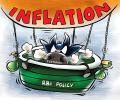
The Reserve Bank on Wednesday lowered the inflation projection for the current fiscal to 4 per cent from 4.2 per cent earlier, taking into account good agricultural output and falling crude prices.

It also receives large investments from the Europe.

From the 30-share blue-chip pack, IndusInd Bank, NTPC, UltraTech Cement, Sun Pharma, Axis Bank, State Bank of India, Tata Steel, Power Grid, Adani Ports and Kotak Mahindra Bank were among the major laggards. Tata Consultancy Services jumped nearly 6 per cent after the IT services company reported an 11.95 per cent jump in the December quarter net profit to Rs 12,380 crore. Tech Mahindra, HCL Tech, Infosys and Bajaj Finserv were the other big gainers.


The prospect of protracted uncertainties in the global economic landscape not only pose a risk for India's growth outlook in 2025-26, but are also likely to dent the private sector's capital raising and investment plans, the finance ministry averred on Tuesday, cautioning the country's corporates that the era of 'easy pickings' was over.

Rupee depreciation, if it continues, will likely pull the markets down further. Since September 2024, the rupee has declined by 3.1 per cent, the Nifty has dropped by 8.5 per cent during the same period, and the Sensex has fallen by 7.3 per cent. If the decline continues, markets will need to brace for more pain as it could push foreign portfolio investors (FPIs) to exit their positions faster than anticipated.

The Reserve Bank of India (RBI) has started winding down its short position in the dollar forward book, after a gap of seven months, on the back of a softening dollar, while infusing funds via open market operations (OMOs) to counter the resulting liquidity drain.

Equity benchmarks Sensex and Nifty on Thursday gave up all early gains to settle lower as surging oil prices amid the ongoing conflict between Russia and Ukraine hit investor sentiment. The 30-share BSE Sensex started the trade on a higher note and jumped 527.72 points in morning deals to a high of 55,996.62. However, during the afternoon trade it surrendered all its early gains and finished at 55,102.68, lower by 366.22 points or 0.66 per cent.

From the Sensex pack, HCL Tech, Bajaj Finserv, HDFC Bank, Bajaj Finance, Infosys, Titan, ICICI Bank, Sun Pharma, Reliance Industries, Larsen & Toubro, Tech Mahindra and NTPC were among the biggest laggards. Among gainers, IndusInd Bank jumped over 5 per cent while Zomato ended marginally higher.

With crude palm oil prices on the rise, companies have started to jack up rates of soaps and edible oils in order to pass on the hike to consumers. Crude palm oil, one of the main ingredients in the manufacture of some consumer goods, saw a price rise of 45.2 per cent in the last three months. One of the country's largest consumer companies, Hindustan Unilever, said it has already started to take price increases in the skin cleansing category.
Murali Deora, Minister of Petroleum & Natural Gas has urged the need for sustainable international oil prices stating that the high oil prices are neither in the interest of oil importing countries nor beneficial to the exporting nations.

'We are not incentivising the old tax scheme. These taxpayers will also shift to the new regime after comparison.'

Tata Steel was the biggest loser in the Sensex pack, sliding 8.59 per cent, followed by Tata Motors, Larsen & Toubro, Adani Ports, IndusInd Bank, Tech Mahindra, Reliance Industries, Sun Pharmaceutical, HCL Technologies, Tata Consultancy Services, Infosys, and NTPC, were the major laggards. On the other hand, Bajaj Finance, HDFC Bank, Nestle India, ICICI Bank, ITC, Asian Paints and Axis Bank were among the gainers.

The US Fed interest rate decision, global trends, tariff-related developments and trading activity of foreign investors will drive the equity market movement this week, analysts said. Among macroeconomic data announcement, WPI inflation for February is scheduled to be announced on Monday.
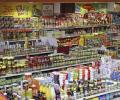
The volume growth of India's FMCG industry has slowed down in the March quarter to 5.1 per cent, driven by increased consumer purchases of small-value packs, according to the latest report from data analytics firm NielsenIQ. Volume growth is slowing across categories, and non-food segments are still outpacing food in the FMCG sector.

Marico reported consolidated revenue growth of 20 per cent year-on-year (Y-o-Y) during the January-March quarter (Q4) of FY25. Domestic revenue surged 23 per cent Y-o-Y, while volume growth was 7 per cent. International growth stood at 11 per cent (16 per cent in constant currency growth).
Worried about the possibility of oil prices' pushing up inflation, the Reserve Bank on Tuesday said chances of prices going up in the coming days need to be viewed against this background.

International oil prices jumped to the highest level since 2014, topping $87 a barrel but domestic petrol and diesel prices remained unchanged for the 74th day in a row - a freeze that may be linked to ensuing assembly elections in states like Uttar Pradesh and Punjab. Brent - the key global oil benchmark - soared to $87.7 per barrel mostly due to rising geopolitical tensions and supply-side disturbances due to Yemen's Houthi group's attack on oil facilities in the United Arab Emirates. Also, global inventories are waning. The attack, some analysts believe, may lead to more hostile behaviour between the two power centres in the Middle East - Iran and Saudi Arabia.

The current oil prices at nearly $83 a barrel, which are slightly above the $70-80 band, are ideal for producers and consumers and are at sustainable levels, Saudi Arabia Minister of Petroleum and Mineral Resources Ali Al-Naimi has said in a news report.
