
The effect of the HDFC-HDFC?Bank merger will be for the bigger space of the Indian financial sector and not just limited to the banking sector. The large finance companies have practically no benefit of regulatory arbitrage. Earlier, such arbitrage between banks and NBFCs was normal. The logic of the merger is very clear - the cost of borrowing of banks is lower.

'If we want faster growth and want greater flow of credit towards the private sector, it's important to have many more of such large entities.'

The Reserve Bank on Thursday asked banks and other financial institutions to report to the government details about accounts resembling 10 individuals who have been designated as terrorists by the Union home ministry earlier this month. On October 4, the Union Ministry of Home Affairs (MHA) had designated a total of 10 members of Hizbul Mujahideen (HM), Lashkar-e-Taiba (LeT) and other proscribed outfits as terrorists under the Unlawful Activities (Prevention) Act (UAPA). Those designated as terrorists include Habibullah Malik alias Sajid Jutt, a Pakistani national, Basit Ahmad Reshi, who hails from Jammu and Kashmir's Baramulla but is currently based in Pakistan, Imtiyaz Ahmad Kandoo alias Sajad, who hails from Jammu and Kashmir's Sopore but now lives in Pakistan, Zafar Iqbal alias Salim, who is from Poonch but presently residing in Pakistan, and Sheikh Jameel-ur-Rehman alias Sheikh Sahab, who hails from Pulwama.
Capital markets regulator Sebi has penalised stock exchanges -- BSE and NSE -- for "laxity" on their part in detecting misuse of clients' securities worth Rs 2,300 crore by Karvy Stock Broking Ltd (KSBL). In two separate orders, the Securities and Exchange Board of India (Sebi) has imposed a fine of Rs 3 crore on BSE and Rs 2 crore on NSE. The matter relates to KSBL misutilising client securities worth Rs 2,300 crore, belonging to more than 95,000 clients, by pledging them from just one demat account. The funds raised against the pledge were used by KSBL for itself and its group entities.

The global turmoil in the banking sector has made analysts cautious, who advise that investors stay away from stocks of this sector till the overall sentiment improves. The recent trouble for the banking sector started with the collapse of US-based Silicon Valley Bank (SVB), Silvergate Capital and Signature Bank. On its part, Moody's Investors Service has also cut its outlook for the US banking system to 'negative' from 'stable', citing the run on deposits at these three banks that led to the collapse of these banking majors in less than a week.

The plan is to offer the ratings of drivers to insurers, which can then customise their premiums -- a higher score meaning a lower premium, for instance, and vice-versa.
As part of its efforts to strengthen customer protection, Reserve Bank is considering setting up a fraud registry to create a database of fraudulent websites, phones and various modus operandi used for digital fraud. Such a database will help prevent these fraudsters from repeating the fraud as the websites or phone numbers would be blacklisted, RBI executive director Anil Kumar Sharma said on Monday. "There is no definite timeline for setting up of the fraud registry.

The central bank's tough new rules spell major changes in the competitive landscape for financial services audits.

More and more PE players are willing to test the waters now, just in case they become early entrants in a future booming business.

NBFCs are mainly dependent on funding their operation from their own cash flows.

'Usually, customers who don't get loans from banks approach NBFCs.' 'This is one reason NBFCs price their loans costlier than PSBs or private banks.' 'NBFCs will have higher delinquencies levels than private banks for most products.'

The Rs 20,000 crore is in addition to Rs 10,000 crore support announced earlier by the housing sector regulator NHB.

Driven by strong demand, the overall passenger vehicle dispatches crossed 3.35 lakh units in February as automakers, including Maruti Suzuki India, Hyundai, Tata Motors and Mahindra & Mahindra, reported robust sales during the month. The dispatches of more than 3.35 lakh units last month marked an 11 per cent over February 2022. It was also the highest ever overall wholesales in the month of February. The country's largest carmaker Maruti Suzuki India on Wednesday said its domestic wholesales rose 11 per cent to 155,114 units in February as compared with 140,035 units in the same month last year.

In view of the economic shock caused by the COVID-19 pandemic, Reserve Bank of India (RBI) on Friday asked scheduled commercial banks and co-operative banks not to make any dividends for the financial year ended March 2020. In view of the ongoing stress and the heightened uncertainty on account of the pandemic, RBI said it is imperative that banks continue to conserve capital to support the economy and absorb losses, if any. The decision is based on review of the September quarter financial performance of banks.

While lenders create a hype around the services offered on digital platforms, customers think otherwise, given that frustration due to the quality of service has only increased, over the years.

Indian economy is poised to do better on the back of reforms undertaken by the government and is expected to clock a 6.5-7 per cent growth in the remaining part of the decade, Chief Economic Advisor (CEA) V Anantha Nageswaran said on Tuesday. Addressing reporters here after the tabling of the Economic Survey in Parliament by Finance Minister Nirmala Sitharaman, Nageswaran said that by and large, inflation is likely to be "well behaved" in FY2023-24 barring headwinds. "My optimism is that in the coming decade, rest of the decade, the potential GDP growth, without taking into account export potential, because global economy is still rife with uncertainty, the growth rate would be around 6.5 to 7 per cent, rather than between 6 per cent and 6.5 per cent," he said.
'Facilitating conversion of well-run NBFCs into banks is urgently needed.'

Such cold-shoulder by banks also indicates a credit freeze that is hard to overcome, unless the government comes out with credit guarantee schemes for loans given by banks. Since that is not happening, and there is no indication of that too, banks are not willing to listen to RBI prodding.

this move by the government is likely to iron out the current challenges for the NBFCs and in turn help the real estate sector.

The Reserve Bank of India (RBI) on Monday allowed microfinance lenders to fix interest rates on loans with a rider that those should not be usurious for the borrowers. A microfinance loan is defined as a collateral-free loan given to a household having an annual income of up to Rs 300,000. Each regulated entity (RE) should put in place a board-approved policy regarding pricing of microfinance loans, said the 'Master Direction - Reserve Bank of India (Regulatory Framework for Microfinance Loans) Directions, 2022'. In the past, the central bank used to announce the rates on quarterly basis.
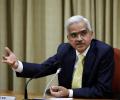
Reserve Bank Governor Shaktikanta Das on Wednesday said the country is at the doorstep of economic revival on the back of accommodative monetary and fiscal policies being pursued by the central bank and the government.

'The CM kept his cool, but his adviser was liberal with filthy language.' Tamal Bandyopadhyay recreates the diary of a general manager in a public sector bank, providing a glimpse of how they balance their work and life.

Nearly three-fourths of the debt money, as of April 30, 2019, was invested in securities with duration of less than three years.

After the finance minister directed public sector banks to join the account aggregator (AA) ecosystem, 5-6 major ones, including State Bank of India (SBI) and Bank of Baroda are expected to go live by July-end. Sahmati, an industry alliance for the AA ecosystem, has been working with PSU banks to get them onboarded for quite some time now. So far, Union Bank of India and Punjab National Bank (PNB) have gone live on the AA ecosystem. While Union Bank has been live for a while, PNB went live earlier this month.

Since infrastructure projects have long gestation periods, investors need to enter them with a long horizon of at least 10 years.

Banks are set to sell dud-loans worth Rs 90,000 crore of 22 firms in the first tranche to the National Asset Reconstruction Company (NARCL). It's reason for cheer given that such sales to asset reconstruction companies (ARCs) have been poor in recent times. In fiscal 2020, their assets under management (AUM) contracted by 4 per cent; and in fiscal 2021, it fell by another 100 basis points to Rs 1.07 trillion. So, why are we where we are?

The finance minister asked lenders to identify eligible borrowers and reach out to them and urged for quick implementation of a sustained resolution plan for the revival of every viable business.

The unexpected interest rate hike by the RBI on Wednesday will have the banking system on average making a 10-15 bps gains on the yields, with private banks making larger gains as 57 per cent of their loans are linked to external benchmark rate and 40 per cent to the marginal cost of lending rates, as per a report. Stating that lenders and borrowers will face volatile times with the Reserve Bank raising the repo rate by 40 bps to 4.40 per cent and the cash reserve ratio (CRR) by 50 bps on May 4 in an off-cycle policy move, India Ratings said the market rates had already been moving higher before the move. The 364-day T-bills have moved up 120 bps and 10-year G-sec by 140 bps since May 2020, when the repo rate was cut to a record 4 per cent, which led to an expectation of a faster and sharper rise in interest rates in the system but the central bank stayed the course to support the fragile economy battered by the pandemic.

Insurance firms and non-banking finance companies are heaving a sigh of relief as the revised draft of the Direct Taxes Code has suggested that book profits rather than gross assets be used to calculate the minimum alternate tax, or MAT, for both groups.

A lot depends on how Srei shapes up under the new administrator and his team, which is critical for investors' interest.
The sector seems set for a rally that may be somewhat temporary.
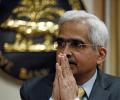
Reserve Bank Governor Shaktikanta Das said on Monday that fair and impartial auditing is essential for a resilient economy as it instils confidence among citizens. Addressing officers at the National Academy of Audit and Accounts, Das said that audit is important for the country as public expenditure decisions are based on these reports. Observing that there is a need to improve the quality and depth of audit, he said the Reserve Bank has taken a host of steps in consultation with the Institute of Chartered Accountants of India (ICAI) for improving the audit of banks and financial institutions.

After banks, it is now the turn of non-banking finance companies (NBFC) to see a spike in loan defaults and provisioning for non-performing assets ( NPAs ).

Days after Moody's cut its gross domestic product (GDP) forecast for financial year 2022-23 (FY23) after the official GDP print for the June quarter came in lower than expectations, the global ratings agency said it would maintain its long-term sovereign debt credit rating and outlook on Asia's third-largest economy. "The credit profile of India reflects key strengths, including its large and diversified economy with high growth potential, a relatively strong external position, and a stable domestic financing base for government debt," Moody's said on Tuesday. "We do not expect rising challenges to the global economy, including the impact of the Russia-Ukraine military conflict, higher inflation, and the tightening financial conditions on the back of policy tightening, to derail India's ongoing recovery from the pandemic in 2022 and 2023," it said.

NBFCs seek level playing field with banks in terms of treatment of NPAs, TDS on deposits, removal of service tax on HP and lease transactions, refinance mechanism akin to NHB etc

The Ministry of Corporate Affairs had taken various steps to protect small investors.

The Serious Fraud Investigation Office (SFIO) has arrested a person who the Ministry of Corporate Affairs (MCA) said has emerged as the mastermind of the racket of incorporating a large number of shell companies with Chinese links in India.

While taking gold out of the closet to borrow money is no longer taboo in Indian households, the sharp drop in gold prices is hitting the newest loan product on the banking turf hard, explains Tamal Bandyopadhyay.

Second-tier NBFC stocks are trading at 24.4x their trailing earnings, which is nearly twice their 15-year average of 13.9x

Superseding the boards of two non-banking financial companies (NBFCs) in the Srei group will neither create liquidity challenges for sound entities, nor build systemic crises because the markets have factored in the problems with the Kolkata-based firms. Such regulatory steps will help in making the NBFC space more robust, bankers and market experts said. The action should have begun earlier because the Reserve Bank of India (RBI) had done a special audit last financial year and asked the group to make provisions for assets considered stressed, analysts said.
 © 2026 Rediff.com - Investor Information - Advertise with us - Disclaimer - Privacy Policy - Sitemap - Feedback - About us - Terms of use - Grievances