Roads, railways, and coal together are likely to account for 70 per cent of the government's takings from the upcoming second edition of the National Monetisation Pipeline (NMP), set to run from FY26 to FY30. In comparison, these three sectors are estimated to have contributed 66 per cent in the first edition of the NMP - FY22 to FY25.
India's market regulator is moving ahead to include real estate investment trusts (Reits) in benchmark indices in a phased manner, Sebi chief Tuhin Kanta Pandey said, while asserting that the regulator was working to strengthen the link between infrastructure building and the markets.

The government has identified 50 public-private partnership (PPP) projects worth over Rs 60,000 crore, significantly surpassing the original targets of the National Monetisation Pipeline, said Ports, Shipping, and Waterways Minister Sarbananda Sonowal at the Business Standard Infrastructure Summit on Thursday.

The National Highways Authority of India (NHAI) is looking to monetise 33 stretches of national highways during the current financial year (FY25) through its toll operate transfer (TOT) and infrastructure investment trust (Invit). These stretches include Lucknow-Aligarh, Kanpur-Ayodhya-Gorakhpur, and Bareilly-Sitapur in Uttar Pradesh, Gurugram-Kotputli-Jaipur bypass and Jaipur-Kishangarh in Rajasthan, Panikoili-Rimuli in Odisha, Chennai Bypass in Tamil Nadu, and Muzaffarpur-Darbhanga-Purnia highway in Bihar. Cumulatively, the 33 stretches, spanning 2,741 kilometres (km) earned approximately Rs 5,000 crore revenue in FY24.
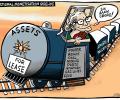
Will the National Monetisation Pipeline revive the economy, which is in deep crisis, wonders Uttam Ghosh.
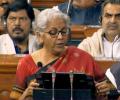
"The budget adopts following seven priorities -- inclusive development, reaching the last mile, infrastructure and investment, unleashing the potential, green growth, youth power and financial sector," she said.

The ministry of railways has dropped its proposal for monetisation of stations on public-private partnership mode, and projects are now being taken up under engineering, procurement and construction (EPC) mode, a source said. The source also told PTI that the ministry of railways has been asked to expedite monetisation of other assets, including trains, goodsheds, hill rail, stadiums, railway colonies and railway land parcels among others. "Largest asset class (stations) dropped. Stations earlier proposed on PPP mode are now being taken up under EPC mode," the source said.

The Department of Investment and Public Asset Management (Dipam) has asked ministries, government departments, and public sector undertakings (PSUs) to send a list of assets that can be monetised under the proposed National Monetisation Pipeline. The list will be used for creation of an asset monetisation dashboard, which will keep a track of such assets. The government, meanwhile, has asked CRISIL to prepare a road map for monetising assets of PSUs and government departments.

Finance Minister Nirmala Sitharaman on Monday announced a Rs 6 lakh crore National Monetisation Pipeline (NMP) that will look to unlock value in infrastructure assets across sectors ranging from power to road and railways. She also said the asset monetisation does not involve selling of land and it is about monetising brownfield assets. Projects have been identified across sectors, with roads, railways and power being the top segments.

The government has fixed an indicative value for Delhi's iconic 'The Ashok' hotel at Rs 7,409 crore under the national monetisation programme, according to sources. The Ashok and the adjacent hotel Samrat are among the eight India Tourism Development Corp assets listed under the National Monetisation Pipeline (NMP) announced by Finance Minister Nirmala Sitharaman last year. The sources said investor consultation has already been undertaken and a cabinet note for the sale of the sprawling 25-acre property in the heart of the national capital is under consideration.

During his first Union Budget in July 2014, former finance minister Arun Jaitley announced the setting up of an institution called 3P India, with an allocation of Rs 500 crore. The intention was to mainstream public-private partnerships (PPPs) in India. The plan was to bring together the capacities of the government and private sector to push PPP projects.
'This plan is basically to allow some of the government assets for rent, and surely not for sale.' 'There is a difference between selling a house and renting out a house.'
Infrastructure assets worth over Rs 1.62 lakh crore are expected to be monetised during the current fiscal, Parliament was informed on Monday. The government had last year announced a Rs 6 lakh crore National Monetisation Pipeline (NMP) to unlock value in infrastructure assets across sectors, ranging from power to road and railways in four years till 2025. In a written reply to the Lok Sabha, Minister of State for Finance Pankaj Chaudhary said about Rs 97,000 crore worth of public assets were monetised in the last fiscal (2021-22).

India's production-linked incentive (PLI) scheme, which aims to make domestic manufacturing globally competitive, has attracted investment worth over Rs 45,000 crore and has also created three lakh jobs, NITI Aayog CEO Parameswaran Iyer said on Monday. The government has rolled out the scheme with an outlay of about Rs 2 lakh crore for as many as 14 sectors, including automobiles and auto components, white goods, pharma, textiles, food products, high efficiency solar PV modules, advanced chemistry cell and speciality steel. "The PLI programme has already started showing results.
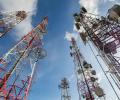
The government expects to realise Rs 35,100 crore from the partial sale of Bharatnet fibre assets and around 13,500 mobile towers owned by state-run telecom firms as part of its national monetisation pipeline released on Monday. Government think tank Niti Aayog has valued over 2.86 lakh kilometre of optical fibre assets laid by BBNL and BSNL under rural broadband project Bharatnet at Rs 26,300 crore, according to the National Monetisation Pipeline (NMP) document. According to the document, BSNL's 13,567 mobile tower assets and MTNL's 1,350 towers have been valued at Rs 8,800 crore.

India and the US on Friday expressed concern over high inflation which is being driven by external factors and has become a challenge for both the nations. Speaking at the US-India Businesses and Investment Opportunities, Finance Minister Nirmala Sitharaman said in India the inflation challenges are prompted more by external factors. "So while the number today is in a manageable range, the challenges are largely due to the import of crude.
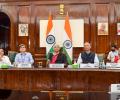
Seven of the meetings will be held in late November or early December at the finance ministry, as is the norm.

'Inter-ministerial coordination, information on the proposed PSUs, and due diligence are taking longer than expected to conclude the process.'

Bajaj Finserv was the top gainer in the Sensex pack, soaring around 8 per cent, followed by Tata Steel, Tech Mahindra, Bajaj Finance, HDFC Bank and SBI.

Talking to PTI Amarjeet Kaur, General Secretary of All India Trade Union Congress (AITUC), said, "The two-day nationwide strike by the joint forum of central trade unions has begun this morning". About the impact of the agitation, she said that the entire coal belt (mining area) is affected in Jharkhand, Chhattisgarh and Madhya Pradesh. She also said that there is a good response in industrial areas of Assam, Haryana, Delhi, West Bengal, Telangana, Kerala, Tamil Nadu, Karnataka, Bihar, Punjab, Rajasthan, Goa, Andhra Pradesh and Odisha. The AITUC official noted that the banks and insurance sectors are affected all over India, while steel and oil sectors are also seeing partial impact due to the strike. Kaur said that she has got preliminary reports that markets are closed in Odisha.

Finance Minister Nirmala Sitharaman on Tuesday highlighted "significant reforms" undertaken by the government including National Monetisation Pipeline (NMP) and National Infrastructure Pipeline (NIP) as she met institutional investors in Boston. Sitharaman arrived in the US on Monday for a week-long trip to attend the annual meet of the World Bank and IMF in Washingon as well as G20 Finance Ministers and Central Bank Governors (FMCBG) meeting. During the official visit to the US, Sitharaman is expected to meet US Treasury Secretary Janet Yellen.

The finance ministry will kick-start the exercise to prepare the annual Budget for 2023-24 from October 10, in the backdrop of revival of the Indian economy and fears of recession in developed countries. The budget for the next year will have to address critical issues of high inflation, job creation, boosting demand, and putting the economy on a sustained 8 per cent-plus growth path. On Wednesday, finance minister Nirmala Sitharaman said inflation is no longer "red-lettered" and the priority for the government now is job creation and boosting growth.
The government has developed an asset monetisation dashboard for monitoring real-time progress of its ambitious Rs 2.5 trillion-plus pipeline, and providing visibility to investors. The portal has been prepared as the government tries to provide a one-stop shop to investors keen on taking over assets of government departments and ministries.

Airports hold pride of place in the government's National Monetisation Pipeline (NMP) programme to monetise public assets. Private airport operators, including the Adani group, Fairfax, GMR and Zurich Airport, are expected to evince interest in the next round of public private partnership (PPP) development of state-owned Airport Authority of India (AAI) airports. Industry analysts, however, do not expect bids to be as high as the last round, which saw Adani group gain control of six airports.
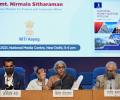
'It has taken 7-and-a-half years for this government to understand the fundamentals of economics.' 'If the prime minister wants to leave an imprint, he has to see to it that this succeeds.'

The Centre's ambitious Rs 6-trillion National Monetisation Pipeline (NMP) could fall short of yearly targets for the current fiscal year (FY22) and the next one as well (FY23), partly due to the long gestation period in monetising big-ticket railway infrastructure, Business Standard has learnt from sources in the finance and rail ministries. Officials say the major chunk of railway monetisation will happen from FY24 onwards because leasing some of the infrastructure, like stadiums and dedicated freight corridor, will not happen anytime soon. Rail infra is expected to be the second-biggest contributor to the NMP, with about Rs 1.52 trillion worth of assets to be monetised.

'There will be political opposition, and this monetisation will require continued political will.'

According to reports, public transport and banking services remain partly disrupted for the second day in some states.

The Centre will release Rs 95,082 crore as tax devolution to the states this month after including one advance instalment to help them push their capital expenditure, Finance Minister Nirmala Sitharaman said on Monday. After a meeting with all chief ministers and state finance ministers, Sitharaman said states had said that it would be helpful for them if the tax devolution is front loaded.
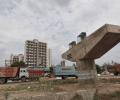
These could include strengthening the public-private partnership (PPP) dispute resolution mechanism, uniform PPP institutional framework, easier terms for infrastructure companies accessing bond markets, and tax sops, Business Standard has learnt. Investment in infrastructure projects with high multiplier effect has been the Centre's main plank to revive the economy, create employment and boost consumption.

A joint forum of central trade unions has given a call for a nationwide strike on March 28 and 29 to protest against the government policies affecting workers, farmers, and people.
Now that almost 10 infrastructure ministries have submitted a fresh list of their core infrastructure assets, the government has realised it stands to make much more money from asset monetisation than previously thought. Two persons in the government said it stood to garner over 30 per cent more than the earlier estimates of Rs 2.5 trillion over the next four years under the National Monetisation Pipeline (NMP). The NMP, which is being prepared by Niti Aayog, is in the advanced stages of finalisation and is expected to be unveiled in August.

Prime Minister Narendra Modi began his engagements in the US on Thursday by meeting with leading American CEOs from five different key sectors and highlighted the economic opportunities in India.

The strike notices were given by workers' unions of various sectors such as coal, steel, oil, telecom, postal, income tax, copper, banks and insurance.

'They are also sitting on huge public sector assets without many returns.'

"If you show us (threaten us with) ED, we will also send proof against BJP leaders to the agency. A section of BJP ministers and leaders is hand in glove with the coal mafia. They even stayed at hotels run by them during elections," she said.
The government has used four methods to value the assets that it is looking to monetise under its Rs 6-trillion National Monetisation Pipeline (NMP). The value of the assets on the block is indicative that the government is expected to realise either in the form of upfront accruals or by the way of private sector investment, NITI Aayog said in its report. Valuations are essentially estimates, so multiple methodologies are useful to get a range, said Manish Agarwal, infrastructure expert and co-founder of AskHowIndia.org. Different valuation methodologies depend on the different assumptions that are being considered for valuing a business, he said.
'This will have a multiplier effect in generating more jobs.'

Referring to Modi, Adityanath and Union Home Minister Amit Shah as 'outsiders', the farmer leader said he has no objection if they become prime ministers after winning polls from Uttarakhand or Gujarat.
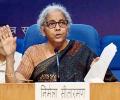
'When the government wants to sell these assets, even if one set of assets gets caught in any quagmire, the whole process will fail.' 'The entire world is watching us.'
 © 2026 Rediff.com - Investor Information - Advertise with us - Disclaimer - Privacy Policy - Sitemap - Feedback - About us - Terms of use - Grievances