
Fitch Ratings on Monday said the shock to economic activity from the latest wave of COVID-19 pandemic will be less severe than the one in 2020, but recovery is likely to be delayed as economic activity dropped in April-May. The global rating agency said there are growing indications that the latest wave of COVID-19 infections will add to risks among financial institutions (FIs) and anticipates that the Reserve Bank of India (RBI) may introduce additional measures to support the financial sector if indications of economic stress mount.

A liquidity crunch has hit several microfinance institutions with the flow of funds 'temporarily' drying up after the largest MFI lender, ICICI Bank, halted payments in early January.
What is the basis of the belief that RBI, which has performed its regulatory task extremely well since independence, cannot regulate microfinance organisations, while NABARD can do so?

Tamal Bandyopadhyay discusses his latest book Bandhan: The Making of a Bank at Bandhan headquarters in Kolkata.

"People forgot about income for farmers. But for the first time, this thinking has been changed," he said and listed steps the Centre has taken for the welfare of farmers.

To help revive the economy battered by COVID-19, Finance Minister Nirmala Sitharaman on Monday announced a slew of measures, including Rs 1.1 lakh crore credit guarantee scheme for improving health infrastructure, and enhancing the limit under the ECLGS by 50 per cent to Rs 4.5 lakh crore for the MSME sector facing liquidity crunch. Sharing the details of stimulus package, the finance minister said this comprises eight relief measures and other eight measures to support the economic growth. She announced Rs 1.1 lakh crore loan guarantee scheme for COVID-affected sectors, including health sector, which includes guarantee cover for expansion or for new projects. Besides, she said, additional Rs 1.5 lakh crore limit enhancement done for Emergency Credit Line Guarantee Scheme (ECLGS) scheme.
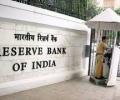
The RBI Governor also reiterated his reservation against repeated loan waivers by various state governments, saying the move distorts credit pricing, thereby also disrupting the credit market.

Rating agency ICRA on Wednesday revised down its credit growth outlook for banks to 2-3 per cent for the current fiscal, and said the coronavirus pandemic-driven stress may leave 3.1-3.7 per cent of assets into bad loan list by March.

This recognition is a testimony of India's strong belief in promoting entrepreneurship

Among the gainers, microfinance player Ujjivan Financial Services which made its stock market debut in May has seen the biggest rally in its share price.

These banks need to build a significant deposit base to start full-fledged banking.
Ending days of suspense, the Reserve Bank on Wednesday granted banking licences to infrastructure financing firm IDFC and microfinance institution Bandhan from among 25 applicants that included corporate heavyweights ADAG Group, Aditya Birla Group and Bajaj Group.

Licence winners are expected to be announced by the first quarter of 2014.
A large number of these applicants are already employed in top positions at public- and private-sector banks, say sources at Bandhan.
Bandhan has a strong presence in India's under-banked eastern and northeastern regions.
Bandhan plans to stick to its Grameen model, creating a unique hybrid model of banking.
What sets Bandhan apart is the roots it has in the world of the rural poor.

The Reserve Bank of India (RBI) has clarified that loans which have remained standard without any defaults as of March 1, 2020, will be eligible for restructuring under the pandemic-related resolution framework issued in August.

While the total disbursement of housing loans by PSBs as well as HFCs witnessed a deceleration in 2016-17, there was significant growth for the lower slabs

What is it about Arohan that puts it in the top league of microfinance institutions in the country?

The company is set to be India's first microlender to become a bank

'We are very watchful about inflation and growth. But the main challenge is economic revival and growth.'

In the 12-month cycle starting July 2013 and ending June 2014, World Bank had made financial commitments close to $5.2 billion in India.
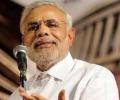
As many as 75 million households that do not have access to banking services will be covered and at least one bank account opened for each household, against the earlier proposal of two.

Digital lending apps extend small amounts at exorbitant rates. Payment delays invite messages to customer or close family members, often with sensitive information such as Aadhaar and PAN Card scans.
Esops are considered perquisites from a taxation perspective. If you are employed with the company at the time of exercising, then the perquisite amount would be added to your salary and subject to tax deducted at source as per the slab rate applicable.

How much will the banks' bad assets grow in March? It could be anywhere between Rs 1.2 trillion and Rs 2 trillion, observes Tamal Bandyopadhyay.
The committee said that to qualify as an NBFC-MFI, an NBFC should provide financial services predominantly to low-income borrowers.
PE/VC investors keen on bolder bets in sect#8744 rise in investment enquiries, growth

Morgan Stanley removed banking stocks from its model portfolio when it slashed its weighting on the sector by 500 basis points. Several foreign brokerages, such as UBS, JP Morgan, and Credit Suisse, of late, have also become less optimistic about banking stocks.
The government has released the draft Micro Financial Sector (Development and Regulation) Bill, 2011, which seeks to make it mandatory for all microfinance institutions to be registered with the Reserve Bank of India, making it the sector regulator.

The coming years could be exciting for Bandhan Bank, IDBI Bank, IDFC First Bank, Federal Bank, and CSB Bank.
After micro finance, micro housing is becoming a buzz word. The sector is not only attracting domestic companies, but also luring foreign financial service firms and institutional players.

For non-banks, the IL&FS crisis was nothing short of India's Lehman moment, which has for a foreseeable future reset the sector on multiple grounds.

According to a report by rating agency Fitch, different sets of regulations imposed by different regulators may result in an uneven playing field.

A bunch of CEOs in their mid-30s and early 40s are trying to rectify the scenario where shady lending applications trap hapless borrowers with astronomically high interest rates and even bodily harm if the money was repaid. Anup Roy reports.

There are allegations that MFIs are charging exorbitant interest rates and using strong-arm tactics to recover the loans.

The finance ministry's plan to offer basic banking licences may find few takers because of doubts over the commercial viability of the proposed business model.
An eclectic mix of Radias, Ambanis and Akulas hogged the headlines this year, with many an unfolding plot promising eventful corporate tales in 2011.

The niche banks - small finance and payments banks -have been set up to further the regulator's objective of deepening financial inclusion.
 © 2026 Rediff.com - Investor Information - Advertise with us - Disclaimer - Privacy Policy - Sitemap - Feedback - About us - Terms of use - Grievances