
Healthcare major Max Healthcare Institute delivered a healthy performance in the second quarter (July-September) of 2025-26 (Q2FY26). Strong patient volumes and average revenues not only boosted the top line but also aided the operating performance.

The fiscal tilt towards capex benefits companies in investment-related sectors like capital goods, defence equipment, engineering & construction and metal & mining. The planned cut in revenue expenditure will weigh on companies in consumption sectors like FMCG, consumer durables and retail.

Shares of healthcare services major Max Healthcare Institute have gained over 23 per cent since the start of this month and the stock crossed the Rs 1 trillion mark on September 24. On September 25, it closed 989.85 apiece at the NSE. The gains were cornered on the back of a strong outlook for the sector and aggressive expansion plans for the chain led by acquisitions and organic growth.

To handle the sudden loss of cashless facility, patients should maintain an emergency fund or a short-term credit line to manage all or part of hospitalisation costs.

While Q2FY26 is expected to be mildly disappointing for the hospital sector, there's a lot of investor optimism for the future. This comes after a favourable revision in rates for Central Government Health Scheme (CGHS) procedures, as well as expectations of rising occupancy and growth in average revenue per operating bed (ARPOB).

Max Healthcare on Monday announced investing around Rs 425 crore (Rs 4.25 billion) during 2004-05 for setting up six hospitals in the National Capital Region.

Revenues from Bangladeshi patients have declined by 30% to 35% in 2024-2025. Bangladesh typically accounts for 70% to 75% of all medical visas issued by India.
Max Healthcare Ltd said on Thursday it would invest Rs 250 crore (Rs 2.5 billion) in the next three years on expansion to take the total bed capacity to 1,500.

'Cancer incidence is projected to increase by 12.8 per cent by 2025 compared with 2020, necessitating more dedicated cancer treatment centres and specialised beds.'
Private sector arm of the World Bank, IFC will invest Rs three billion in Max Healthcare over next four years through purchase of equity and preference shares to fund the company's capacity expansion.

Leading chains plan Rs 40K crore infra revival to close capacity gap over next 3-5 years
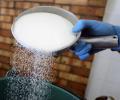
The Central Board of Secondary Education (CBSE) has directed schools to set up dedicated 'Sugar Boards' to raise awareness about sugar consumption and combat childhood obesity. Experts hail the initiative as a significant step towards promoting healthier dietary habits among students and families. The boards will display information on the sugar content in common snacks, drinks, and meals, helping children make informed choices. This move comes as data reveals alarmingly high sugar intake among Indian children, exceeding the World Health Organization's recommended limits.
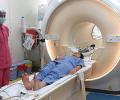
According to a recent CareEdge Ratings report, Bangladesh accounts for around 50-60 per cent of India's total medical tourism inflow

As a part of the Max Medical Scholarship Programme, 100 deserving MBBS students will receive sponsorship for their annual tuition fee along with laptops, books and a stipend for monthly expenses.
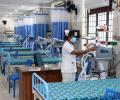
'Every hospital now tracks length of stay closely.' 'More efficiency is brought into the system now.'

All the affected people have been shifted to a quarantine facility in East Block of Max Hospital, Saket in south Delhi, sources said.

Three big private hospital chains -- Apollo, Fortis and Max -- on Friday announced the launch of Covid-19 immunisation drive for the 18-44 age group at limited centres in the country from May 1 while the Delhi government said it will start the vaccination exercise once it receives doses from the manufacturers.

The decision was taken after a meeting of the Max Healtcare authorities in connection with the incident.

The Indian equity market has been dancing to the tune of foreign portfolio investors (FPIs) for more than two decades now. Typically, when FPIs are net-buyers on Dalal Street (D-Street) and raise their ownership of Indian equities, the broader market rallies. Conversely, when FPIs turn net-sellers, the stock prices decline. FPIs have been net-sellers on D-Street for five quarters on the trot and the result has been predictable.

Major hospital chains such as Max Healthcare, Apollo and Fortis are going online in a big way, to extend their operations into smaller towns and cities.

The three-member panel in its report said that no ECG tracings were done to check if the child was alive. The body was handed over without written instructions.
Warburg Pincus on Monday enhanced its stake in Max Healthcare to 23 per cent with a second round of investment of Rs 115 crore (Rs 1.15 billion).
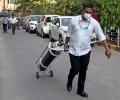
As India continued to record a huge number of new COVID-19 infections, hospitals in the national capital and other major cities complained of 'dangerously low' levels of oxygen that is needed for critically ill patients. The situation has been made worse by states that house oxygen manufacturing units restricting inter-state supplies.

Jaipur Golden Hospital said it has over 200 patients and they had only half-an-hour of oxygen was left at 10:45 am.

The appointment is effective from February 16, 2012, following formal approval from the Board of Vodafone India.

After missing the Dave Schultz Cup due to a shoulder injury, star Indian wrestler Sushil Kumar is now eyeing a return at the Asian Wrestling Championships starting from April 18 to 22.

The donor had recovered from the infection three weeks ago and again tested COVID-19 negative at the time of donation along with other standard tests to rule out other infections.

The sub-group constituted by the Supreme Court to audit Oxygen consumption in hospitals in national capital during the second wave of COVID-19 said that the Delhi government 'exaggerated' the consumption of oxygen and made a claim of 1140 MT, four times higher than the formula for bed capacity requirement of 289 MT.
A government doctor said hospitals in Delhi are wary of admitting more patients amid a serious shortage of oxygen in the city.

Hospitals and state-owned insurers will take a few more days to reach a deal on resuming cashless mediclaims in all city hospitals.

The move came after a three-member inquiry panel of the government submitted its final report to Health Minister Satyendar Jain, who described the incident as 'not acceptable'.
A panel formed by the Delhi government to look into the case on Tuesday found Max Hospital guilty of not following prescribed medical norms in dealing with newborn infants.

"Zero is an unlikely figure. The virus is mutating and it is difficult to predict it's future behaviour,

"Lives of another 60 'sickest' patients at risk. Major crisis likely," he said.
Ranbaxy chief Malvinder Singh and Max Healthcare chairman Analjit Singh on Monday said they have reached a settlement on the will of Ranbaxy founder Bhai Mohan Singh and decided to withdraw all cases against each other.
A report of five-member sub-group constituted by the Supreme Court to audit oxygen use in hospitals in the national capital during the second wave in April-May said the Delhi government "exaggerated" consumption of oxygen and made a claim of 1,140 MT, four times higher than the formula for bed capacity requirement of 289 MT.

The sub-group constituted by the Supreme Court to audit oxygen consumption in hospitals in the national capital during the second wave said the Delhi government "exaggerated" the consumption of oxygen and made a claim of 1,140 MT, four times higher than the formula for bed capacity requirement of 289 MT.

The bench said the Union Cabinet Secretary will be the convenor of the task force and may nominate an officer not below the rank of Additional Secretary to depute for him, when necessary.
 © 2026 Rediff.com - Investor Information - Advertise with us - Disclaimer - Privacy Policy - Sitemap - Feedback - About us - Terms of use - Grievances