
US think tank Lisa Curtis talks about the Pakistan polls and its aftermath.

Lisa Curtis, who served as deputy assistant to President Trump and as National Security Council senior director for South and Central Asia from 2017 to 2021, said she expected the same bumps for India and the US, as in Trump's first term, including tariff, dependence on Russia over arms supply and oil purchase from Iran. Curtis, however, said both countries could never enter an alliance but develop a partnership that is "short of an alliance". She hoped them to achieve a cooperation that deters China, but also prepares both countries in case of a crisis or conflict, be it in the Taiwan Strait, the South China Sea, or another flare-up on the India-China border.
Lisa Curtis, the head of conservative Heritage Foundation's South Asia Program analyses the Obama visit to India in conversation with Aziz Haniffa.
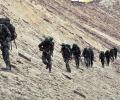
The report said that Indian officials believe China is trying to contain India by forcing it to divert more resources into defending simultaneously both its western border with Pakistan and eastern flank with China and by weakening its willingness and ability to challenge Chinese ambitions to dominate the region.

US Secretary of State John Kerry's current visit to India will set the tone for cooperation between the two countries over the next few years, especially in key areas of shared interest like managing the security risks associated with China's rise and the stabilisation of Afghanistan, notes Lisa Curtis.
Unless Pakistan's military leaders awaken to the dangers that lie ahead from the Islamist extremist threat, it may eventually overwhelm the Pakistani state, warns Lisa Curtis
The pathetic failure of United States' policy in Pakistan is evident by the fact that more than 10 years after the 9/11 terror strike, terrorist groups based in Pakistan continue to operate with impunity, according to Lisa Curtis, a former Central Intelligence Agency official and currently the head of the South Asia Programme at the Heritage Foundation. She argued, "The 9/11 attacks should have crystallised our policy in different ways,".
Pakistan missed a valuable opportunity to create goodwill with the United States and other North Atlantic Treaty Organisation members when it failed to announce a reopening of NATO supply routes to Afghanistan at the summit held Sunday and Monday in Chicago, says Lisa Curtis.
The United States and India need to stop being suspicions of each other's intentions and deepen intelligence sharing if they are to effectively combat terrorism, a leading South Asia expert and erstwhile Central Intelligence Agency analyst has told the US Congress.
'The US should make clear to Pakistan that, whether or not the attack originated in Pakistan, now would be an opportune time to move ahead with the prosecutions of the LeT members involved in the 2008 attacks.'
South Asia watchers are mixed in their opinion about whether the exposure of the Pakistani Inter Service Intelligence's incestuous relationship with the Taliban would result in the Obama administration coming down hard on Pakistan's double-game.
US is highly unlikely to relent in its drone campaign since the tactic has proven to be the most effective tool to destroy Al Qaeda's leadership, says Lisa Curtis
The United States should pursue robust strategic and military engagement with India to limit China's geopolitical horizons and encourage a stable balance of power in Asia, two noted American scholars said on Tuesday.
American and Indian leaders will hold their third round of strategic dialogue talks in Washington, D.C., this week amidst growing concern that the US-India relationship is failing to live up to what US policymakers expected from it seven years ago, when the civil nuclear deal was first unveiled, writes Lisa Curtis.
Experts comment of the ignominy Pakistan will have to face in the days to come in the aftermath of Osama bin Laden's killing
Experts in Washington, DC warn about the potential hazards of a State Department official's recent assertion on a greater Chinese role in South Asia.
Former Central Intelligence Agency South Asia analyst, Lisa Curtis, now a Senior Fellow at the Heritage Foundation, recalled how in 1995, when she served in Islamabad as a diplomat, the Pakistan-based terror groups that were funded, armed and supported by the Inter-Services Intelligence specifically to launch attacks in Kashmir against Indian security forces, also had strong links to the Taliban.
Lisa Curtis, erstwhile Central Intelligence Agency South Asia analyst and ex-senior Congressional staffer on the powerful Senate Foreign Relations Committee, has said that the arrest and findings from the investigation of Chicago-based Pakistani-American Lashkar-e-Tayiba operative John Coleman Headley, has awakened US officials to the gravity of the threat of the LeT and other Pakistan-based terrorist groups.
Curtis, who was the lead panellist at a conference at The Brookings Institution titled, The US-India Nuclear Agreement: Expectations and Consequences,' said, "During the Bush Administration, US officials broke the habit of viewing India solely through the India-Pakistan lens. Washington developed a greater appreciation for the Indian democratic miracle and viewed our shared democratic principles as the bedrock for a broader strategic partnership."
While the Pentagon has asserted that the US is "comfortable" over the safety and security of Pakistan's nuclear weapons arsenal and Islamabad has rubbished a report that militants attacked its nuclear facilities at least three times, an erstwhile CIA analyst has argued that what should elicit more concern among the international community is terrorists in Pakistan acquiring material for a "dirty bomb".

An expert on South Asian affairs has said that the US can pursue, support and encourage Pakistan in its transition from tolerating to fighting the various militant groups on its territory, with the help of four policies.
President-elect Barack Obama has been told to refrain from promoting the idea of direct US mediation between India and Pakistan over Kashmir by senior American analysts, who say any such move could backfire.Such a mediation "could backfire by raising unrealistic expectations for a favourable settlement among Pakistanis, thereby fuelling Islamabad's support for militants in hopes of pushing a hard-line agenda," stated analysts Lisa Curtis and Walter Lohman.

The large turnout of voters in the Afghan presidential elections despite threats from militant groups is a blow to Taliban, eminent South Asian experts have said.

"We saw this when they to tried scuttle at the last minute, the civil nuclear deal at the Nuclear Supplier Group meeting last year and so that was sort of an indication that China is not completely comfortable with India's rise on the world stage," said Lisa Curtis of the Heritage Foundation.
On fuel assurances for India, they said ensuring that the US maintained the right of recapture the ability to demand back any US-origin nuclear fuel or technology -- in the event of a future Indian nuclear test was an important part of the agreemen

Within 24 hours over the weekend, two major terrorist attacks by Islamist extremists occurred in different parts of the world. In Kenya, military forces are still fighting terrorists holed up in a shopping mall in Nairobi, where nearly 60 civilians already have been killed. In Pakistan, over 80 were killed in a dual suicide bomb attack following a Sunday morning church service in the northwest city of Peshawar.

One Congressmen said the Uri terror attack along with the bombings in New York and New Jersey "demonstrate our need to continue to work together through our" counter-terrorism partnership to defeat terrorism.

'The crisis has strengthened America's resolve to work towards building its relationship with India as a bulwark against Chinese aggression'

'It is highly doubtful that the Trump administration will consider inserting itself into the volatile India-Pakistan dispute.'

'India should be aware that China will take full advantage of US domestic turmoil and reduced international prestige,' warns Colonel Anil A Athale (retd).

To mark Prime Minister Modi's seventh meeting with Obama and his historic joint address to US Congress -- the sixth Indian PM to do so -- India Abroad, the newspaper published from New York and owned by rediff.com, reached out to diplomats and strategic thinkers in New Delhi and Washington, DC, to assess the current state of the US-India relationship and suggest a road map for the future.

References to Balochistan, Gilgit and Pakistan-occupied Kashmir by Prime Minister Narendra Modi signals a change in India's Pakistan policy, top American experts on South Asia have said as they sought more clarity on New Delhi's new approach towards disturbed areas in Pakistan.

The strategic alliance between China and Pakistan is primarily driven by their rivalry with India, eminent US experts have said, with one of them expressing concern over Sino-India border tensions.
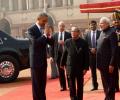
'We are no longer striving for a strategic partnership. We have arrived at one.'

"Japan will participate in MALABAR this year which is our largest bilateral naval exercise with India and it's scheduled to take place at the end of this month," Deputy Assistant Secretary of Defense for South and Southeast Asia Amy Searight told lawmakers during a Congressional hearing on Thursday.
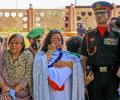
'The Delhi-Washington stalemate can end only if India's concern over trans-border terrorism is addressed.' 'The Indian security establishment expects a spike in terrorist attacks in the months ahead.' 'And there is every likelihood that India may retaliate against Pakistan at some point,' observes Ambassador M K Bhadrakumar.

Since the US and India broadly share similar interests in Sri Lanka, they should coordinate closely to ensure that the country preserves its democratic institutions, says Lisa Curtis
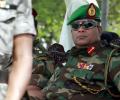
'Clearly, Washington has all but given up hope following US Acting Assistant Secretary of State Alice Wells's stormy visit to Colombo last month where she read the riot act to Sri Lankan leaders to sign the pending status of forces agreement allowing American troops to use Sri Lanka as a hub for operations in the Indian Ocean,' points out Ambassador M K Bhadrakumar.
"The incident involving India's deputy consul general was outrageous, deplorable and inexcusable. Period. Full stop."
 © 2026 Rediff.com - Investor Information - Advertise with us - Disclaimer - Privacy Policy - Sitemap - Feedback - About us - Terms of use - Grievances