
It's easy to say investors should focus on fundamentals but this risk can have a significant and lasting impact

'Modi must keep his members in check or risk losing domestic and global credibility,' Moody's warned.

His view will be shaped by his perception of US world interests and India's economic performance relative to China.

Bold reforms and prudent monetary and fiscal policies by the incoming Narendra Modi government will help the economy to grow at 6.5-7 percent, says a report.

Make in India has big shortcomings when it comes to natural resources.

The government must realise that it has very little time to recover itself, its reputation, its legacy - and India's fortunes,says Mihir S Sharma.

The fate of Sunday's intriguing European Championship final between France and Portugal weighs largely on two men wearing the number seven shirt, one already at the top of the game and the other one getting there fast.

'Will people who buy iPhones stop buying iPhones to help swadeshi models?' 'There should be some advantage for the consumer to make them buy a Made in India product.' 'Patriotism and nationalism are good words, but in business, it won't work.'

India's political infighting is denting business confidence.

There may be some losers as well as winners. And those who lose their jobs to the new technology will soon find other employment, says Martin Feldstein.

The new entrants are young, enterprising Chinese men and women who want to tap into the promising Indian market.

The RBI must cut rates to spur growth, say experts.

The past few weeks have seen several hundred people let go of by IT services firms joining unions claiming to represent tech workers fighting for their rights.

The United States has hoped that the major diplomatic row over the arrest of the Indian Deputy Consul General in New York will not affect bilateral ties with India. In a major diplomatic embarrassment to India, 39-year-old Devyani Khobragade, a 1999-batch IFS officer, was taken into custody on Thursday as she was dropping her daughter to school and handcuffed in public on visa fraud charges before being released on a USD 250,000 bond after pleading not guilty.

Manish Sabharwal tackles 5 criticisms of demonetisation.
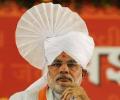
The problems facing India and its economy are far too severe and deep to be fixed in 100 days, and an excessive focus on the first 100 days might have indicated that the government had failed to understand that.

A minor fix in tax laws can make start-ups bloom, says Ajit Balakrishnan.
A minor fix in tax laws can make start-ups bloom, says Ajit Balakrishnan.

The prime minister's August 15 address was undoubtedly inspirational and outlined important economic and social objectives, such as making India a global hub for manufacturing, ensuring bank accounts for all poor families, major thrusts in sanitation and cleanliness, and a radical restructuring of the Planning Commission.

Buoyed by government retreating on the land ordinance, Congress President Sonia Gandhi on Tuesday attacked Prime Minister Narendra Modi saying he has been "reduced to unedifying flip flops" and most of his poll promises were nothing more than "hawabaazi" (empty talk).

Workers being laid off will be entitled to full wages of 45 days for every year of service.

The Prime Minister also underscored the importance of public sector undertakings in the country.

So, what does 2016 have in store for the Indian markets? Will they be able to take a giant leap forward in the leap year, and what are the key risks?
.jpg)
The year 2014 was one of the most challenging years for India. For two consecutive years our GDP growth was sub 5 per cent. Employment generation had declined, the revenue buoyancy was low and the country had become investment starved.

The days of 365-days-a-year, eight-hours-a-day employment are pretty much over, especially as an attractive political promise.

''We have a very difficult period ahead of us.' 'Fortunately we have a popular government and a popular leader who is ideally placed to take us into confidence,' says Aakar Patel.

Make in India right now is just a slogan. The policy content is missing or not clearly articulated. The lion with cogs and wheels must now show some majestic movement forward, says Rahul Khullar.

'Concerns about India's future are hampering private investment.' 'If the private sector sees strategy, teams and execution on these issues, this will inspire confidence in India.' 'This should be our main strategy for 2017,' says Ajay Shah.

This Budget will be a litmus test of the government's resolve to ensure Make in India strategy works
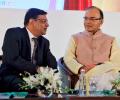
'Who would want to be the man nominally in charge of driving the economy when your boss orders you to swerve it into a ditch of unknown depth?'
'Demonetisation demonstrates that this government is simply too amateurish in terms of economic policy-making to properly address India's deep, deep problems,' argues Mihir S Sharma.

Lamenting that children were not a "political priority" in the country, Nobel laureate and child rights campaigner Kailash Satyarthi on Friday appealed to the Centre to implement the toughest law to put an end to their exploitation.
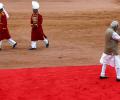
Reforms under the Modi government will maintain a slow and tentative pace, constantly wary of political opposition. It may not be reform by stealth, but it is reform on the quiet, says A K Bhattacharya.
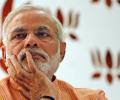
The next general election is more than three years away. Yet, the Centre appears to be reluctant to take any bold move that might annoy influential sections of the electorate.

The Economic Survey called for improving business environment.

Local businesses are fretting over reform setbacks.

Sangh affiliates believe the government's apparent anti-poor message led to their loss

The strategies that the gurus adopted to build their successful business empires over the past two decades could hardly be adopted by businesses that openly claim to be businesses, points out Somasekhar Sundaresan.

Perhaps half-way through India's demographic transition, what is the outlook for the future?

As many as 82 per cent of child workers in the national capital said that given an opportunity, they would not like to attend school
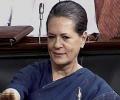
The Congress on Tuesday tore into the agenda outlined by President Pranab Mukherjee in his address saying it is repackaging of work done by the United Progressive Alliance and asked the Narendra Modi government to implement the promises made without trumpeting and "arrogance".
 © 2026 Rediff.com - Advertise with us - Disclaimer - Privacy Policy - Sitemap - Feedback - About us - Terms of use - Grievances