
The Supreme Court of India has directed the central government to establish a no-fault compensation policy for individuals who experience serious adverse events after receiving a COVID-19 vaccine.

Questioning senior advocate Raju Ramachandran who appeared for Gandhi, the bench said, "You said the court should be circumspect in its remark but have you asked your client what kind of remarks she has made? Have you heard her podcast? She has made all kinds of remarks against everybody without even thinking. Have you seen her body language?"

The Supreme Court declined to intervene in allegations of harassment against women dog feeders, stating it's a law and order issue. The court is hearing arguments in the stray dogs case and addressed concerns about unregulated breeding and exotic imports.

The Supreme Court of India has expressed concern over the lack of implementation of stray animal norms and indicated it will direct state governments to pay significant compensation for dog-bite incidents. The court also suggested holding dog feeders responsible for attacks.

The Supreme Court has suggested that the National Highway Authority of India (NHAI) consider establishing gaushalas (cowsheds) under Corporate Social Responsibility (CSR) to care for stray animals entering highways. The court also expressed dissatisfaction with several states' efforts to manage stray dog populations and suggested developing an app to report stray animal sightings.
The Supreme Court clarified that it has not ordered the removal of all stray dogs, but rather that they should be treated according to Animal Birth Control (ABC) Rules. The court heard arguments on the issue, addressing concerns about rodent populations, hospital safety, and the implementation of existing regulations.

The Supreme Court expressed concerns over the dangers posed by stray animals, including dog bites and accidents, and urged civic bodies to strictly enforce rules and regulations. The court is hearing pleas for modification of its earlier orders related to the issue.

The Supreme Court has questioned the NIA regarding the detention of Kashmiri separatist leader Shabir Ahmed Shah in a terror funding case, asking the agency to justify his detention for over six years.
The Supreme Court questioned petitioners who challenged the accuracy of India's COVID-19 vaccine adverse effect data, suggesting they unduly trusted UK figures. The court heard arguments about alleged deaths due to the Covishield vaccine and reserved its order.
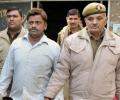
The Supreme Court of India has acquitted Surendra Koli in one of the Nithari murder cases, paving the way for his release. Koli was earlier acquitted in other Nithari killing cases.

The Supreme Court expressed serious concern over custodial deaths, calling it a 'blot' on the system. The court is pushing for compliance with orders to install CCTV cameras in police stations and central investigation agencies to curb human rights abuses.

The Supreme Court said it would hear in 2026 the plea of Tamil Nadu Deputy Chief Minister Udhayanidhi Stalin for clubbing all FIRs and complaints over his contentious "eradicate Sanatan Dharma" remarks in 2023 and transfer to one place.

The Supreme Court on Friday dismissed a plea challenging the Karnataka government's decision to invite International Booker Prize winner Banu Mushtaq to inaugurate Mysuru Dasara this year.

The Supreme Court told actor and BJP MP Kangana Ranaut that she had "added spice" to a retweet during the 2020-21 farmers' protest, leading her to withdraw her plea for quashing a defamation complaint.
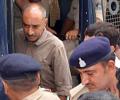
The Supreme Court of India has dismissed the bail plea of former IPS officer Sanjiv Bhatt, who was convicted and sentenced to life imprisonment in a 1990 custodial death case. The court ruled that there was no merit in his plea for bail or suspension of sentence. Bhatt, along with co-accused Pravinsinh Zala, was found guilty of murder, voluntarily causing hurt, and criminal intimidation by the Gujarat High Court in 2024. The case stems from the death of Prabhudas Vaishnani, who was detained by Bhatt following a communal riot in Jamjodhpur in 1990. Vaishnani's brother alleged that Bhatt and other police officers tortured him in custody, leading to his death.

A bench of Justices Vikram Nath and Sandeep Mehta also restored the destruction of evidence charge levelled on deputy commissioner of police Parampal Singh for directing the removal of the number plate of the car after the firing incident in 2015 in which a driver was killed.

The Supreme Court of India has made public the asset details of its judges, including Chief Justice Sanjiv Khanna who has Rs 55.75 lakh in a fixed deposit, a three-bedroom DDA flat in south Delhi, and a four-bedroom apartment measuring 2,446 square feet in the Commonwealth Games Village. The court has also uploaded the complete process of appointments to the high courts and the Supreme Court on its website for public awareness.

The Supreme Court on Friday said the plea seeking a policy for verification of electronic voting machines should go before the same bench that delivered a verdict in April rejecting the demand for bringing back the old paper ballots.

The Centre and the National Testing Agency (NTA) had on Thursday told the Supreme Court they had cancelled the grace marks given to 1,563 candidates who took the examination for admission to MBBS and other such courses.

It is for the first time in the history of the apex court that nine judges took oath of office at one go.

The CJI's announcement made in the apex court assumes significance in the wake of Union Law Minister Kiren Rijiju's statement in Rajya Sabha on Thursday in which he said there was a feeling among the people that long court vacations were not very convenient for justice seekers.

A bench of Justices B R Gavai and Vikram Nath asked the Centre to furnish details of the experts in the task force who specialise in cheetah management, their experience and qualification within two weeks.

The Gujarat high court on Thursday put a stay on the operation of some sections related to interfaith marriages of the state's new anti-conversion law.

The Gujarat high court on Thursday turned down the state government's plea seeking rectification of its recent order in which it stayed the operation of section 5 of the new anti-conversion law.

Sonowal said the judgement is a reflection of India's democratic values where human rights and fairness are respected.
 © 2026 Rediff.com - Investor Information - Advertise with us - Disclaimer - Privacy Policy - Sitemap - Feedback - About us - Terms of use - Grievances