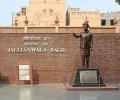
Former Supreme Court judge Justice Rohinton Nariman has warned that events similar to the Jallianwala Bagh massacre could occur if the 'basic structure' doctrine of the Constitution is diluted. In his new book, 'The Basic Structure Doctrine: Protector of Constitutional Integrity,' Nariman argues that the 1973 Kesavananda Bharati judgment, which established the doctrine, is essential for protecting fundamental rights and preventing constitutional amendments that could lead to such tragedies. Nariman's concerns are echoed by Supreme Court judge Justice K V Viswanathan, who applauds the book for its "chilling clarity" and underscores the importance of the Kesavananda Bharati ruling. The book provides a detailed analysis of the doctrine and its implications, highlighting the robustness of the Kesavananda Bharati judgment and the lack of a compelling alternative theory.

"Day in day out there exists a misconception in the minds of people that judges stay in big bungalows, work only 10 AM to 4 PM and enjoy their holidays. Such a narrative is untrue," Chief Justice N V Ramana said on Thursday while paying glowing tributes to Justice Rohinton Fali Nariman on his superannuation after over seven years at the Supreme Court bench.

The former woman employee of the apex court, who has levelled the sexual harassment allegations, has opted herself out from participating in the enquiry.
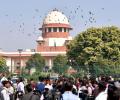
Besides the CJI, the seniormost judge, Justice N V Ramana, and justices R F Nariman, U U Lalit, A M Khanwilkar, D Y Chandrachud, Ashok Bhushan and L Nageswara Rao would deal with the PILs and social justice matters, usually involving the Centre and the states, and their instrumentalities as opposite parties.

Aadhaar-related schemes and the Aadhaar Act exist on the assumption that Right to Privacy is not a Fundamental Right.

A bench headed by Justice P C Ghose said the appropriate bench comprising him and Justice R F Nariman will be hearing the matter on Thursday. Justice Nariman was not present in the court on Wednesday.

The 97th constitutional amendment, which dealt with issues related to effective management of co-operative societies in the country was passed by Parliament in December 2011 and had come into effect from February 15, 2012. The change in the Constitution has amended Article 19(1)(c) to give protection to the cooperatives and inserted Article 43 B and Part IX B, relating to them.
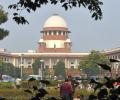
The Supreme Court on Monday termed as 'amazing' and 'shocking' that people are still being booked under the Section 66A of the Information Technology Act, which was scrapped by the apex court verdict in 2015.

The Supreme Court of India on Friday ruled in favour of e-commerce giant Amazon by holding that Singapore's Emergency Arbitrator (EA) award, restraining the Rs 24,731 crore merger deal of Future Retail Ltd (FRL) with Reliance Retail, was valid and enforceable under Indian laws.

'Let every person remember that the 'holy book' is the Constitution, and it is with this book in hand that the citizens of India march together as a nation, so that they may move forward in all spheres of human endeavour to achieve the great goals set out by this 'Magna Carta' or Great Charter of India'

A majority verdict by Chief Justice Ranjan Gogoi and Justices A M Khanwilkar and Indu Malhotra decided to keep pending the pleas seeking a review of its decision regarding the entry of women into the shrine, and said restrictions on women in religious places was not restricted to Sabarimala alone and was prevalent in other religions as well.
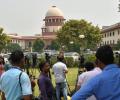
In an unprecedented order to check criminalisation of politics, the Supreme Court on Tuesday held nine political parties including the ruling BJP and JD (U) in Bihar guilty of contempt and fined eight of them for violating its February, 2020 order on publication of criminal antecedents of their candidates for the assembly polls.

A bench comprising Justices P C Ghose and R F Nariman asked all the parties in the case to file their written arguments by April 6 and posted the matter for further hearing on April 7.

A bench of Chief Justice Dipak Misra and Justice R F Nariman framed five questions to be adjudicated on by the Constitution bench.

If the apex court agrees to hear the petitions challenging the removal of Article 370, it would be interesting to see if there is an immediate status quo on further proceedings or if it will decide after hearing all the petitions, reports Aashish Aryan.
The CJI has also kept with himself matters concerning arbitration, habeas corpus, criminal cases, contempt of court and ordinary civil matters.
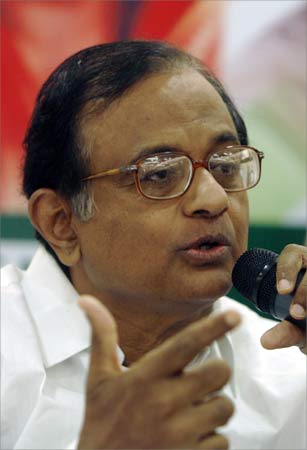
Congress leader P Chidambaram on Tuesday welcomed the Supreme Court judgement

The Congress admitted that the Section 66A of cyber law was poorly drafted

During the hearing, Solicitor General Tushar Mehta, appearing for the Centre, said that meaning of Sanskrit 'shlokas' is a universal truth and merely because it is written in Sanskrit, it does not make it communal.

The apex court said banning entry of women to Kerala's Sabrimala temple is gender discrimination and the practice violates rights of Hindu women.
The state govt said that celibate status of deity cannot be a ground for barring entry of women.
The apex court struck down Section 497 of the Indian Penal Code dealing with the offence stating it was archaic and violative of right to equality.

'The nine judges with all their convictions, wisdom, intellectual girth and enlightened debate have not just stood up to the government but disempowered the State in favour of the people,' says Maheshwar Peri.

A nine-judge Constitution bench, headed by Chief Justice J S Khehar, heard marathon arguments for six days over a period of three weeks and reserved its verdict on the issue whether right to privacy can be held as a fundamental right under the Constitution.
The court held that the states were not required to 'collect quantifiable data' reflecting the backwardness among these communities.

AG Venugopal asserted that right to privacy could not be bundled as a single right in a developing country like India where a few persons, claiming right to privacy, override the fundamental rights of 60-70 million people, who did not have access to basic amenities like food and shelter.

We don't want 2 gay men holding hands walking on Marine Drive Marine Drive should be disturbed by the police'

In what is the first ever verdict in India on the right to freedom of speech on the Internet, the Supreme Court has scrapped Section 66 A of the IT Act. Justices J Chelameswar and Rohinton F Nariman said that 66 A cannot be properly implemented as governments come and go.

The apex court, however, noted that Rajasthan Governor Kalyan Singh enjoys Constitutional immunity and can be tried only after he ceases to hold the office.
The verdict could impact a range of life choices of Indians, including food habits and sexual orientation.

Biometric authentication is based on the unscientific and questionable assumption that there are parts of human body that does not age, wither and decay with the passage of time.
 © 2026 Rediff.com - Investor Information - Advertise with us - Disclaimer - Privacy Policy - Sitemap - Feedback - About us - Terms of use - Grievances