
Police in Kochi have arrested three directors of an agri-tourism firm accused of defrauding hundreds of investors of over Rs 100 crore through a fake investment scheme.

'It's a changing world and the opening up doesn't mean that concerns with regards to security have gone away.'

Benchmark indices tumbled about 2 per cent on Friday, capping one of the most turbulent weeks for domestic equities as investors fretted that the West Asian conflict could drag on for weeks or even months.

'Except for extremely conservative investors, others can consider allocating 10 to 20 per cent of their portfolio to small caps.'

Households should moderate large discretionary expenses for the time being.
'They should prioritise essential spending. They should maintain an emergency fund covering 6 to 12 months of expenses.'
Indian stock market benchmark indices Sensex and Nifty experienced a significant drop in early trade due to rising crude oil prices, bearish global market trends, and continuous foreign fund outflows.

Indian equity markets experienced a significant downturn, with the Sensex and Nifty plummeting due to rising crude oil prices, geopolitical tensions in West Asia, and continuous foreign fund outflows.

Ask rediffGURU and PF expert Nitin Narkhede your mutual fund and personal finance-related questions.

Foreign portfolio investors (FPIs) withdrew a substantial amount from Indian equities in the first half of March, driven by geopolitical tensions, rupee depreciation, and concerns about crude oil prices.

Their assets under management (AUM) rose from Rs 1.04 trillion (January 31, 2025) to Rs 1.75 trillion (January 31, 2026), an increase of 68.3 per cent.

BJP state general secretary S Suresh defends party leader Shone George's criticism of a Malayalam daily, Deepika, alleging its misuse for political interests ahead of the Kerala Assembly polls. The BJP maintains it respects all religions and aims for equal justice, denying any communal stance.

The BJP has defended its leader Shone George's criticism of a Malayalam newspaper, Deepika, alleging it was favouring the UDF ahead of Kerala's Assembly elections. The party claims it respects all religions and aims for equal treatment.

Ask rediffGURU and tax expert Mihir Tanna your income tax-related questions
A new report, 'India's Sports Startup Ecosystem: Current Status and Emerging Pathways,' was unveiled, offering insights into the sports industry's growth potential, innovation, and opportunities for stakeholders as India prepares to host major international sporting events.

Tata Consultancy Services (TCS) has extended 25,000 offers to freshers for the current fiscal year (FY27), with future hiring decisions contingent on the demand scenario, according to CEO K Krithivasan.

'When we go into the next cycle of bilaterals, we will try to see whether we can get a bigger window, so we can go from 74 to 94 games.'
Foreign investors pulled out Rs 21,000 crore (around $2.3 billion) from Indian equities over the last four trading sessions amid deteriorating global risk sentiment triggered by the West Asia crisis.

The Indian trading and investment space has transformed exponentially in the last few years, and technology plays a pivotal part in how traders engage with the markets. In 2026, brokers are far more than order-execution platforms; they provide several value-added features to market participants to facilitate a data-driven and seamless trading experience.

The biggest risk for investors isn't the market, but their own minds, biases and emotions often lead to poor financial choices.

Share of IPOs opening above issue price drops to 64.6%, median gains shrink sharply amid market volatility.

Indian benchmark stock indices Sensex and Nifty rebounded, closing over 1% higher, mirroring a global equities recovery after recent losses due to geopolitical tensions.

Retiring at 50 is not unrealistic. It simply requires: Discipline + Long-Term Vision + Compounding

Is Bhutan merely experimenting with digital finance -- or is the Himalayan kingdom punching far above its weight, quietly playing one of the most sophisticated strategic games in Asia today? asks Varun Arya.
Indian stock market benchmark indices Sensex and Nifty experienced a significant decline, driven by escalating tensions in the Middle East and rising crude oil prices.

In modern investing, transparency is more valuable than zero fees and not all investing app score big on this front, says Ramalingam Kalirajan.

Ask rediffGURU Reetika Sharma your insurance, mutual fund and personal finance-related questions.

'More than becoming a unicorn, what truly satisfies us is seeing small businesses grow from Rs 10,000 a month to Rs 20 lakh after joining our platform.'

Indian stock market indices Sensex and Nifty experienced a significant decline, driven by rising crude oil prices, sustained foreign fund outflows, and selling pressure in major bank stocks.

India's aviation sector is facing fresh turbulence, with rising fuel costs, the Ministry of Civil Aviation's free-seat directive, and geopolitical disruptions in West Asia clouding near-term earnings visibility.

'We are profoundly energy-dependent on the Gulf. That dependency must now be redirected towards the United States, because we require American permission to procure oil.' 'We additionally require Iranian permission to acquire oil from that source. So India now has to seek two separate permissions merely to secure its energy supply.' 'Should we be compelled to source from America, or from Venezuela -- which is, in effect, American-controlled supply -- that will inevitably carry a price premium, an elevated shipping cost, and a considerably extended delivery timeline, given the distances involved.'

We will explore some of the reasons why a stock-only portfolio may no longer be sufficient and some of the modern alternatives and strategies that can help investors build resilient and profitable portfolios.

Platform-style partnerships between global investors and Indian developers are expected to gain further traction over the next few years. This comes as institutional capital increasingly shifts from one-off asset acquisitions to scalable, long-term strategies.

Indian equity markets experienced a volatile trading day, with the Sensex and Nifty closing almost flat. Market sentiment was influenced by global cues, US-Iran talks, and profit-booking activities.

The National Stock Exchange (NSE) will launch Dated Brent Crude Oil (Platts) futures on April 13, offering a new hedging tool for market participants.

The Indian rupee weakened to a record intra-day low against the US dollar due to a strengthening greenback, continuous foreign capital outflows, and elevated global crude oil prices amidst the West Asia conflict.

Ananya Birla shows her support for Royal Challengers Bengaluru ahead of their IPL 2026 opener, as the team enters a new era under new ownership.

With domestic markets turning choppy, investors are increasingly scouting for opportunities overseas to diversify portfolios and hedge against a weakening rupee.

Rupee slumped 69 paise to an all-time low of 92.18 against the US dollar in early trade on Wednesday, as a sharp spike in crude oil prices amid geopolitical tensions following the escalation of the US-Iran conflict weighed on investor sentiment.

Biocon aims to become the world's leading insulin company, capitalising on larger pharmaceutical rivals' strategic shift towards newer, high-margin GLP-1 diabetes therapies. The company plans to expand its insulin presence across 80 markets, focusing on value maximisation and addressing the indispensable need for insulin, particularly for Type-1 and late-stage Type-2 diabetics.
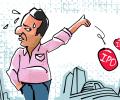
India's equity markets may have expanded rapidly, but initial public offerings (IPOs) are increasingly becoming exit vehicles for early investors rather than as engines for raising long-term capital, a shift that undermines the spirit of public markets, Chief Economic Advisor V Anantha Nageswaran warned on Monday at a CII event.
