
Brazil had the fastest growth compared to the previous year as the demand was up by 17.9 per cent.

International Air Transport Association, which had suspended it from its Clearing House on Wednesday, said Kingfisher has been suspended from participating in the global airline body's Billing and Settlement Plan and Cargo Accounts Settlement System.

Indian aviation has deep-rooted problems that need comprehensive and coordinated solutions, and high aviation turbine fuel pricing is certainly the most urgent.

75 per cent said they would rather go through a full body scanner than have a full pat down.

IATA informed travel agents that they would have to remit the ticket sale proceeds to airlines every week.

According to May results of the International Air Transport Association, Indian domestic traffic rose just 0.1 per cent year-over-year, but fell 2.7 per cent compared to April.

Riding high on the aviation boom, India has built 17 international airports.
Airlines in Asia-Pacific expected to post losses worth $1.1 billion out of a total industry loss of $8.3 billion next year.
The existing system where all airline passengers, barring VVIPs, have to undergo rigorous frisking, the IATA model proposes different levels of screening for passengers based on the level of risk associated with each one of them.

Despite the bullishness associated with India, IATA has flagged taxation and fuel charges as key areas of concern for the aviation industry in the subcontinent, which is among the fastest growing in the world.
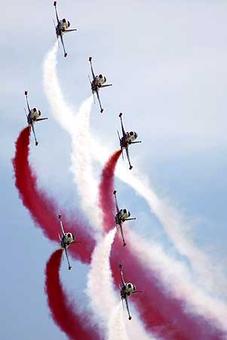
Airlines worldwide will continue to be in the 'red' because of the global meltdown and may take more than three years to recover, an international aviation group said warning that the epicentre of the crisis is now in Asia.
According to the International Air Transport Association (IATA), which represents the majority of airlines operating in the $598 billion industry, the demand for LCCs is expected to rise 4.4 percent over the next year with the Asia-Pacific region growing faster at 6.4 percent.
A volcano named 'Eyjafjallajoekull' has spread havoc across Europe hitting businesses across the world.
The International Air Transport Association (IATA) has termed the service tax charged on air tickets by the Indian government as illegal according to the Chicago Convention.

Though the civil aviation sector accounts for only two per cent of the global carbon emission, the industry has conducted sufficient research on the usage of alternative fuels, from the prospective of both environment and cost.
The forecast represents a 54 per cent fall compared to estimates put out by the trade body in March, and is 78 per cent lower than the $18-billion profit that the industry recorded in 2010.
The government was put on the Wall of Shame at the annual general meeting of the International Air Transport Association in Singapore, along with the European Union Parliament and the governments of the UK, Germany and Austria, for imposing high taxes on air travel.

Over the last five years, Indian domestic market expansion has been the strongest with a tripling in size.
Qatar Airways, which is seeking to deepen its penetration into the Indian market, disputed the International Air Transport Association's projections last week that there might be a drop in air traffic in 2009 following the Mumbai terror attack.
Security can only be guaranteed by making a risk assessment of people before they are even board an aircraft, The Telegraph quoted Giovanni Bisignani, director general of the International Air Transport Association, as saying.

In a letter to US Homeland security secretary Janet Napolitano, IATA's director general Giovanni Bisignani said 'the air transport system cannot support 100 per cent pat-down searches over the long term' even though short-term temporary and extra-ordinary security measures were needed until the immediate threat had abated.
Domestic air traffic demand in India grew by around 14 per cent with the airlines enjoying an average load factor of almost 79 per cent in May compared to last year, even as the global traffic rose by 6.8 per cent.
The new greenfield airports should not charge different user development fee from domestic and international travelers and such charges should be regulated by a regulatory authority, global airlines body International Air Transport Association said on Tuesday.

The 2010-11 Finance Bill, tabled in Parliament, proposed to expand the scope of air transport services 'to include domestic journeys and international journeys in any class' for a 10 per cent service tax.

Airlines in the Asia-Pacific region are expected to corner the maximum profits this year, with the aviation industry's umbrella body IATA projecting a global profit of $8.9 billion in 2010.
In its report, the International Air Transport Association said that in 2009 intra-Asia-Pacific travellers numbered 647 million compared to 638 million who travelled within North America, including domestic markets.
The International Air Transport Association on Tuesday criticised the increase in airport development charges imposed by Mumbai and New Delhi, saying the burden on the already beleaguered global airline industry is a 'wake up call' for the Indian government.
The airlines worldwide may collectively lose a whopping $9 billion in 2009, a key aviation body said in its forecast, nearly doubling its March estimate of $4.7 billion loss, spelling a rapidly deteriorating revenue environment for the industry.

The government has recently decided to infuse equity worth Rs 800 crore (Rs 8 billion) in the first tranche into Air India, which has a paid-up equity base of just Rs 145 crore but has ordered aircraft worth Rs 40,000 crore (Rs 400 billion).
IATA has said that airlines globally were 'prepared for the heightened level of alert' following the World Health Organization's decision to move to Phase 5 of its pandemic preparedness plan. The global airlines body and the WHO have prepared guidance materials for the airline staff, including cabin crew, maintenance workers, cleaners, passenger agents and cargo and baggage handlers.
"By the time this fiscal year ends and then next one starts and unless someone does a harakiri in lowering their fare, we see a good scenario beginning April onwards," Boeing India president Dinesh Keskar told PTI in an interview.
India, the second fastest-growing economy in the world, does not figure in the brighter side of the aviation picture, because Indian civil aviation industry has been hugely loss-making (a $1.75 billion loss in 2009-10) and showing no signs of consolidation.
The government has approved the levy of development fee at Mumbai International Airport. An airport development fee of Rs 100 will be charged from outbound domestic passengers and Rs 600 from international passengers.

The airline industry globally is expected to bounce back to its pre-recession traffic levels in two or three months, International Air Transport Association (IATA) has announced.

Globally, there were 73 accidents as of November 30 compared to 109 a year ago. "If you were to fly once per day, it would take 4,807 years for an individual to be involved in an accident," IATA's senior vice president (safety) Gunther Matschnigg told PTI in Geneva.

Painting a gloomy picture, the International Air Transport Association (IATA) on Friday said the Indian aviation industry is estimated to suffer a collective loss of $1.5 billion in 2009, with Air India accounting for most of it.

Airlines have to deal with high operating costs - fuel, taxation, airport charges - in a very competitive environment.
The airline industry will suffer a $2.5bn net loss next year despite the big fall in the oil price, as carriers are overtaken by falling demand for air travel amid the deepening recession in several leading economies.
Forecasting a 'major shift' in performance of carriers in India and China, IATA chief Giovanni Bisignani said the airline industry in these two 'robust emerging markets' would face 'a much more substantial slowdown' in 2009 and asked the the two governments to take corrective steps to help the ailing business.
Giovanni Bisignani, CEO of International Air Transport Association, said Delhi and Mumbai airports were one of the worst contributors to the crisis, for their 207 per cent hike in charges. "There is no room for this nonsense in our future. When demand drops, suppliers cannot divide the same costs among fewer customers. The shape of everything must change," he declared.
 © 2026 Rediff.com - Advertise with us - Disclaimer - Privacy Policy - Sitemap - Feedback - About us - Terms of use - Grievances