
The Indian Cellular Association, which bands some 20 handset makers such as Nokia and Motorola Inc, expects Indians to buy 4.4 mn mobile phones in 2002 and 9.5 mn units next year.\n\n\n\n

Goods and services tax (GST) collections from mobile device companies, amounting to Rs 1.82 trillion between 2020-21 (FY21) and 2023-24 (FY24), have already generated more than five times the revenue for the government compared to the Rs 34,149 crore allocated under the production-linked incentive (PLI) scheme for mobile devices over six years ending 2025-26 (FY26). Currently, the GST on mobile devices stands at 18 per cent.
Consumers would soon have to shell out more to buy mobile phones, TV sets, cameras, laptops and other consumer electronic goods.

Finance Minister P Chidambaram is banking on the aspirations of people to own a swanky new mobile phone to boost the government's indirect tax revenue in the next financial year.
Canadian company dismisses series of charges levelled by cellular majors

According to the ICA, the demand for mobile handsets in the country is expected to grow at 10 to 12 per cent per annum and will touch 280 million units by 2015.

Mobile handsets without the unique identification number, which helps authorities track users, will face disconnections by December 1, Indian Cellular Association said on Wednesday.The International Mobile Equipment Identification (IMEI) is a 15-digit code that identifies a handset and enables security agencies to track down users.
On September 3, department of telecommunication had directed that all handsets without IMEI numbers be banned with effect from December 1, 2009.
Nokia, on its part, insisted that its batteries were tested against internationally-recognised quality standards, suggesting that the faulty batteries could be counterfeits.
According to research firm IDC, China shipped 85 million GSM handsets in the last fiscal. And it says China's percentage share is likely to go up since these phones offer swanky features ranging from 3 megapixel camera, terrestrial TV, music and MP3 players.
Worried about the increasing loss every year to users, the Indian Cellular Association has recommended to the government that it should play an active role in this scenario.
If you buy a mobile phone worth Rs 4,000 today, you will be paying about 123 per cent of the cost of the mobile (which works out to Rs 4,942) as tax to the government over the next four years.
At present, 70% of the mobile handsets sold in India are imported.

Online booking started on February 18 but the site soon crashed.

The government has prohibited imports of all kind of mobile handsets with fake or duplicate unique identity numbers, a move that will help security agencies in tracking callers using different SIM cards.

Only one in five handsets sold in India this year is likely to be made locally.

The government has notified mandatory standards for 15 electronic products, including mobile phones, power banks, LED lamps, to curb flow of low quality items in the country.

Ringing Bells has said the manufacturing cost of the phone is about Rs 2,500.

The number of smartphones booked during the initial hours was 30,000.

Uttar Pradesh has the potential to attract investment of about Rs 72,000 crore (Rs 720 billion) by 2020 in the field of electronics system design and manufacturing.
Noida-based Ringing Bells is launching India's most affordable smartphone, priced at Rs 251.

Nokia's Chennai plant is under freeze over tax dispute.
Nokia may be allowed to sell Chennai mobile plant.

The Directorate of Enforcement is investigating Ringing Bells, the company which has launched smartphone for Rs 251, for alleged contravention of FEMA.

The Department of Telecom is believed to have sought a 15-year tax holiday on domestic production of handsets and a lower unifom VAT rate among other relaxations to rejuvenate mobile phone manufacturing in the country.

Overall mobile phone production was about 68 million in 2014, increased to 100 million in 2015 and 350-400 million in July 2016.

IAMAI in a statement, which represents digital businesses in India, said Trai's recommendation to formulate standards of anonymisation and de-identification was akin to putting the cart before the horse, and till such time the Srikrishna Committee submits the report, making these standards would be like groping in the dark.

From real estate behemoths to infrastructure majors, from mobile device manufacturers to heavy engineering companies, they all made commitments to the tune of billions of dollars. Unfortunately, the reality has fallen far short.

Samsung makes the largest number of non-4G feature phones in India
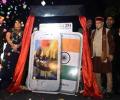
Departments of electronics, excise, I-T launch probe into Rs 251 smartphones

Come July, mobile phone prices are expected to be dearer by up to 10 per cent due to the steep depreciation in the value of rupee against dollar.

Components manufactured in India are low-value products like casing and box packaging that constitute 5% of the bill for materials required in phone manufacturing.
 © 2026 Rediff.com - Investor Information - Advertise with us - Disclaimer - Privacy Policy - Sitemap - Feedback - About us - Terms of use - Grievances