
Unlike the earlier experience post the global financial crisis, where nearly 90 per cent of the restructuring happened in the corporate loans, the non-corporate segment, which includes small businesses, agricultural loans and retail lending, will account for a higher share this time.

As India emerges from the COVID-19 crisis, the ninth budget under the Modi government, including an interim one, is widely expected to focus on boosting spending on job creation and rural development, generous allocations for development schemes, putting more money in the hands of the average taxpayer and easing rules to attract foreign investments.

India's industrial production contracted by 3.6 per cent in February, official data showed on Monday. According to the Index of Industrial Production (IIP) data released by the National Statistical Office (NSO), manufacturing sector output declined by 3.7 per cent in February 2021. Retail inflation rose to 5.52 per cent in March, mainly on account of higher food prices, government data showed on Monday. The consumer price index (CPI) based retail inflation stood at 5.03 per cent in February.

India's dependence on imported crude oil to meet domestic demand has been a matter of concern for years. Delivering the inaugural address at the global energy summit - Urja Sangam - in 2015, Prime Minister Narendra Modi had called for enhancing domestic oil and gas production to cut the import burden. He aimed at lowering it by at least 10 per cent by 2022 - to coincide with the platinum jubilee of India's independence. But this target is far from being achieved and the country's import reliance has only risen.

India's GDP estimates for 2020-21 show that the economy is expected to perform much better than earlier projections by different agencies, indicating a sustained V-shape post-lockdown recovery, experts said. The first Advance Estimates (AE) by the National Statistics Office (NSO) has projected a contraction of 7.7 per cent in the real GDP during 2020-21. This was better than the projections by certain international agencies like the IMF and World Bank.

In Q1, India's GDP shrank by a staggering 24 per cent year-on-year amid the imposition of one of the most stringent global nationwide lockdowns.

Check out some of the stocks that will react on the basis of their numbers in the near term.

RTGS is used to transfer large sums, the minimum amount being Rs 2 lakh. This mode is used primarily to facilitate trade and market transactions. The primary beneficiary would be the capital markets.

Among other segments, home broadband subscriptions have picked up and the virtual private network service, too, increased by around 15 per cent.

India Ratings on Friday downgraded the outlook of domestic construction sector to 'Negative' due to challenges faced in the execution of projects on account of delays in environment clearances and other issues.

After unseasonal rains, supply disruptions and pandemic-induced woes pushed retail inflation well over the Reserve Bank's comfort zone in 2020, the scenario is likely to stay that way at least in the short term as economic recovery slowly gains foothold. For most part of this year, pricier food items pushed the retail inflation, based on Consumer Price Index (CPI), higher in the range of 6.58-7.61 per cent, except for March when the reading was 5.91 per cent. Experts believe retail inflation is likely to average around 6.3 per cent this fiscal and mostly will remain sticky going forward owing to pick-up in demand across sectors.
The volume in the anonymous trading platform, NDS-OM, was Rs 7,210 crore - less than half the normal volume, but not as bad as the start of the day indicated.

Company says confident of raising funds; to raise Rs 688 crore by February-end.

India's economy recovered faster than expected in the September quarter as a pick-up in manufacturing helped GDP clock a lower contraction of 7.5 per cent and held out hopes for further improvement on better consumer demand. The gross domestic product (GDP) had contracted by a record 23.9 per cent in the first quarter of the 2020-21 fiscal (April 2020 to March 2021) as the coronavirus lockdown pummelled economic activity.

Welcoming the latest round of stimulus announced by Finance Minister Nirmala Sitharaman on Thursday, experts said the measures will support the economic recovery boosting demand, job creation and by providing funds to the MSME and stressed sectors. The fiscal impact of the stimulus is likely to be around 0.25-0.6 per cent of GDP in the current fiscal, they said.

For 2021-22, it projected the economy to clock a growth of 10.6 per cent.

In India, it is not easy to fight it out with the large banks which are nimble-footed and technology-savvy and are continuously innovating on the retail turf with newer products for customer acquisition.

Going forward, the February factory output may be impacted as several industries such as automobiles, technology, pharma and fashion have some exposure to imports of raw and intermediate materials from China.

Despite the 3 per cent gain in September 2019, the FPI sell-off during the quarter has seen the benchmark indices - the S&P BSE Sensex and the Nifty 50 register negative returns in Q3CY19.

It came on the back of tepid dispatches in the March quarter as consumer sentiment took a knocking, owing to uncertainty ahead of the general election.

Retailers in the food, grocery and fashion retail segments to be unaffected
If Reliance has to pay about one percentage point more for short-term money, the bond market could be out of bounds for many lower-rated firms after some time.

Gold is currently trading at Rs 25,200 for 10 grams.

Economic affairs secretary S C Garg said that all macroeconomic parameters are performing well.

While the COVID-19 pandemic has completely halted production and new orders, exporters say that payments have also been delayed for the shipments sent before the lockdown. Exporters say some customers are not taking delivery of the shipments because they have shut shop. Ready-made garment players had been hoping for a revival in demand in China but with the virus spreading to Europe, the US and other major markets, there are no orders coming from the major retailers.
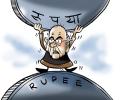
For the first eight months of the current financial year, the figure stood at Rs 7.17 trillion.

The revised salaries of central government employees are likely to be paid from July 1, 2016.

The labour force at large has turned less needy, due to various government financial incentives and freebies.

Indian corporates might face higher borrowing cost in the overseas market in short-run due to the Greek debt crisis.

From spending a little less than three hours on making voice calls, Indians are spending well over 5 hours. So, while people make more calls, they are spending less than ever, reports Romita Majumdar.

In February, FPIs sold $421 mn in debt; in March they have sold $133 mn so far
According to Soumya Kanti Ghosh, chief economic advisor of the State Bank of India group, a 50 bps rate cut is a possibility, but 25 bps is more likely.
Gold prices in the country may even dip to Rs 20,500 per ten grams.
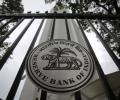
By no means do economists see the Reserve Bank of India stop at just a 25-bp cut. Some of the economists such as Soumyakanti Ghosh of State Bank of India are of the firm view that rates have room to fall by a total of 75 bps in the current financial year, starting with 25 bps in the August 7 policy.
For current financial year, govt plans to borrow Rs 2.88 trillion in the first half of 2018-19, out of Rs 6.05 trillion planned for entire year

The main reason was that CPI inflation would likely remain below 4 per cent till July.

Banking system liquidity will experience transient frictional tightness ahead of the payment of arrears

'It is a worrying trend as we are not seeing too much fresh capital being raised for new projects, plants, expansion or diversification. It's just private equity or venture capital or promoters cashing out.'

The rating agency also expects merchandise exports to grow by 8-10 per cent in the next fiscal year.
 © 2026 Rediff.com - Investor Information - Advertise with us - Disclaimer - Privacy Policy - Sitemap - Feedback - About us - Terms of use - Grievances