
The inclusion of a "no-contest" clause in Ratan Tata's will has caught the attention of India Inc, prompting a wave of interest among promoters of listed companies and business families. Legal advisors and estate planners are seeing a noticeable uptick in queries, as wealthy individuals look for ways to shield their legacies from courtroom battles.

Corporate India's net profit as a percentage of gross domestic product (GDP) dipped in the 2022-23 financial year (FY23) -- after rebounding sharply in FY22 -- amid a decline in global commodity prices. Top 500 companies' combined net profit stood at 4.1 per cent of the GDP for FY23, down from 4.3 per cent in the previous financial year when it had gone up from just 3.5 per cent in FY21. "The year-on-year (YoY) decline was led by global commodities, which contributed adversely to the ratio, while the financial sector contributed positively.

'The conversation is no longer just about securing funds or acquiring customers but about the long-term value of customers.'

Listed companies' net profit as a percentage of gross domestic product (GDP) has hit a decadal high and is expected to edge even higher over the next two financial years. According to an analysis by ICICI Securities, India's Inc net profit stood at Rs 8.4 trillion, or 4 per cent of GDP of Rs 210 trillion for the trailing 12-month period ending September. This is the highest since financial year 2011-12 (FY12), when it was at 4.6 per cent.

Corporate earnings got a big boost from the fall in commodity and energy prices in July-September 2023 (Q2FY24) despite a slowdown in revenue growth during the quarter. The combined net profits of 3,123 firms that have declared their results so far were up 38 per cent year-on-year (Y-o-Y) to Rs 3.07 trillion in Q2FY24, up from Rs 2.24 trillion a year ago. Earnings were, however, down 3.5 per cent on a sequential basis from Rs 3.18 trillion in April-June (Q1) FY24.
The earnings of India Inc hit a record high in the 2022-23 (FY23) January-March quarter (fourth quarter, or Q4), compared with their poor showing in the previous two quarters of the financial year. The rise in earnings, however, is exclusively led by banking, financial services, and insurance (BFSI) companies. A better-than-expected showing by banks and non-bank lenders in Q4FY23 more than compensated for the earnings contraction in the non-BFSI space.

According to the Regus business confidence survey, Indian businesses' confidence index decreased 2 points (from 143 to 141) since April 2012.

Equity fundraising through qualified institutional placements (QIPs) has gained traction, thanks to supportive equity markets and the need for fresh fundraising to meet capital expenditure (capex) requirements.

The rupee breached the 80-mark against the dollar on Tuesday. The steady depreciation in the value of the rupee against the US dollar is likely to prove expensive for corporate India. The listed companies' revenue expenses in foreign currency or imports exceed their export revenues or revenue earnings in forex. In their latest financial year, BSE500 companies, excluding banks and non-banking finance companies and insurance (BFSI), reported combined forex expenses of Rs 12.31 trillion against forex earnings of around Rs 10 trillion.
The decision by the Reserve Bank of India to introduce a unified regulatory framework on connected lending for all the regulated entities (RE) is expected to reduce the influence of business conglomerates in the Indian lending space, said bankers and experts. "Connected lending pertains to lending to related parties within the same business group. "While the RBI might appear more agreeable to allowing business conglomerates to own banking licenses, it deems it crucial to bolster regulations that would prevent conglomerate-owned banks from gaming the system," said Shivaji Thapliyal, head of research and lead analyst, YES Securities.
Brokerages expect India Inc to report an upturn in earnings for the March quarter of 2022-23, after a relatively muted showing in the previous two quarters. This growth is expected to be led by banking, financial services and insurance (BFSI) companies, FMCG firms, and automobile makers. The combined net profit of the Nifty50 companies (excluding Adani Enterprises) is expected to have grown 15.6 per cent to Rs 1.77 trillion in Q4FY23, from Rs 1.53 trillion a year ago.

'It is inconceivable that there are no gays working in Indian corporations but obviously, the subject remains taboo enough in the workplace for those of alternate sexual orientation to feel safer remaining in the closet,' notes Kanika Datta.

India's corporate sector is likely to report a slowdown in revenue growth and earnings for the July-September 2023 period (Q2FY24), according to earnings estimates by brokerages, after the country's top listed companies posted higher than expected profits for the first quarter. The combined net profit of Nifty50 companies, based on brokerage estimates, is expected to have grown by 19.6 per cent year-on-year (Y-o-Y) to Rs 1.75 trillion in Q2FY24 - a sharp deceleration from 37.6 per cent Y-o-Y growth in the combined earnings of index companies in the April-June 2023 period. According to estimates, the combined earnings in the second quarter would be down 8.8 per cent on a quarter-on-quarter (Q-o-Q) basis and the lowest in the past three quarters.

As India faces slowing economic growth, HSBC Global Research has downgraded the Indian stock market outlook from "overweight" to "neutral". In a report, the global financial services firm said profits at India Inc appeared to have softened while valuations are elevated. After annualized growth of 25 per cent in recent years, profits appear to have softened while valuations are elevated at 23x forward earnings.

'Given a chance, more than 50 per cent of employees would switch to WFH as opposed to working from office.'

Indian companies are expecting generous tax incentives from the Union Budget that will help them invest more in building capacities in the coming years. While the productivity-linked incentives (PLIs) are a good start to spur local manufacturing, the government should also take steps to boost consumer demand, which is not showing encouraging signs, say chief executive officers (CEOs) of India Inc. Statistics released by the Reserve Bank of India (RBI) shows that Indian banks had sanctioned loans worth Rs 75,558 crore in 220 new projects - a record low - in the pandemic-hit financial year ending March 2021. This is not showing any signs of a significant pick up in the last nine months of the ongoing financial year.

If India Inc sincerely feels the separation of posts is not a good governance measure, it must spell out its doubts clearly to Sebi and give cogent arguments rather than mundane ones like India is different, argues J N Gupta, member, Kotak committee on corporate governance reforms.

'Inflation is not good for industry. Nor for the economy as a whole.'
The Indian economy continues to sustain the momentum achieved in the first half of 2023-24 and expectations of a fresh round of capex by the corporate sector is likely to fuel the next leg of growth, the Reserve Bank Bulletin said on Tuesday. "The likelihood of the global economy exhibiting stronger than expected growth in 2024 has brightened in recent months, with risks broadly balanced," said an article on 'State of the Economy' published in the bulletin.

Prime Minister Narendra Modi's announcement that the central government will provide free coronavirus vaccine to states will help ensuring quick rollout of vaccine, uniformity of procurement prices and resuming normal economic activities at the earliest, India Inc said on Monday. Industry chamber PHDCCI said that the increased role of the central government in the vaccination procurement process would help make vaccination drives further effective and maximise the supply in the country in relatively less time. "This would be a crucial step in making the country COVID free sooner than later," it said.
It seems the financial headroom for India Inc will get worse, given the rising gap between profit growth and interest obligations.

Bharti Airtel Chairman Sunil Bharti Mittal said India has lost one of the finest political leaders and a legal luminary.

In a move towards gender inclusion, Tamil Nadu has partnered Godrej Consumer Products (GCPL) to offer a 5 per cent job reservation for LGBTQAI+ and people with disabilities at GCPL's upcoming fast-moving consumer goods manufacturing unit in Thiruporur in Chengalpattu district. According to industry experts and activists, while companies acknowledge transgender communities, this is the first time the entire spectrum of gender minorities, including lesbian, gay, bisexual, transgender, queer/questioning (one's sexual or gender identity), asexual and intersex, is receiving such a notable share of job participation in the private sector while signing memoranda of understanding with states.
'Instead of wailing about the absence of tax benefits, the private sector should press for an early implementation of the package of measures,' advises A K Bhattacharya.
The bulk of the incremental profits will come from oil & gas and automobile sectors.

Aided by the $57.8-billion merger of HDFC Bank and HDFC, India Inc reported its highest ever mergers and acquisitions in calendar 2022 at $171 billion as against deals worth $145 billion announced last year. The acquisition by the Adani group across cement, media and ports dominated the headlines with the conglomerate making its foray into the cement sector by buying Swiss materials firm Holcim's stake in Ambuja Cements for $6.5 billion. The Adani family's additional $4-billion open offer for Ambuja did not get a response because shareholders preferred to stay invested with the new owner.

India Inc's investments abroad in April-June 2015 have once again risen to $1.3 billion.

Corporate India is more dependent than before on exporters of IT services such as Tata Consultancy Services (TCS), Infosys, and Wipro for earning foreign exchange. Such companies account for nearly 43 per cent of the forex revenues of listed firms, up from 22 per cent a decade ago. The listed IT services companies earned nearly Rs 4.2 trillion through exports in FY22, up 15 per cent from the Rs 3.65 trillion a year earlier. In comparison, the forex revenues or exports of the rest of the BSE500 companies were down 11.9 per cent to Rs 5.6 trillion last financial year.
After the hit of the pandemic, India Inc is now worried about the adverse impact of inflation and higher commodity prices on their revenues and margins. The inflation scare is the strongest among manufacturers of consumer goods such as automobiles, consumer durables, and fast-moving capital goods (FMCG). Companies across sectors fear they will not be able to pass on the hike in input costs to their consumers due to weak demand, which, in turn, would lead to a hit on margins and profitability in the forthcoming quarters.
Broader sentiment of lack of transparency bothers most in India Inc.

Capital expenditure by Indian companies is likely to see an uptick in the upcoming quarters as capacity utilisation has surpassed the critical threshold of 75 per cent, and numerous companies have deleveraged their balance sheets, according to analysts. The first quarter of the current financial year has shown improved profitability, driven by a decrease in input prices. This, according to analysts at Care Ratings, should stimulate a revival in the private capex cycle.

The combined dividend payout by early-bird companies -- those that have declared their results for FY21 -- is up 8.9 per cent, lower than the 21.9 per cent rise in in FY20 but ahead of the underlying growth in India Inc business last year. Combined net sales of these early birds were down 1.8 per cent last financial year while net profit was up 27.3 per cent in FY21. Some top companies that have stepped up dividend payout in FY21 include Hindustan Unilever, Indus Towers, Tata Steel, Ultratech Cement, Larsen & Toubro, Dabur, Asian Paints, and UPL. In contrast, banks have skipped dividends under an RBI diktat while companies such as Marico, TCS, Maruti Suzuki, and Godrej Consumer are paying lower dividends for FY21.

'We need to encourage the next generation of farmers to continue in farming'

'The Budget must be pro-growth, focusing on infrastructure creation while also managing the fiscal deficit.'
As global economies contract because of the Covid-19 pandemic, the focus of most of the India Inc has now moved back to the home market where demand is expected to pick substantially from the coming festival season.

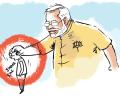
'India Inc has been afraid to criticise the government of the day for many years now, and it is perhaps unfair to blame the current one alone,' says Shyamal Majumdar.

Corporate results confirm worst fears about growth trajectory.

'Retail investors, who had not seen such a massive correction in the SMID universe since COVID-19, are witnessing something like this for the first time. Panic profit booking may continue.'

'We are getting to understand the mind of this generation.' 'Minor tweaks are being made to ease the process as we go along.'
