
India Inc has started lobbying with the government to compensate them by giving tax incentives on the funds spent on CSR.

Making strong inroads in the global acquisition arena, Indian companies have won many big ticket deals and acquisitions.

United States Secretary of State Hillary Clinton on Saturday had a breakfast meeting with top honchos of India Inc at the iconic, sea-facing Taj Hotel in Mumbai. Amongst those from India Inc who were present at the meeting included Ratan Tata, chairman of Tata Group and Reliance Industries' Mukesh Ambani. Others present were the chiefs of India's two largest banks, O P Bhatt of State Bank and Chanda Kochhar of ICICI Bank, Swati Piramal and Sudha Murthy.

India Inc is set to post an 18-20 per cent revenue growth for July-September as compared to the year-ago period, domestic rating agency Crisil said on Thursday ahead of the filing of quarterly earnings by companies. The handsome growth in the topline will be driven by both higher volumes and higher commodity prices, the rating agency said. However, the rising input prices may have capped operating profit margin expansion for companies when compared to the preceding quarter, the agency said.

The stellar rise in corporate earnings in financial year 2021-22 (FY21) and FY22 did not result in a corresponding boom in capital expenditure (capex), with listed companies' investment in fixed assets rising just 2.3 per cent year-on-year (YoY) in FY22, growing at the slowest pace in the last six years. In comparison, the firms' combined net profit jumped 63.5 per cent YoY in FY22, while net sales increased 31.1 per cent - the fastest pace in over a decade. The 955 non-financial companies in Business Standard's sample reported combined net profit of Rs 7.18 trillion in FY22, compared with Rs 4.39 trillion in FY21 and Rs 2.59 trillion in FY20.
In absolute terms, capex spending has risen by Rs 228,000 crore (Rs 2,280 billion), despite declining profits and a 37 per cent decline in fund flow from financial markets in 2008-09. The capital-intensive sectors of India Inc do not find the current environment a deterrent to push ongoing expansion and so they continue with capex plans. The study looks at 323 listed companies whose capex spending data for 2008-09 is available.
Welcoming the government's move to name new members on Satyam's board, industry on Sunday exuded confidence that the new directors would help shape the future of the scam-hit company and restore the global investors' confidence in India Inc.

Corporate earnings grew in double digits during the April-June 2022 (Q1FY23) quarter but the momentum waned. Overall corporate earnings in the quarter were down sharply from their highs in FY22. The combined net profit of 2,981 listed companies across sectors in the Business Standard sample was up 22.4 per cent YoY to Rs 2.24 trillion in the June quarter, driven by a big jump in the earnings of banks, non-banking lenders, oil & producers, and FMCG companies. Also, earnings in the corresponding quarter a year ago were affected because of the second wave of the Covid pandemic, even though the numbers were a lot better than Q1FY21 when there was a nationwide lockdown.

Demand on rise as companies look to expand in Asian, European markets
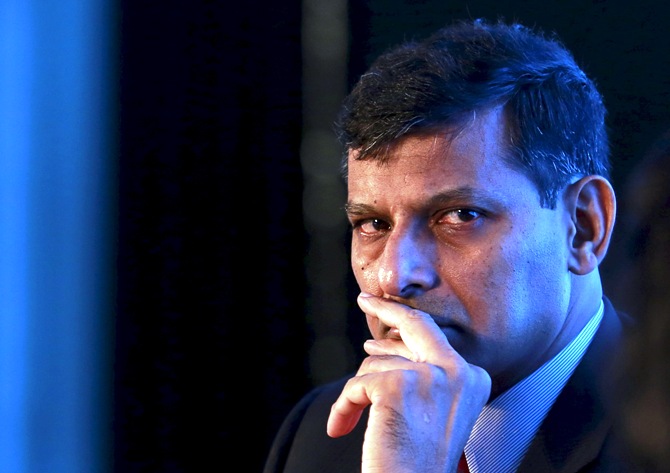
India's captains of industry said they were disappointed at the exit of Reserve Bank of India Governor Raghuram Rajan.
Households may be feeling the pinch of higher inflation but corporate India is enjoying record high margins and profits. The combined quarterly net profit of listed companies scaled a new high in the April-June 2023 quarter owing to a sharp rise in operating and net profit. The expansion in margins more than compensated for the slowdown in revenue growth, which slipped into single digits in Q1FY24 after a gap of nine quarters.
In 2020-21, Indian firms offered to buy back shares worth Rs 39,295 crore, or 97% more than Rs 19,972 cr proposed in the previous financial year.

From offering office premises that can be converted into isolation wards to earmarking funds to be used for procuring kits, ventilators as well as personal protective equipment for health care workers, India Inc has put a united front to combat the unprecedented crisis facing the country.

Even as the slowdown in the information technology (IT) services sector deepens, banking, financial services and insurance (BFSI), as well as oil and gas companies, emerge as the primary drivers of corporate earnings in the country. The IT services sector's share in corporate earnings declined to a five-year low of 17.4 per cent in the second quarter (Q2) of 2023-24 (FY24), whereas banks and finance companies accounted for 46.5 per cent, and oil and gas firms contributed 16.8 per cent. At their peak, IT services firms like Tata Consultancy Services (TCS), Infosys, HCLTech, and Wipro represented just over a third of the combined net profit of all listed companies in the Business Standard sample.
The early bird results for the January-March 2022 quarter (Q4FY22) hint at a slowdown in corporate sector growth in the upcoming quarters. The combined net sales of the 81 early bird companies in the Business Standard sample were up 15.1 per cent year-on-year in Q4FY22; this was less than the 15.9 per cent YoY jump reported in Q3FY22. The slowdown could be much stronger for the domestic market-focused companies, including those in the banking, finance, and insurance (BFSI) space.

'Volumes in F&O trading had gone up rapidly and, in a way, the increase in STT on F&O will protect investor interest.'
India Inc on Tuesday expressed deep reservations over the supplier liability provision -- the contentious Clause 17(b) -- in the Civil Liability for Nuclear Damages Bill, 2010, saying it would seriously hinder nuclear commerce.

India Inc's profit share in the country's GDP at 15-year low in 2018. Since 2013, net profit for top 500 companies has remained in the range between Rs 4 trillion and Rs 4.8 trillion despite steady growth in nominal GDP.
Finance Minister Nirmala Sitharaman on Tuesday unveiled a Rs 39.45 lakh crore Budget with a view to fire up the key engines of the economy to sustain a world-beating recovery from the pandemic. This was Sitharaman's fourth Budget. While the taxpayers were left in the lurch, once again, was she able to cheer Corporate India?
Foreign banks and private credit funds are queuing up to fund acquisitions by Indian companies who are buying out their local rivals. The Adani Group, Torrent Group, and the Hindujas have approached several foreign banks and private equity (PE) firms to fund their acquisitions. Global investors have about $2 trillion of funds to invest, and about $100 to $150 billion is set aside for India, according to an estimate by JP Morgan.
Having rung in the New Year with two major acquisitions in the metals space, India Inc is set to execute more such deals, albeit in automotive, pharma and IT sectors, with companies in Europe being the targets.

While margins contracted by 30 basis points on y-o-y basis, they fell a sharper 120 basis points on a sequential basis to 16.8 per cent. Profitability was impacted adversely due to subdued demand, tepid realisations in commodity sectors, and negative operating leverage.

As Covid-19 cases recede, India Inc is once again tweaking work rules. Big tech companies such as TCS, Wipro and Infosys have either begun or are in the process of calling employees back to office in a staggered manner. A survey by Aon, a global professional services firm, has found that 60 per cent of tech firms now expect every second employee to come to office. More than half of the employees working in engineering and manufacturing firms are also being asked to return to work.

Food inflation fell to a four-month low of 9.18 per cent for the week ended March 26, even as wholesale price inflation stood at 8.31 per cent in February.

'Kerala isn't as dependent on agriculture like Bihar or Odisha or even other southern states.' 'Economic losses would not be too intense, unlike other states.' 'The floods could, at best, impact India Inc's earnings for a quarter or two.'

'Not paying workers enough will end up being self-destructive or harmful for the corporate sector itself.'
Not surprisingly, equity investors are bidding-up stock prices across sectors and the broader market is now more valuable than pre-Covid levels.

Indian companies are planning to increase investments in the new year to expand capacity, acquire companies, and go on a hiring spree, a survey of top executives showed. They, however, cited rising costs, weak consumer demand, and increasing interest rates as major concerns for 2023 which may impact their plans.

'The message is loud and clear: "If you're not falling in line, we will open a line of understanding with the MNS, and then the Shiv Sena will be in trouble".'
The environment looks conducive for growth for corporate India and thus we believe that equities would continue to deliver decent returns over the long term. \n\n

A sharp hike in global commodity prices meant that India Inc's raw material costs rose 38 per cent and, since they constitute 41 per cent of sales revenues, this lowered profits growth to 35 per cent (from 62 per cent in Q3).
A strong performance by sectors including banking raised the profits of Indian companies by 28 per cent in the three months ended March 2022. The rate of growth is, however, lower than the 30 per cent seen in December. Growth in net sales was also lower than what was seen in the December quarter for the sample under consideration.
Corporate India's merger and acquisition deal activity in February stood at $2.3 billion taking the total M

Rahul Gandhi spoke about his vision of empowering women and giving voice to the people of billion-strong nation.

A study of 435 companies listed on the Bombay Stock Exchange, which provide their capital-employed data on a quarterly basis, shows capex grew by a meagre 3.4 per cent in the nine months ending December 2009, compared to the level in March 2009.

Dalal Street had a roller coaster ride in 2024 from shattering record after record to facing heavy correction off-late but equity markets still rewarded investors with positive returns, driven by a surge in domestic fund flows and a resilient macro landscape. The first half of the year saw robust corporate earnings, a surge in domestic flows, and a resilient macro landscape, driving the Nifty to an all-time high of 26,277.35 in September 2024, according to Motilal Oswal Wealth Management.
