
After six years of painstaking talks, the Comprehensive Economic Cooperation Agreement will be signed which will eliminate duties on 80 per cent of goods traded between the two over the next eight years. Commerce minister Anand Sharma, who is in Bangkok to sign the pact, said the agreement is well balanced and is in harmony with the India's Look East Policy.

Government officials said the Asean FTA, as well as a similar pact with South Korea involving free trade of goods, services and investment, could be signed on the sidelines of the summit of Asean nations, scheduled in October this year. The India-South Korea Comprehensive Economic Partnership Agreement is also ready for signing, sources added.

After operationalising FTA in goods last year, both the sides were engaged in widening the base of the pact by including services and investments.
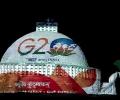
'The group commands 85 per cent of the global GDP, and if you are able to convey your point of view effectively to this group then you have reached more or less all the important players that matter.'
Ways to expand cooperation with East Asian countries will top the agenda of two-day visit of Prime Minister Manmohan Singh who left for Singapore on Tuesday to attend the ASEAN and East Asia Summit. Noting that the trade between India and the ASEAN had been growing rapidly, Singh said it had "surpassed" the expectations as it stands at $30 billion.
India and ASEAN have reached an accord to enhance partnership in the field of science and technology with a thrust on bio-technology and agriculture. \n\n

Meeting is on June 24-25 on stalled pact, agreement likely by year-end.

In fact, India stands to gain in sectors such as textiles, handicrafts, chemicals and pharmaceutical from its trade with the Asean economies.
Vice President Hamid Ansari, whose last engagement in his 4-day visit to Vietnam was an Indian community reception hosted by Ambassador Ranjit Rae on Thursday afternoon, described the community as an important agent to expand the economic, commercial and technological ties with the Association of South East Asian Nations, Asean. Around 300 Indians from various backgrounds attended the reception.
India and the 10-member ASEAN grouping on Thursday announced concluding a deal for a free trade agreement that will break duty barriers for goods in the 1.5 billion people strong market.
In a significant move to strengthen economic ties, India and 10 Association of South East Asian nations on Tuesday decided to set up a Regional Trade and Investment Area

Sharma was speaking to journalists while returning with Prime Minister Manmohan Singh from Cambodia last night on special aircraft after attending the ASEAN and East Asia Summits.

India and the Association of Southeast Asian Nations signed an FTA in goods in August last year and are engaged in intense negotiations to expand this pact to include services and investments.

So far, two rounds of negotiations have already taken place in this regard. India signed a Free Trade Agreement with the Association of Southeast Asian Nations in August, which will come into effect from January 1, and is committed to begin breaking duty barriers on goods.
Prime Minister Manmohan Singh, during his visit to the 13th Asean summit held at Singapore in November 2007, had indicated that India would take a flexible stand in the FTA talks.

Indian Commerce and Industry Minister Anand Sharma met his counterparts from the ten Asean-member nations to review the progress of negotiations at Da Nang.
Prime Minister Manmohan Singh concluded his three-day visit to Bali on Saturday, where he attended the India-ASEAN meet and East Asia Summit, besides holding talks with US President Barack Obama and his Chinese counterpart Wen Jiabao.
While the delegation accompanying Prime Minister Dr Manmohan Singh on his 9th India-Asean summit said that the India-China relationship was a 'complex' one, they also emphasised that India-US relations were in good shape, reports Saisuresh Sivaswamy, who is a part of his media delegation accompanying the prime minister to Bali.

'What India needs to do is to re-build those cultural links in a way it didn't.' 'Clearly, India needs to wake up and spend more time on ASEAN.'
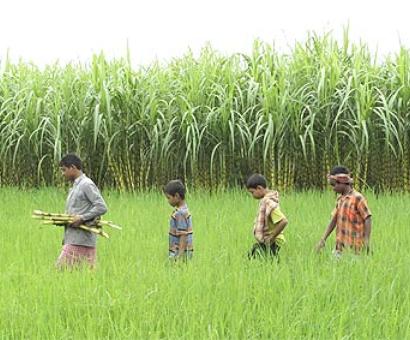
This accord marks the success of India's Look East Policy and is the first with a trading bloc.
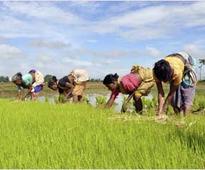
This accord marks the success of India's Look East Policy and is the first with a trading bloc.

These categories rank among India's top 10 export items by value.

Signing of the two pacts -- FTA in services and investments -- were scheduled during the India-ASEAN Economic Ministers meeting in Myanmar last week. But the meeting was postponed as Commerce and Industry Minister Nirmala Sitharaman was not able to attend the meet due to domestic compulsions.

The prime minister will have a tight schedule in the Philippines as besides attending the 15th ASEAN-India summit and 12th East Asia summit on November 14, he will have a series of other engagements including bilateral meetings with several leaders.

Addressing the India-ASEAN Summit in Phnom Penh, Singh said, "India's relationship with ASEAN members and with ASEAN institutionally continues to grow in all dimensions. Commerce and connectivity are vital areas of this relationship and we have made good progress in both."

The government expects to conclude the agreement during the December 20-21 meet.
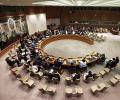
"In India's development cooperation, we will be guided by our partners' development priorities. Our assistance does not create indebtedness and is without conditionalities," he said at the 44th Annual Meeting of the G-77 Foreign Ministers on Thursday, in a veiled reference to China's loans which has led to debt-traps in some countries.
Unmindful of China's displeasure over India's involvement with nations in its backyard, Prime Minister Manmohan Singh on Saturday announced a proposal to link South East Asian nations through a highway, presumably over the sea.

Leveraging the India-ASEAN Free Trade Agreement, India wants to double its commerce with Myanmar and diversify the bilateral engagement to agro-research and natural gas exploration.
A day after attending the India-Asean summit and the East Asia Summit in furtherance on India's Look East policy, Prime Minister Manmohan Singh on Sunday credited Singapore for leading to the strategic shift in the nation's foreign and economic policies.
Prime Minister Manmohan Singh left for Bali and Singapore on Thursday.

By hosting the 10 ASEAN leaders on Republic Day, India amply demonstrated that ASEAN is a central pillar of its Act East policy. But is India 'central' for ASEAN, asks Dr Rahul Mishra.

India will make a strong pitch for new initiatives with ASEAN countries to collectively respond to challenges thrown up by the global economic meltdown and climate change during the two day India-ASEAN and East Asia Summits beginning in Thailand tomorrow.

The 25th anniversary of ASEAN-India Dialogue Relations is being marked. And invitations were sent by the Indian government to all ASEAN leaders for the Republic Day function.

The Indo-Asean FTA provides an opportunity for India to be more engaged with the region, says Sanjaya Baru.
The prime minister's directive, which came after general elections were announced, would postpone signing of the India-ASEAN and India-South Korea free trade pacts. Many believe that the prime minister put an embargo on the FTAs as model code of elections had come into force and such important policy issues would need to be looked into after polls.
The FTA will provide Indian trade and industry with access to a large and vibrant market in a region that is increasingly prosperous. This market is bound to expand further as the Asean trading bloc is already in talks with countries like China, Japan, South Korea, Australia and New Zealand for free or preferential trade pacts.
Consumers can expect duty-free imports of a range of products like capital goods, some textiles, electronic goods and chemicals from next year after India successfully concluded negotiations on a Free Trade Agreement for goods with the 10-member Association of Southeast Asian Nations in Singapore on Thursday.
The implementation of the ambitious India-Asean Free Trade Agreement is likely to miss the target date of January 1, 2009. Negotiators from both the countries had closed talks this August, after six years of painstaking dialogue.
 © 2026 Rediff.com - Advertise with us - Disclaimer - Privacy Policy - Sitemap - Feedback - About us - Terms of use - Grievances