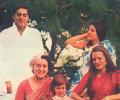
'I do not think Rajiv Gandhi at that stage had any influence on his mother. Indira Gandhi relied totally on Sanjay and she looked upon him as a dependable son.' 'What really affected people and eventually Indira Gandhi was the sterilisation drive. She lost so badly in north India because of these drives.' 'She is the one who has given this aura of 'the family' to the Gandhis.' The second and final part of veteran journalist Coomi Kapoor, whose book The Emergency: A Personal Account was published recently, to Sheela Bhatt/Rediff.com about Independent India's darkest phase.

In a marathon address to the nation from the ramparts of the Red Fort, Prime Minister Narendra Modi on Saturday underlined India's unity and diversity and the progress of his 15-month-old government's policies.
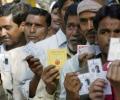
Indonesia, Turkey and Afghanistan also see important polls in the seven short weeks between end-March and mid-May, says Shankar Acharya

India has made a remarkable journey from a top-down system of economic decision-making to one that unleashed our entrepreneurial spirits but the next big jump lies in enhancing the quality of our tale.

'Why should the people of Odisha divert water from the Mahanadhi when 13 out of 32 districts are chronically drought prone?' 'Water is a state subject. Can you really nationalise rivers for which you need drastic amendments in the Constitution?'
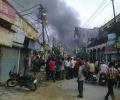
'If the BJP wants to build a minimally inclusive and secure society, in which vulnerable groups and religious minorities don't feel persecuted, then the Sangh Parivar, the party and its government must change their ways. Or else, they risk dividing India further -- violently and irreparably -- for narrow political ends,' argues Praful Bidwai.

'Pluralism is a fundamental fact of Indian life,' Colonel Anil A Athale (retd) tells members of the US Congress. 'Indians created a secular/plural State because that is what the majority believes in and not the other way round.'
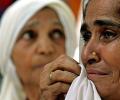
'Koi Sardar hai? Goli se maar dalenge...' 'The only sardars who were spared in the train were the six with us. And the credit goes to the innate goodness of the passengers in our coach.' Payal Singh Mohanka remembers that horrifying train journey in the aftermath of Indira Gandhi's assassination.
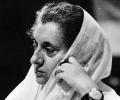
Veteran journalist Coomi Kapoor, whose book came out recently, speaks to Sheela Bhatt/Rediff.com about Independent India's darkest phase.

Global investor and author Jim Rogers, who recently sold his India investments, talks about his disappointment with Prime Minister Narendra Modi's economic reforms, why he is betting big on the US dollar and the Chinese Renminbi and what will bring him back to India some day.

'There is no evidence that it was Nehru who ordered this surveillance (on Netaji's kin). It was a very low-level Bengal-based operation.' 'Netaji's grandnephew Sugata Bose has written in his book on the leader that the existing evidence that Subhas Bose died in that plane crash is overwhelming. No historian looking at that evidence can come to a different conclusion.' 'Contrary to popular belief, there were very little differences among the three (Netaji, Nehru and Gandhi). Netaji was of the opinion that some amount of violence was necessary to bring independence for India.' Historian Rudrangshu Mukherjee says that the controversy over the alleged spying on the kin of Netaji is a damp squib.
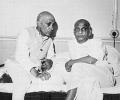
The debate on Sardar Patel's legacy is less about the Sardar and more about the acute sense of threat felt by the Delhi establishment at the rise of Narendra Modi and questions he has raised about the disproportionate share of credit given to a single family, says Colonel (retd) Anil Athale.
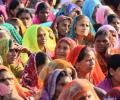
The perception that 'winnability' is based on gender is very strong, even though, if you break up the electoral success rate by sexes, the women who do win elections are proportionally far more successful than the men who win, given the huge number of men they have to beat.

Twenty-eight years ago almost to the day, 37 unarmed Muslims were killed in cold blood, an act of wanton violence for which no one has so far been held guilty. Jyoti Punwani and photographer Uttam Ghosh visited the Meerut locality after the trial court recently acquitted the security personnel charged with the killings, and found a town untouched by its grim past.
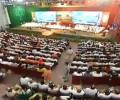
The 10-year UPA rule came under sharp attack in the BJP's National Council meeting in on Saturday, which unveiled the new government's future plans and policy prescription in domestic and foreign affairs arena in a political resolution, which hailed the "strong and able" leadership of Narendra Modi.
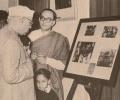
'The evidence about a plane crash that killed Netaji as stated in the Shahnawaz Committee report, is quite strong.' 'None of the files that I read bear any evidence that it was Nehru who ordered this kind of intrusive surveillance.' 'The government's excuse that declassifying some files may affect India's relations with friendly foreign countries is not a credible one.' Subhas Chandra Bose's grand-nephew and Trinamool Congress MP Sugata Bose on reports that his family was under surveillance for 20 years and the rumours over Nataji's death.
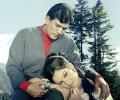
'It is ironic that the guy who set the standard of stardom was forgotten. It was his death that made us remember him again.'

'Let us also not expect that there will be a clean break with the past, much though the new government might like to think about it. In a functional democracy that is neither feasible nor desirable. But basic change it must be,' says Shreekant Sambrani.

Born in poverty and subjected to inhuman abuse, Kalpana Saroj overcame all hurdles to emerge a success story.

'If the Kasturirangan Committee report is implemented, the mining and quarrying lobbies will flourish... It will be disastrous for the environment... There will be water shortage, there will be pollution. Finally, farmers will have to quit the area.' Dr V S Vijayan, a member of the Gadgil Committee, points out how the Kasturirangan Committee report will hit both people living in the Western Ghats as well as the plains.

Sardar Vallabhbhai Patel's sage advice remains as relevant today as it was during his lifetime, says Vivek Gumaste.

2014 will be a watershed election. Much is at stake and much needs to be changed. Women need their voice to be heard and they need representation with real power, says Sunanda Vashist.

Minister for External Affairs Salman Khurshid speaks about the importance of the fourth edition of the India-US Strategic Dialogue, which he co-chaired with United States Secretary of State John Kerry in New Delhi

Transcript of the political resolution adopted by the Bharatiya Janata Party in its national executive meeting in Panaji, Goa on Sunday.

President Pranab Mukherjee on Monday addressed the first joint sitting of Parliament as mandatorily required under the Constitution after the general elections. The address is the political, economic and foreign policy road map of the Narendra Modi government and covers virtually all crucial areas.
 © 2026 Rediff.com - Investor Information - Advertise with us - Disclaimer - Privacy Policy - Sitemap - Feedback - About us - Terms of use - Grievances