
Irrespective of the global movement, gold prices in India are nearing the level of Rs 34,000 per 10 grams in the physical markets.

India's gold demand recovered during the January-March period to witness a growth of 37 per cent at 140 tonne compared to the same quarter of 2020, due to ease of COVID-related restrictions, pent up demand and softening of prices of the yellow metal, according to the World Gold Council (WGC). The overall gold demand stood at 102 tonne during the first quarter of 2020, as per WGC data. Gold demand in value terms increased by 57 per cent during the first quarter of this calendar year to Rs 58,800 crore compared to Rs 37,580 crore in the corresponding period of 2020.

'Gold could benefit from the resulting risk aversion, as happened last year.'

The BSE benchmark Sensex plummeted about 383 points to close at 57,300-level on Tuesday, tracking massive selloffs in global markets. After sinking about 1,300 points in early deals, the Sensex staged a sharp recovery but still ended 382.91 points or 0.66 per cent lower at 57,300.68. The NSE Nifty too reclaimed part of its early losses before closing 114.45 points or 0.67 per cent lower at 17,092.20. On the Sensex chart, Tata Steel, TCS and SBI fell the most, losing as much as 3.64 per cent. Of the 30 Sensex constituents, 20 closed in the red. "Escalations in Ukraine tensions with Russia recognising two pro-Russian rebel regions have aggravated the crisis. "The economic consequences are already visible in higher crude and gold prices," VK Vijayakumar, chief investment strategist at Geojit Financial Services, said.

The surge in volatility across the globe sparked by Russian invasion of Ukraine has led to an increase in prices of gold and silver - considered to be safe-haven investment bets. In the past month, silver funds have delivered returns of 7.34 per cent, while gold funds on an average have risen around 6 per cent. In comparison, the benchmark Nifty has declined 4 per cent. Fund managers say precious commodities act as a good hedge against inflation and phases of geopolitical uncertainty.
The rising trend in gold remained unabated on the bullion market in Mumbai on Monday with pure gold zooming up further to close at a new record high of Rs 6,235 per ten gram due to sharp rise in the global prices.

In comparison to other asset classes, globally, gold rallied significantly after many years to deliver 18.4 per cent returns in 2019.
The yellow metal now trades at a 0.5 per cent premium over its landed cost, compared to a 4 per cent discount in mid-September because jewellers have voluntarily withdrawn the display of cash price from their website.

Gold prices may trade higher in the coming days because of weaker dollar and speculations of US Fed rate cut.
Gold price will surge to a record high of $900/oz, driven by a weaker US dollar and economic turmoil in 2008, while a surplus in the metal will narrow by 97 tonnes, possibly dipping into a deficit, keeping prices strong, according to the VM Group/Fortis bi-annual The Yellow Book.

A strengthening rupee following a sharp surge in the inflow of foreign money from investors and "illegal imports" were among some of the reasons for the fall.
Since the Union Budget, gold has become costlier by 8-9 per cent because of a 2.5 per cent increase in import duty to 12.5 per cent and about a 5 per cent depreciation in the rupee.
The government has hiked gold import duty to 15 per cent from 10.75 per cent to check the current account deficit (CAD) and rising import of the yellow metal. The duty changes came into effect on June 30. Earlier, the basic customs duty on gold was 7.5 per cent, now it will be 12.5 per cent.

Forecasts of a further rise in bullion prices keep Indians away from selling gold.

Experts attributed the inflows to sudden rally in gold prices, mainly due to uneasy trade negotiations between the US and China and lower than expected global GDP growth.
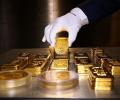
Gold demand appears to be positive in India as the consumer sentiment is likely to recover in 2021, from its dismal performance due to the coronavirus pandemic-related disruptions and volatile price movement, according to a report by the World Gold Council (WGC). Initial data about the Dhanteras festival in November suggest that while jewellery demand was still below average, it had substantially recovered from the lows seen in the second quarter (April-June 2020) of last year, according to the report.

Regaining the lost sheen, sales of gold jewellery and coins are set to touch pre-COVID levels in volume terms on the auspicious Dhanteras as easing pandemic concerns and pent up demand saw consumers flocking to stores to buy the precious metal. Increased footfall at stores and brisk sales online as well as relatively softer gold prices compared to record Rs 57,000 per 10 grams level in August spurred increased buying, especially light weight offerings, on Tuesday. Dhanteras is considered to be auspicious for buying precious metals and other valuable items.

Why millennials are choosing silver over gold this Valentine's Day.
Many offer personalised ornaments with 3D printed images and engraved names to lure customers in a scenario of high gold prices.

Most consumers are going for token buying of lesser value and are waiting for price correction for purchase of wedding jewellery.

Given the economic trends, it might make sense to allocate some savings to gold.
Mandatory hallmarking of gold would be a positive in making the gold market more organised. Mandatory hallmarking would come into effect from January 15, 2020, with a one-year transition period for trade to sell existing inventories. Experts also expect more policy measures next year to bring in more transparency in terms of gold as an asset class.

Gold price in Mumbai's physical market on Friday fell 31.1 per cent or Rs 1,351 to close at Rs 41,848 per 10 gramme. Friday's fall in per cent terms is worst after November 2015 and, in absolute terms, the worst after August 2013. Silver prices fell Rs 2,255 to close 5 per cent lower at Rs 43,085 per kg on Friday.
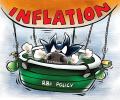
The Consumer Price Index (CPI)-based inflation is now projected to be at 5.3 per cent for 2021-22 with risks evenly balanced. In its August policy, the central bank had estimated inflation to be at 5.7 per cent due to supply side constraints, high crude oil and raw materials cost.
A substantial fluctuation is likely because for a long period gold has moved in a narrow range of $ 50-60 and at higher levels short positions were built.

For the first time, consumers, including those at the so-called bottom of the pyramid, are monetising gold by taking loans from banks, offering the yellow metal as collateral, says Tamal Bandyopadhyay.

Gold prices in the country may even dip to Rs 20,500 per ten grams.
Uncertainties like the bankruptcies bill, rising non-performing accounts at banks and political uncertainty are expected to drive gold demand higher in India.
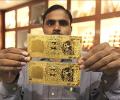
While global uncertainty has led to a rise in prices in 2016, there is still a lot of doubt regarding its future.

You also avoid capital gains tax during redemption in case the gold price is higher, making them tax efficient.

The gems and jewellery industry is staring at a sales washout on Akshaya Tritiya for the second consecutive year as most of the states are under lockdowns due to the raging second wave of the COVID-19 pandemic which has led to negative consumer sentiment, say industry leaders. Akshaya Tritiya, considered as an auspicious day for buying gold and jewellery, falls on May 14 this year. India is the worst-hit among all nations with the second wave of the pandemic, which has been killing more than 3,500 daily and infecting close to 4 lakhs daily for weeks. The massive caseload has nearly paralysed the medical infrastructure.

Gold prices this year are higher than last year, and the goods and services tax is an additional burden for consumers

The second day of pre-Diwali Dhanteras witnessed a tepid response from shoppers on Friday as gold and silver sales have likely to be fallen by up to 35 per cent year-on-year due to high prices and COVID-19 induced financial distress, although consumers moved to online buying to make most of the festival, jewellers said. The buying was heavily restricted to light weight jewellery, coins and precious stones due to lower purchasing power and high gold rates, they said. Due to the fear of coronavirus infection, many customers who had booked in advance were taking delivery of wedding orders on Friday, while some were seen buying safely through online brands like Tanishq and Melorra.

Pre-Diwali Dhanteras sales of gold and silver witnessed a tepid response from consumers on Thursday on account of high prices of the precious metals and sluggish demand due to COVID-19 induced economic hardship, according to jewellers and industry experts. However, jewellers are expecting maximum footfalls on Friday as Dhanteras -- considered the most auspicious day in Hindu calendar for buying items, ranging from precious metals like gold and silver to utensils -- is being celebrated for two days this year.

The yellow metal witnessed some token buying but failed to take off on Dhanteras, a day considered auspicious for buying gold, silver and other valuables and is largely celebrated in North and West India.

Gold prices fell to a 5-year low of less than $1,100/ounce.

'In most schemes, where the monthly investment is a fixed amount, investors run the risk of the price of gold rising during the tenure of the recurring deposit,' notes Harsh Roongta.

The government was also faced with problems on its balance of payments. It took steps to conserve declining foreign exchange reserves, and began to regulate the production, supply and distribution of gold. It banned forward trading in the yellow metal in November 1962, and introduced gold bonds as well, reveals the RBI's annual report for the year ending June 1963.

Gold falls on muted demand, silver shapes up on fresh buying.

Traders said stockists selling in line with a weak global trend as stronger dollar reduced appeal for the precious metal, led to decline in gold prices.
 © 2026 Rediff.com - Investor Information - Advertise with us - Disclaimer - Privacy Policy - Sitemap - Feedback - About us - Terms of use - Grievances