
Indian information technology (IT) stocks, led by Infosys, experienced a significant selloff, dragging the Nifty to a two-month low, primarily due to escalating West Asian tensions pushing crude oil prices higher, and concerns over upcoming large IPOs diverting funds from secondary markets. The sector is also grappling with the long-term implications of AI disruption.

India's Chief Economic Advisor V Anantha Nageswaran stated that the country's balance of payments (BoP) pressure is expected to remain a continuous challenge due to rising imports, commodity dependence, high global interest rates, and intense competition for capital.

US Secretary of State Marco Rubio has characterised the strategic alignment between India and the United States as "extraordinary", emphasising that both nations have an opportunity to shape the course of the 21st century through partnership.

India's largest IT services company, TCS, announced a 4.61 per cent increase in its net profit to Rs 13,349 crore for the June 2026 quarter, with revenues climbing nearly 14 per cent year-on-year.

Zoho Corporation has paused annual pay hikes and reduced marketing expenditure, citing a four-fold increase in server prices for AI infrastructure and an uncertain software sector outlook, according to founder Sridhar Vembu.

India's economy recorded a robust 7.8 per cent growth in the April-June quarter of fiscal year 2026-27, surpassing both market expectations and the Reserve Bank of India's forecast. This strong performance positions India as the world's fastest-growing major economy, demonstrating resilience despite global economic uncertainties and geopolitical tensions, including the conflict in Iran. The Ministry of Statistics and Programme Implementation highlighted the sustained growth momentum amidst global headwinds.

Geopolitical disruptions have made shipping times unpredictable and raised costs for Volvo Car India, which may have to increase vehicle prices if the situation persists, its Managing Director Jyoti Malhotra said on Monday.

The Indian Navy has commissioned INS Mangrol, its third anti-submarine warfare shallow water craft (ASW-SWC), in Mumbai. Built by Cochin Shipyard Limited, the vessel is designed to enhance India's ability to detect and counter submarine threats, especially in shallow coastal waters. Its induction is seen as vital amidst rising geopolitical tensions and increased submarine activity in the Indian Ocean, reinforcing India's indigenous shipbuilding capabilities and maritime security.

'The Indian market has struggled over the past two years.' 'It peaked in September 2024, and although it has moved up and down since then, investors have not really made money.'
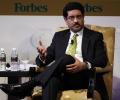
Aditya Birla Group Chairman Kumar Mangalam Birla stated on Tuesday that investments in artificial intelligence should be driven by potential returns, not by a "fear of missing out." Speaking at the 2026 Bloomberg New Economy Forum, Birla indicated that his group would adopt AI more gradually than previously planned, moving away from an "AI arms race" mentality. He also discussed the varied applications of AI across different business sectors, the challenges of capital allocation, and the impact of geopolitical events on global companies.

Former Pakistan pacer Sohail Tanvir has expressed his excitement for the India-Pakistan clash in the 2027 ICC Men's ODI World Cup, emphasising the importance of quality cricket. He highlighted the immense pressure from fans in such encounters, drawing from his own experiences of thriving under pressure while playing against India, including in the IPL and on bilateral tours. The article also notes the historical head-to-head record and details of the upcoming 2027 World Cup fixture.

External Affairs Minister S Jaishankar stated that the world is entering an age of flux marked by conflicts and tariff volatility, requiring India to respond effectively to these challenges. He reiterated India's consistent stance on the Russia-Ukraine conflict, advocating for dialogue and diplomacy, and highlighted India's efforts to engage with both sides. Jaishankar also emphasised India's role in championing the voice of the Global South and navigating complex strategic partnerships in a multi-aligned world.

Indian IT services firms are expected to report a soft Q1 FY27 performance due to a challenging macro environment, the impact of AI, and geopolitical uncertainties, leading to reduced discretionary spending and slower decision-making cycles, according to Motilal Oswal Financial Services.
Industry leaders at an AIMA panel discussion emphasised the need for businesses to quickly adapt to changing market conditions and invest in technologies like artificial intelligence to build resilience and achieve long-term growth. They highlighted the current era of uncertainty driven by geopolitical tensions, supply chain disruptions, and rapid regulatory changes, stressing that tactical responses are as crucial as long-term strategy.

Former CDS Anil Chauhan stated that China poses a long-term and comprehensive challenge to India, with the boundary issue remaining unresolved due to differing perceptions of the Line of Actual Control. However, he emphasised that India's ties with Beijing cannot be solely defined by border disputes, advocating for engagement through platforms like SCO and BRICS. He also highlighted the broader global geopolitical flux and instability in India's neighbourhood as significant security concerns, stressing the need for self-reliance.

Former Army chief General Manoj Naravane asserted that while India's immediate attention is on Pakistan due to terrorism, China will be New Delhi's primary long-term competitor across political, economic, trade, and military domains, necessitating a strong military deterrence alongside dialogue.

IBM India and South Asia MD Sandip Patel stated that India is at a defining moment with a unique opportunity to shape exponential technologies like artificial intelligence, emphasizing that "when India builds, it builds for billions," leading to scalable impact. Speaking at the IBM Think 2026 event, Patel highlighted that the AI revolution is still in its early stages, requiring enterprises to redesign their operations around agents, real-time data, automation, hybrid architecture, and trust. He also introduced the concept of "digital swaraj" or sovereignty in the Indian context, stressing the importance of control over operating environments, data, technology, and AI execution. IBM also announced an MoU with MeitY Startup Hub to accelerate India's deep tech innovation and startup ecosystem, providing startups access to IBM's technology expertise and platforms like watsonx and Sovereign Core.

India-Pakistan clashes in cricket and hockey drew big audiences at the Aichi-Nagoya Asian Games, helping fuel stronger viewership and a 20% revenue rise.

BJP MP Janardan Mishra has strongly defended the Centre's ethanol blending policy amidst ongoing controversy, highlighting India's high crude oil import dependency and global geopolitical challenges. He questioned opponents of ethanol blending, citing Brazil's successful use of 100 per cent ethanol in vehicles and experts' views on its engine compatibility.

US Secretary of State Marco Rubio kick-started a three-day visit to India on Tuesday to advance bilateral ties in energy, trade and investment, defence, critical technologies, and exchange views on the West Asia crisis.

Analysts predict that developments in the West Asia conflict, crude oil prices, and upcoming US inflation data will be the primary factors influencing the Indian stock market next week, alongside foreign investor activity and global market trends.
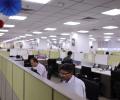
Net office space leasing in India's top eight cities declined by 20 per cent in the January-September period to 36.7 million sq ft, primarily due to limited fresh supply of quality workspaces and a high base effect from the previous year, according to a report by Cushman & Wakefield. Despite this, gross leasing saw a 1 per cent increase, reaching a record 64.6 million sq ft, indicating strong underlying market activity.

Iranian President Masoud Pezeshkian arrived in New Delhi for the BRICS summit, where he is scheduled to hold bilateral talks with Prime Minister Narendra Modi to enhance trade and strengthen overall relations. His visit is particularly significant given the heightened tensions in West Asia and recent US economic sanctions against Iran. Pezeshkian highlighted BRICS' role in fostering economic resilience and reducing dependence on the US dollar, while the summit itself aims to address global challenges and bolster collective resilience in critical sectors.

The Reserve Bank of India's 25-basis point increase in the repo rate to 5.5 per cent is expected to exert pressure on housing affordability and buyer sentiment, particularly affecting interest rate-sensitive segments and potentially moderating sales during the crucial festival season.

Global investment firm KKR remains optimistic about India's long-term growth, citing rising incomes, premiumisation, financial deepening, and demand for quality services as key drivers for its consumption story, even as higher energy prices and AI disruption pose near-term challenges.

Iranian President Masoud Pezeshkian urged BRICS nations to expand trade in national currencies and build an inclusive global economic framework. He criticised "unilateral sanctions" by Western powers, stating they make emerging economies vulnerable and impact global food security. Pezeshkian emphasised BRICS' role in creating a balanced world order and highlighted Iran's geopolitical and energy capacities for cooperation.

Air Chief Marshal AP Singh, Chief of Air Staff, has expressed significant concern over the inordinate delays in inducting new combat jets, including the indigenous Tejas aircraft, stating that these delays are severely impacting the Indian Air Force's depleting fighter squadron strength. He highlighted the need for 36-40 new fighter jets annually to address these gaps and voiced worry over Pakistan's collaboration with China on a fifth-generation fighter jet.

Union Minister Ashwini Vaishnaw warned of increased global turbulence from tech disruptions, AI, and financial risks in the coming years. He stated that India is strengthening its economic and technological resilience to protect its growth from external shocks. India is focusing on domestic manufacturing and design in critical tech areas while maintaining global integration, with trust becoming as crucial as cost in supply chains.

Indian benchmark indices Sensex and Nifty saw a rebound in early trade, driven by a moderation in crude oil prices, despite persistent selling by Foreign Institutional Investors (FIIs) and mixed global market cues.

'While the population remains relatively young, its age structure is beginning to shift, setting the stage for a much older population later this century.'

Infosys Senior Vice President Vikram Meghal stated that India is experiencing a significant demand window in the semiconductor market and must evolve from merely engineering products to inventing complete systems. He highlighted the massive shifts driven by AI and supply chain challenges, urging a focus on "Invent in India" to capture higher value and leverage decades of investment in the ecosystem.

BRICS nations have successfully reached a consensus on a joint statement following extensive negotiations, with India playing a crucial role in bridging differences, particularly among West Asian members like Iran, Saudi Arabia, and the UAE, despite regional conflicts and geopolitical tensions.

Air Chief Marshal AP Singh has voiced concerns over significant delays in inducting new combat jets, including the Tejas aircraft, which are impacting the Indian Air Force's depleting fighter squadron strength. He stressed the need for annual induction of 36-40 jets to address the gaps and discussed ongoing procurement plans like the MRFA deal and future strategies for combat aircraft and theatre commands.

The BRICS summit in New Delhi brings together leaders from major emerging economies to address global challenges like trade disputes, geopolitical upheavals, and the economic impact of conflicts in Ukraine and West Asia. India, as chair, aims to position BRICS as an economic growth engine, focusing on the Global South's food, energy, and supply chain security. The summit also highlights the grouping's expansion and its growing influence in global governance.

The Indian corporate sector demonstrated strong credit quality in the first half of FY27, driven by robust balance sheets and healthy liquidity, despite facing risks from elevated crude prices, inflation, and global interest rates.

Electric commercial vehicle manufacturers in India are struggling to meet localisation requirements under the PM eDRIVE scheme, set to begin on Tuesday. The Society of Indian Automobile Manufacturers (Siam) has requested a seven-month extension until April 1, 2027, citing disruptions in the supply of rare earth magnets due to China's export restrictions and geopolitical tensions. The government is yet to decide on the request, which aims to prevent production disruptions and allow time for local supply chain development.

India's leading IT companies are anticipated to report subdued revenue growth and largely stable margins for the July-September quarter, as clients maintain tight discretionary budgets, with analysts closely watching the conversion of strong bookings into revenue and the impact of AI on traditional services.

Senior Congress leader Shashi Tharoor has articulated India's position on BRICS, advocating for it to be a "non-West, but not anti-West" platform, a stance he believes is crucial for India's national interest. He highlighted the prestige of hosting the BRICS summit, India's responsibility to represent the Global South, and the significance of bilateral meetings, particularly with China and Russia. Tharoor also addressed the strained India-China relations, citing border issues and trade leverage, and discussed the challenges within BRICS, including difficulties in achieving consensus on global issues and trade imbalances, while also considering the need for diversified international relations amidst unpredictable US sanctions.

The Reserve Bank of India (RBI) has declared a record Rs 2.87 lakh crore dividend to the government for the 2025-26 financial year, offering significant financial flexibility amidst global economic uncertainties.

After a significant 9.9% depreciation in FY26, the Indian rupee has shown comparative stability in the first half of FY27, depreciating by only 1.1%, attributed to regulatory interventions and measures to attract foreign capital, despite ongoing global pressures from rising crude oil prices and foreign investor outflows.
