
India's latest offer of talks has been taken up by Pakistan President Asif Ali Zardari, Prime Minister Yousuf Raza Gilani and army chief General Ashfaq Parvez Kayani.
India's latest offer of talks has been taken up by Pakistan President Asif Ali Zardari, Prime Minister Yousuf Raza Gilani and army chief General Ashfaq Parvez Kayani.
Highest levels of Pakistan's security apparatus, including army chief General Ashfaq Parvez Kayani, might have been aware of the plot to bomb the Indian embassy in Kabul in July, United States intelligence and security officials believe, a media report has said.They also believe that the attack was aided by Pakistan's infamous Inter Services Intelligence agency."It's very difficult to imagine he (General Kayani) was not aware," a senior American official said.

Pakistan will emerge triumphant in the war against extremism and peace will be restored in the country at any cost, Pakistani Army Chief General Ashfaq Parvez Kayani said.
The ruling Pakistan People's Party feels that the disclosure of US diplomatic cables have been beneficial to return of popular rule in the country as it has forced the military to clarify its position regarding democracy, a party leader has said.
Pakistan army chief General Ashfaq Parvez Kayani escaped an attempt on his life when Taliban militants fired rockets at an area in South Waziristan tribal agency shortly after his visit to the troubled region.
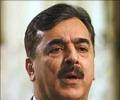
Pakistan Prime Minister Yousuf Raza Gilani and army chief General Ashfaq Parvez Kayani on Monday made an unannounced visit to the restive Swat valley where troops are engaged in flushing out Taliban militants.A top-level review of the security situation and the repatriation of the displaced people, uprooted by insurgency, was the highlight of the visit. The visit also assumes significance with reports of the army being on the verge of wrapping up the intensive operation.
The top United States commander in Afghanistan has said that they are facing difficulties in their latest military campaign against the Taliban due to lack of cooperation from Pakistan.General Stanley McChrystal, the commander of the International Security Assistance Force and US Forces in Afghanistan, is believed to have pursued this line in his secret visit to Islamabad over the weekend, during which he met President Asif Ali Zardari and Army chief Gen Ashfaq Parvez Kayani.
Admiral Mike Mullen, the chairman of the Joint Chiefs of Staff, who just couldn't stop praising Pakistani Army General Ashfaq Parvez Kayani , told Congress Thursday that Kayani has purged the so-called 'rogue' elements from the ISI who are in cahoots with the Taliban.

Pakistan's Defence Minister Chaudhry Ahmed Mukhtar has said that the Pakistan People's Party-led government was not giving any extension to Chief of Army Staff General Ashfaq Parvez Kayani, as he has not asked for the extension of his tenure.
In a bid to defuse tensions between India and Pakistan, United States on Monday rushed its top Army official to Islamabad, to hold discussions with the country's political leadership. US Joint Chiefs of Staff Admiral Mike Mullen arrived in Islamabad today on an unscheduled visit, second after the November 26 terror strikes in Mumbai that killed more than 180 people. Mullen met Pakistani national security advisor Mehmood Ali Durrani shortly after his arrival.
The report regarding Pakistan Army Chief General Ashfaq Parvez Kayani extending the tenure of Inter-Services Intelligence Director General Lieutenant General Ahmed Shuja Pasha by a year clearly suggests that nothing much has changed in the country and the two still rule the roost, says an article in the New York Times.While experts believe that Kayani's move may also pave the way for his own extension in service, the 'weak' civilian set-up in Pakistan has no other choice.
Pakistan's army chief General Ashfaq Parvez Kayani on Monday emphasised the need to avoid a conflict with India in the wake of the Mumbai attacks as China launched a diplomatic initiative to ease tensions by dispatching a top diplomat to Islamabad. Kayani's comments, believed to be his first on the situation, came during his talks with Chinese Vice Foreign Minister He Yafei, who is in Islamabad.

General Raheel Sharif on Friday assumed charge as Pakistan's new army chief at a ceremony in Rawalpindi, where outgoing army chief general Ashfaq Parvez Kayani passed on the command stick to him.

The increase in violence along the Line of Control in the last few weeks indicates that despite the olive branch offered by Pakistan Prime Minister Nawaz Sharif, hard-line elements in Islamabad are in no mood to become friendly with India.

But the ISI chief did not retire giving the impression that he has won General Asim Munir's trust, notes Rana Banerji who headed the Pakistan desk at RA&W.

Pakistan's top military commanders have discussed the likely implications of the leaked report of the Abbottabad Commission which has made a series of stinging remarks against the country's powerful security establishment.

Pakistan Army chief General Ashfaq Parvez Kayani had expressed doubts about a claim by the regime of his former boss Pervez Musharraf that Benazir Bhutto was assassinated by the Pakistani Taliban, a United Nations investigator has said.
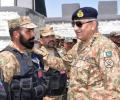
If Imran Khan delays his assent to General Bajwa's recommendations any further, it could imply he is taking stock of possible serious dissent within Pakistan's top army echelons, says Rana Banerji, who headed the Pakistan Desk at the Research and Analysis Wing, India's external intelligence agency.
General Bajwa remains in command as army chief and Prime Minister Imran Khan did not play any role in the reshuffle, says Rana Banerji, who headed the Pakistan Desk at the Research and Analysis Wing, India's external intelligence agency.

Barack Obama has said that he had ruled out involving Pakistan in the raid on Osama bin Laden's hideout because it was an "open secret" that certain elements inside Pakistan's military, and especially its intelligence services, maintained links to the Taliban and perhaps even al-Qaeda, sometimes using them as strategic assets against Afghanistan and India.

Violations from the Pakistani side along the Line of Control have become a common recurrence, and according to sources in the Intelligence Bureau, some peace can be expected only after Pakistan Army Chief Gen Ashfaq Parvez Kayani retires next month.
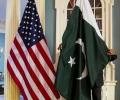
The relations between Pakistan and the US nosedived this January after US President Donald Trump accused Islamabad of giving nothing to Washington but "lies and deceit" and providing "safe haven" to terrorists.

General Asad Durrani's disclosures could leave considerable egg on the face of those currently wielding the stick in Pakistan, notes Rana Banerji, who headed the Pakistan desk at the Research and Analysis Wing, India's external intelligence agency.
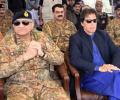
'It is not difficult for a Pakistan army chief assisted by the deep state to manipulate a situation.' 'Pulwama, Uri and Pathankot, all come to mind,' cautions Lieutenant General Syed Ata Hasnain (retd).

The United States drone attack that killed Pakistani Taliban chief Hakimullah Mehsud has done "serious damage" to the Islamabad's efforts for a dialogue with militants, Prime Minister Nawaz Sharif said on Tuesday.
Pakistan National Security Advisor Sartaj Aziz brings to New Delhi a newfound Pakistani confidence, stemming from its leverage in Afghanistan, says Ajai Shukla
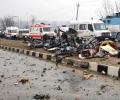
'A resurgent Jaish could be a reflection of the Pakistani security establishment's view that with the region moving ever closer to a post-US Afghanistan, it is time to redirect attention to Kashmir.'

Experts trace the reasons for the 26/11 attacks to the Pakistan's military interest in three key areas: Kashmir, Afghanistan and nuclear armaments.

'A close look at the time-lines tells you that exactly as the back-channel negotiations were in their most crucial stage, "somebody" was planning the 26/11 attacks in Mumbai,' says Shekhar Gupta questioning Khurshid Mahmud Kasuri's account of a peace deal with India.
 © 2026 Rediff.com - Advertise with us - Disclaimer - Privacy Policy - Sitemap - Feedback - About us - Terms of use - Grievances