
Researchers at IIT Bombay have discovered that heatwaves in the Indo-Gangetic Plains are primarily caused by local land and weather conditions, rather than hot air originating from elsewhere, emphasising the need for location-specific early warning systems.

Prime Minister Narendra Modi presented a range of culturally significant gifts during his recent five-nation tour, including a Muga silk stole for the Italian Prime Minister and Madhubani painting for the Dutch Prime Minister, showcasing India's rich artistic heritage.

A poor monsoon could drag overall economic growth and compound the impact of the West Asia conflict on the Indian economy.

Kolkata Knight Riders, struggling to find form, face a tough challenge against Lucknow Super Giants, spearheaded by Mohammed Shami, in their IPL 2026 match.

Delhi recorded its coldest January morning in three years with the minimum temperature dropping to 3 degrees Celsius. Cold wave conditions are expected to persist, and air quality has deteriorated to the 'very poor' category.

Sonia Gandhi criticizes the Modi government's environmental policies, claiming they endanger the Aravalli hills and disregard environmental protection.

According to the data, the tiger population in the country increased from 2,967 in 2018 to 3,167 in 2022.
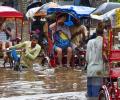
The early onset of the southwest monsoon brought continuous rainfall across southern and eastern India, contributing to this record.

'Modi's charisma may have weakened as last year's Lok Sabha poll results showed but in the eyes of the Sangh Parivar, it has not waned.' 'Minus a strong BJP government at the Centre for another decade and more, there is apprehension that an anti-Hindutva government could reverse many of the ideological gains that the Modi dispensation has achieved through its three terms,' points out N Sathiya Moorthy.

A new study by IIT-Kharagpur warns that ozone pollution could significantly reduce agricultural yields in India, particularly impacting wheat, rice, and maize production. The study, published in the journal 'Environmental Research', highlights the vulnerability of major food crops to rising surface ozone levels, especially in the Indo-Gangetic Plain and Central India. The researchers call for effective emission reduction strategies to mitigate these risks and ensure global food security.

Chandragupta Maurya was the first king to establish an empire in India. He died a monk.

'It has the potential to sow seeds of furthering discord when the direction of the discourse is aimed at propagating the perceived supremacy of 'cultural nationalism' from a distant past over the prevailing dominance of 'Constitutional nationalism',' argues N Sathiya Moorthy.

A host of weapons, possibly used during the rebellion of 1857, was found by a farmer while working in his field in the district, an official said on Friday.

The ministry said it has launched an inquiry to ascertain as to how this "factual information" was not included in the ministry's response to an RTI query.

The IMD said that rainfall over India in August and September would be around 106 percent of the long-period average of 422.8 mm.

Heatwave conditions are expected over northwest India during the next five days, with Punjab, Haryana, Rajasthan and Delhi predicted to bear the maximum impact, the India Meteorological Department (IMD) said on Thursday.
According to weather officials, wind speeds along and off the Odisha-West Bengal coasts are anticipated to reach 60 km/h from October 23, increasing to 120 km/h from October 24 night to October 25 morning.

Local people had hoped that all the floodwater would be cleared by Friday but the opposite occurred.

Ten to 20 days of heatwave are expected against the normal of four to eight days in the entire April-June period.
'There will not be very heavy rain.' 'Moderate showers will be there and winds will be, say, somewhere between 20 and 40 km/hr, gusting to 35 km/hr.'
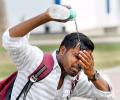
Heatwave conditions have been prevailing in Odisha since April 15 and the Gangetic West Bengal since April 17, according to the MeT department.

Intense heat swept through east India and parts of the southern peninsular region on Thursday, testing power grids and prompting the Kerala government to order closure of educational institutions till May 6.

In underlining the role of border villages as custodians of India's frontiers, New Delhi is following China's example in Tibet.

The heat wave is likely to impact parts of Jammu and Kashmir, Himachal Pradesh, Uttarakhand, Punjab, Haryana, Delhi, Rajasthan, Madhya Pradesh, Jharkhand, Odisha and Gangetic West Bengal, the Met office said.

Satellite imagery showed a layer of dense fog extending from Punjab and north Rajasthan to the northeast. Patches of fog were also visible along the east coast.

It is in more than a decade that the IMD has predicted 'above-normal' rains in the country.

The Met office has issued a "red" warning for Delhi, Haryana, Punjab and west Rajasthan, stressing the need for "extreme care for vulnerable people".

Lakhs of voters will have to bear the searing heat when they step out to exercise their franchise in the second phase of the Lok Sabha elections on Friday.
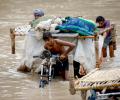
The El Nino impact on the Indian monsoon typically manifests by way of extended break in rainfall.

Satellite imagery showed a dense elongated band of fog stretching from Punjab to the northeast.

In view of air pollution in the national capital, the December winter break of all schools has been rescheduled and it will be now from November 9 to November 18, a circular of the Delhi Directorate of Education stated on Wednesday.

Cold-day conditions prevailed in parts of north India on Friday though the maximum temperatures rose slightly amid clear skies and sunshine during the day.

Some areas in the Indo-Gangetic basin in India have already passed the groundwater depletion tipping point and its entire northwestern region is predicted to experience critically low groundwater availability by 2025, according to a new report by the United Nations.

The genesis of India's most-loved dish may go to canny cooks in the Mughal era, notes Sandeep Goyal.

At the review meeting, chaired by cabinet secretary Rajiv Gauba in New Delhi, the IMD said above normal maximum temperatures are likely over most parts of northeast, east and central India and some parts of northwest India.

The minimum temperature in the national capital on Saturday settled at 10.2 degrees Celsius, three notches above the season's average, it said.

A railway official said around 20 trains were delayed by 15 minutes to 2 hours in the morning.

The national capital, parts of which reeled under heatwave conditions for the past few days, had some relief on Wednesday with strong winds and partly cloudy skies witnessed during the day.
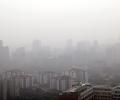
Air quality in Delhi and its suburbs dropped to the severe category again on Wednesday morning, with smoke from post-harvest paddy straw burning in neighbouring states accounting for one-third of the air pollution in the national capital.

The city's Air Quality Index (AQI) stood at 420 at 8 am on Thursday, compared to 426 at 4 pm on Wednesday. The AQI map prepared by the Central Pollution Control Board showed clusters of red dots (indicating hazardous air quality) spread across the Indo-Gangetic plains.
 © 2026 Rediff.com - Advertise with us - Disclaimer - Privacy Policy - Sitemap - Feedback - About us - Terms of use - Grievances