
Consumer stocks remain the biggest laggard on the bourses. The Nify50 weighting of FMCG stocks declined to a decade low of 9.9 per cent at the end of March this year, down 150 basis points from 11.4 per cent a year ago. At their peak in March 2013, major FMCG stocks, such as Hindustan Unilever, ITC, and Asian Paints, together accounted for 15 per cent of the Nifty50. But now together with automobile stocks, the consumer goods sector accounts for only 14.7 per cent of the index, down 200 basis points in the past 12 months and 37 per cent from the record high weighting of 23.4 per cent at the end of March 2014.

Automotive retail sales saw a 14 per cent rise in March on a year-on-year (YoY) basis, according to data released by the Federation of Automobile Dealers Associations (FADA). For the whole of financial year 2022-23 (FY23), sales grew 21 per cent YoY. For both March and the financial year, all categories, except for tractors, and including two-wheelers, three-wheelers, passenger vehicles (PVs), and commercial vehicles (CVs), posted double-digit growth. However, the total retail sales of 22.1 million for the financial year were still 12 per cent lower than the pre-Covid (FY20) level of 25 million, owing to an 18 per cent dip in the two-wheeler segment.

After outperforming the broader market and their public sector peers for the better part of the post-Lehman period, private sector banks - such as HDFC Bank, ICICI Bank, Axis Bank, and Kotak Mahindra Bank - are now underperforming. Last week, the Nifty Private Bank index was up just 6 per cent year-to-date in the calendar year 2021, against nearly 13 per cent rally in the Bank Nifty and a 15 per cent rise in the benchmark Nifty50. Public sector (PSU) banks, such as State bank of India, Bank of Baroda, and Punjab National Bank, are now rally leaders and outperforming the broader market. The Nifty PSU Bank index was up 42 per cent since the beginning of this calendar year. But on a longer term, the Nifty Private Bank index is up 101 per cent since March 2016, against a 118 per cent rally in the Bank Nifty and just 2 per cent rise in the Nifty PSU Bank index in the period.

'The formula now is even if there is no profit there should be break-even.' 'We green-light a film only if we can see break-even in it.'

Gross value added in agriculture and allied activities clocked a healthy growth rate of 4.5 per cent at constant prices in the second quarter of FY22, up from 3 per cent during the same period last fiscal year and 3.5 per cent in Q2 of 2019-20. In the first quarter of FY22, gross value added in the sector was also 4.5 per cent. Growth in current prices was also a healthy 7.9 per cent in July-September 2021-22, up from 7.3 per cent in the same quarter last fiscal year. It was slightly less than the 8.7 per cent of the second quarter of 2019-20.

However, despite Covid, Indian markets registered their best financial year performance in a decade, with the Sensex and Nifty50 rallying 68 per cent and 71 per cent, respectively, in FY21.

Abbott India outperformed the Indian pharmaceutical market (IPM) with a year-on-year (YoY) growth of 23 per cent in February. The domestic market grew at a robust 20 per cent on a low base, primarily led by volume growth and price hikes. Abbott continued to outperform the sector in the anti-diabetic space with a growth of 20 per cent and key brands such as Thyronorm (hypothyroidism), biliary agent Udiliv, insulin Ryzodeg posted robust growth.

'India has always been a bottom-up stock-picking market, and as growth recovers with higher liquidity, mid and small-caps always tend to outperform.'

'Honoured to call on HRH Crown Prince Mohammed bin Salman in Jeddah this evening. Conveyed the warm greetings of PM @narendramodi.'

Domestic commercial-vehicle (CV) sales volume will witness significant growth over the next few years and the overall CV volume is likely to reach close to 1-million units by FY24, a report said on Wednesday. The report by credit ratings agency Fitch Ratings also expects growing demand and the resultant rise in operating leverage to boost the profitability of the domestic CV-focused original equipment manufacturers after FY22, despite elevated production costs. A recovery in medium and heavy CVs from multi-year lows, along with sustained growth in light CV categories, will help overall CV volume to reach close to 1-million units by FY24 - the level of the last cyclical peak recorded in FY19, it said.

Maruti Suzuki is set to launch a new multi-purpose vehicle (MPV) -- Invicto -- next month. It will be the company's first passenger vehicle with an ex-showroom price tag of Rs 20 lakh or more, said Shashank Srivastava, executive director (sales), on Tuesday. The upcoming MPV will compete with the likes of Toyota Innova Hycross, Kia Carnival, Hyundai Alcazar, MG Hector Plus, Tata Safari, Mahindra & Mahindra XUV700, and Mahindra & Mahindra Scorpio-N - all having three rows of seats. Invicto will be based on the Hycross by Toyota, which will manufacture Maruti's most expensive car at its Bidadi plant in Karnataka.

'Pump prices of petrol and diesel have reached historical highs. An unwinding of taxes on petroleum products by both the Centre and the states could ease the cost-push pressures,' the Monetary Policy Committee (MPC) has said.

At risk of entrenched rough times are sectors like hospitality and those with discretionary spends.

When Life Insurance Corporation (LIC) of India gets listed on the bourses next month, it will be among the biggest listed life insurers globally in terms of market capitalisation (m-cap), assets, and revenue, but will also be among the least profitable and capitalised among its peer group. A big gap between LIC's m-cap, profits, and networth (shareholder capital) will make it one of the priciest insurers globally, in terms of price-to-earnings (P/E) multiple and price-to-book value (P/B) ratio. LIC also lags behind its Indian listed peers in terms of profit and networth.
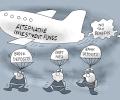
Alternative investment funds (AIFs) - pooled investment vehicles catering to high net worth individuals (HNIs) - saw a 30 per cent increase in investment commitments during financial year 2022-23 (FY23). At the end of March 2023, the total investment commitments raised stood at Rs 8.33 trillion, up Rs 1.92 trillion from Rs 6.41 trillion at the end of March 2022. A commitment is the money clients are willing to put into AIFs.
ITC's first foreign venture in the hotel space - a premium and luxury mixed-use development - has been "adversely impacted" by Sri Lanka's economic crisis, the firm said. The $300-million project under WelcomHotels Lanka (Private) Limited (WLPL), a wholly-owned subsidiary of ITC, comprises a luxury hotel and a super-premium residential apartment complex on 5.86 acres of prime sea-facing land in Colombo. In its latest annual report for financial year 2021-22 (FY22), ITC mentioned that the project's construction was running on schedule till the third quarter (Q3) of FY19, but was adversely impacted due to disruptions in the aftermath of the terror incidents in 2019 and thereafter by recurrent waves of the Covid-19 pandemic.

Arguing that the recent elevation in retail inflation is not structural but supply-driven and therefore potentially transitory, a foreign brokerage report has forecast that the benign interest rate regime will continue at least until next June. The assessment comes a day ahead of the third bimonthly monetary policy review on Friday wherein it's widely expected that the monetary authority will leave the key rates unchanged at 4 per cent even though the consumer prices have been on remaining above 6 per cent since May and crude prices have been north of $70 a barrel for months.
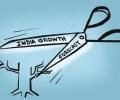
The Indian economy is estimated to grow at 7 per cent in the 2022-23 fiscal, down from 8.7 per cent a year ago, mainly due poor performance of mining and manufacturing sectors. As per the first advance estimates of national income released by the National Statistical Office (NSO) on Friday, the manufacturing sector output is estimated to decelerate to 1.6 per cent in the current fiscal from 9.9 per cent in 2021-22. Similarly, mining sector growth is estimated at 2.4 per cent in the current fiscal as against 11.5 per cent in 2021-22.

A weak margin outlook in the near term and lack of fresh triggers may keep the Godrej Consumer Products (GCPL) stock under pressure. The stock, after tepid September quarter (Q2) results and marginal downward revision in earnings estimates, declined 3.5 per cent in trade on Friday. Though consolidated sales of the company, which owns the Goodknight and Cinthol brands, grew 8.5 per cent year-on-year (YoY), its operating profit declined because of the sharp contraction in margins.

Cooler weather meant that demand for milk products and value-added items like buttermilk and ice-cream did not show the usual rise.

Benefitting from the economic rebound, banks are expected to report a healthy bottom-line and asset quality profile in the quarter ended March 2023 (Q4FY23). The net profit of listed commercial banks is projected to grow by an average 43.6 per cent year-on-year (YoY) in Q4FY23 amid better net interest margins (NIMs) and declining credit costs. This is based on a combined assessment of analyst estimates for 17 banks on Bloomberg database.

The cost of debt-funds for the states has touched the highest level so far this fiscal with the weighted average cut-off crossing the 7.16 percentage points at the latest auctions, up 11 bps over the past week, reflecting the hardening yields even for the government securities. The hardening of the rates at the first auction of the quarter comes in the wake of the expected large supply of debt from the states, as indicated for Q4 at Rs 3.2 lakh crore, up by Rs 10,000 crore. Nine states on Tuesday raised Rs 18,900 crore at the latest auction of state development loans.

It may plan a significant hike in budgetary support aimed at completing the balance 8.4 million dwellings by March 2024.

A spate of recent orders under the Indigenously Designed Developed and Manufactured (IDDM) category have led to investor focus on defence stocks. Actually, the defence index has been an outperformer for a long while with public sector undertakings (PSUs) like Hindustan Aeronautics (HAL), Bharat Electronics (BEL), Bharat Dynamics (BDL), Garden Reach Shipbuilders Engineers (GRSE), Cochin Shipyard and Goa Shipyard being beneficiaries of the policy.

After withdrawing record funds in 2021-22, foreign portfolio investors (FPIs) continued their sell-off in the last fiscal too and pulled out Rs 37,631 crore from Indian equities amid aggressive rate hikes by central banks globally. The outflow trend is likely to reverse in the current financial year since India has the best growth potential in the financial year 2023-24 (FY24), VK Vijayakumar, chief investment strategist at Geojit Financial Services, said. Market analysts believe that FPI flows in the current financial year would be decided by a host of factors, such as the US Federal Reserve's policy stance, oil prices movement and development in the geopolitical situation.

Despite the wobble in the markets over the past few weeks, Indian equities remain expensive as measured by several yardsticks. India's market capitalisation-to-GDP ratio, for instance, has touched a multi-year high. The ratio is currently at 116 per cent, based on the FY22E gross domestic product (GDP) number, above its long-term average of 79 per cent.

If that happens, India's economic size will be just shy of $20 trillion and its annual per capita income will be about $10,000, when the country celebrates its centenary of independence.

The argument that India is going towards a 'Hindu rate of growth' is "ill-conceived, biased and pre-mature" when weighed against the respective data on savings and investments, said SBI Research in its Ecowrap report. The term Hindu rate of growth was coined by economist Raj Krishna in 1978, which denoted the economic growth of about 3.5-4.0 per cent in terms of GDP during 1947-1980. "India's quarterly sequential Y-o-Y GDP growth has been in a declining trend in FY23.

In a multi-year first, the country's largest software exporter TCS on Monday reported a marginal decline in its overall employees for the December 2022 quarter but announced that it will be hiring over 1.25 lakh staff in FY24. The software firm posted a decline of 2,197 people in its employee base for the October-December period to 6.13 lakh. The Tata group company, however, made it clear that this was due to the higher hiring done over the last 18 months, and not driven by the demand environment.

Overlooked yet capable candidates will now have the opportunity to apply for TCS open requirements.

Striking a different note from its peers, US brokerage Bank of America Securities has maintained that the Reserve Bank will leave rates unchanged next week, recognising growth-focused and capex-driven fiscal expansion, which though poses huge price pressure and interest rate risks later. The RBI's rate setting panel Monetary Policy Committee (MPC) will begin its deliberations next Monday and announce the policy moves on Wednesday (February 9) in the backdrop of a massive spike in bond yields post the Budget. Almost all major central banks are in the process of hiking rates to tame inflation.

Zomato has lost over 9 per cent thus far in calendar year 2023 (CY23) and has underperformed the S&P BSE Sensex that has slipped nearly 5.3 per cent during this period. Despite this underperformance, analysts at HSBC think that the stock can hit Rs 87 going ahead - up over 64 per cent from the current levels. The food delivery industry, wrote Yogesh Aggarwal and Abhishek Pathak of HSBC in a recent note, has slowed considerably in the last few months.

Check out some of the stocks that will react on the basis of their numbers in the near term.

A sharp sell-off in the Indian equities markets after a spike in crude oil prices should not be surprising. Historically there is a negative correlation between stock valuations in India and the price of Brent crude oil, which is the benchmark for the Indian crude oil basket. Between 2011 and 2014, crude oil traded above $100 a barrel for an extended period, the Sensex-trailing price/earnings (P/E) was 18X, on average, during the period, nearly 22 per cent lower than the current index P/E of 23X.

If the current restrictions remain in place until the end of May, we estimate that the cumulative loss of activity could amount to around $10.5 billion, or around 0.34 percentage point (pp) of annual nominal gross domestic product, say Barclays economists.

The stock of the retail chain Avenue Supermarts (Dmart) was the biggest loser in the BSE 100 Index shedding 4.35 per cent on Thursday and added to these losses on Monday by falling an additional 1.3 per cent. The Street was reacting to lower than expected operational performance by the company in the March quarter. The country's largest listed retailer by market capitalisation reported a 20 per cent year-on-year (y-o-y) growth in its top line to Rs 10,337 crore.

While Mukesh Ambani-led RIL posted a 108 per cent YoY rise in profit after tax for Q4FY21 at Rs 13,227 crore, it fell short of Bloomberg estimate of Rs 13,704 crore.

'When we look at the quality of our retail loan book, the non-performing asset percentage is low.'

While Wipro leads the pack on absolute numbers, analysts for Infosys for reporting consistent growth, revising FY22 guidance and beating TCS on revenue growth.

In the early part of 1800, a 30-acre plot next to Fort Gloster on the banks of river Hooghly in Howrah district of Bengal was the nerve centre of industrial activity; it housed India's first steam-powered cotton mill, Bowreah Mills, which was set up by a British merchant and went on to become a hub of factories - a rum distillery, foundry, cotton yarn factory, an oil mill and a paper mill, et al. Spearheaded by Dwarkanath Tagore, the industrialist grandfather of Rabindranath Tagore, the commercial complex was possibly the first of its kind in the country. Close to 200 years later, after much ebb and flow of history, the hub is set for a resurgence of sorts.
 © 2026 Rediff.com - Advertise with us - Disclaimer - Privacy Policy - Sitemap - Feedback - About us - Terms of use - Grievances