
Foreign investors, according to them, will now wait-and-watch how the economy takes shape in the backdrop of doubts over monsoon, interest rate trajectory and other global events such as the US - China trade war.

There is considerable speculation as to whether this award would have any bearing on another Vodafone-type case, namely, the ongoing tax-related arbitration proceedings with Cairn Energy.

The FPI holding in India's top 100 companies, which are part of the Nifty 100 index, declined to 24.23 per cent on average at the end of March this year, from a high of 27.5 per cent at the end of March 2021. This is the lowest FPI holdings in India's top listed companies in at least three years. A general sell-off by FPIs has weighed on stock prices and the benchmark S&P BSE Sensex is down 8.5 per cent, from its 52-week high made in October 2021. Most analysts expect FPI flows to remain weak in FY23 as well, given rising bond yields in the US and an expected earnings slowdown in India due to high inflation and commodity prices.

The approval comes few days before the company has to clear statutory liabilities of up to nearly Rs 35,586 crore, of which Rs 21,682 crore is licence fee and another Rs 13,904.01 crore is spectrum dues.

Amid an existential crisis facing the firm over Rs 50,000 crore unpaid dues towards the government, billionaire Kumar Mangalam Birla on Wednesday stepped down as the chairman of Vodafone Idea Ltd. Birla -- who had in June offered to give away his holding in the joint venture with Britain's Vodafone to the government -- will cease to be a director and non-executive chairman of the company at the end of business hours on Wednesday, VIL said in a filing to the stock exchanges. It did not give any reason for Birla's decision. He will be replaced by Himanshu Kapania (who was earlier managing director and CEO of Birla's Idea Cellular) as the new chairman of Vodafone Idea Ltd.

'Today, there is no easy money to be made after the run-up in equities.'
.jpg)
Net investments by foreign investors in the equity market were $2.2 billion (Rs 13,166 crore) from July 1-25, while they amounted to $3 billion (Rs 17,829) in the debt market, taking the total to $5.2 billion (Rs 30,995 crore), as per the latest data.

Tata Steel was the top loser in the Sensex pack, sinking over 5 per cent, followed by SBI, IndusInd Bank, Bajaj Finance, HDFC Bank and NTPC. NSE Nifty tanked 371 points to 16,614.20.

Around 75 per cent, or 372 stocks, that are part of the BSE500 are trading at least 10 per cent below their all-time high levels, despite the index hitting a record high 20,515 points on the BSE in intra-day trade on Wednesday, surpassing its previous high of 20,390 touched in March 12. The index, which accounts for 93 per cent of BSE listed companies' market capitalisation, has gained 8 per cent from its recent low of 18,983, touched on April 19. In comparison, the benchmark S&P BSE Sensex gained 6 per cent over the same period, but is still nearly 4.5 per cent away from its all-time high of 52,517 that it hit on February 16.

The government on Saturday made its prior approval mandatory for foreign investments from countries that share land border with India to curb 'opportunistic takeovers' of domestic firms following the COVID-19 pandemic, a move which will restrict Foreign Direct Investment from China.

The auction follows aggregate overseas investments in government debt securities yesterday reaching Rs 1,21,271 crore (Rs 1,212.71 billion), which is 97.46 per cent of total permitted limit of Rs 1,24,432 crore (Rs 1,244.32 billion).

In the aviation sector, 100 per cent FDI is allowed under automatic route for MRO (maintenance, repair, overhaul), ground handling, and aircraft purchase.

In 2017, a consortium led by Russian state oil company Rosneft agreed to buy Essar Oil for $12.9 billion in India's biggest foreign acquisition of a homegrown company. Rosneft's buyout of Essar's assets was meant to herald a wave of energy investments in India - over six decades after Esso, Caltex and Shell invested in India's refining sector in the 1950s. But the government has tripped up in its efforts to sell Bharat Petroleum Corporation Ltd (BPCL), formerly Burmah Shell, a blue chip public sector company. Bidders include a couple of global funds and resources firm Vedanta.
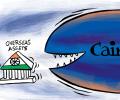
UK-based Cairn Energy PLC on Wednesday said it has agreed to drop litigations to seize Indian properties in countries ranging from France to the UK as it has accepted the Indian government's offer to settle tax dispute relating to the levy of taxes retrospectively. Meeting the requirements of new legislation that scraps levy of retrospective taxation, the company has given required undertakings indemnifying the Indian government against future claims as well as agreeing to drop any legal proceedings anywhere in the world. The government now has to accept this and issue Cairn a so-called Form-II, that will commit it to refund the tax collected to enforce the retrospective tax demand.

The government plans to bring down its stake to 26 per cent in these two banks, which are yet to be identified. This may not come in the way of getting investors for these banks, provided the government is willing to step back rather than run them the way it had been doing for over five decades since these banks were nationalised, points out Tamal Bandyopadhyay.

The Modi leadership could lose Election 2024 if a communal flare-up becomes cause for all-round catastrophe, warns N Sathiya Moorthy.

'Two esteemed foreign investors with huge funds are coming with us in our real estate and city development businesses.'

'It is going to be a tough balance for the RBI to manage economic stability and ensure smooth government borrowing.'

Market recovery on the cards in 2014 as investors are likely to chase higher yields

This amount does not include losses suffered indirectly through investment in mutual funds (MFs) and insurance companies.
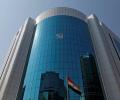
The regulator typically meets overseas investors in the US and UK in the first half of a financial year, and had opted for a virtual meet last year too.

'They want (the ownership and management of PSU banks) to pass into the hands of a private sector entity.' 'Ownership of these banks will go from the public sector to private sector.'

For large start-ups the US market is considered to be a preferred destination, as Indian investors were seen as hesitant to pay the kind of valuation private equity investors or the US markets pay. However, Zomato's listing has quashed these notions.

As per the current policy, 100 per cent foreign investment is allowed in scheduled air transport service, domestic scheduled passenger airlines and regional air transport

The Sensex is on course to ending calendar year (CY) 2019 at a price-earnings (P/E) multiple of 29x, the highest in 25 years. Current valuations are, however, lower than those seen in the early 1990s. The Sensex has risen close to 14 per cent in the last 12 months, while the index underlying EPS dropped 6.7 per cent during the period.

The country last raised the amount of government debt that foreign investors can buy by $5 billion in June last year.

'While there has been an impact on economic activity, it is not as profound as the lockdown last year.'

The positive momentum in the secondary market and the availability of foreign capital has helped India Inc tap the market to raise capital.
The recent US-India friction over trade is being driven by Big Pharma.

Sensex rally was driven by Bajaj FinServ, Reliance Industries, Bajaj Finance, ICICI Bank, HDFC and Axis Bank. NSE Nifty climbed 326.50 points to end at 15,245.60.

'Q1 is going to bear the brunt of the second wave, exposing full-year GDP forecasts to downward revisions, unless phase-3 of vaccination is executed quickly.'

'At this moment, investors should look for relative value within sectors and clear visibility (third-wave-or-not) on earnings delivery.'

Top losers in the Sensex pack included SBI, HDFC twins, Bajaj Auto, ONGC and Tata Steel, falling up to 2.49 per cent.
Sensex closed up 300 points at 22,055 and the Nifty gained 89 points to close at 6,584.

In the entire 2017, FPIs put in a collective amount of Rs 2 trillion in equity and debt markets

The ED had filed the first chargesheet in the case against Chidambaram's son Karti; later, a supplementary chargesheet was also filed against him.

A favourable monsoon and government support to the rural economy are among the reasons that agrochemical companies, including makers of pesticides and fertilisers, have done well.

The primary market is set for a bumper Rs 80,000-crore bonanza with 30 companies already filing IPO papers to raise Rs 55,000 crore, while around 10 more are lined up for this month itself, seeking to mop up another Rs 25,000 crore, say investment bankers. The market has been on a non-stop rally, hitting new records almost every week, on the back of an influx of investors -- a vast majority of them first-timers -- coupled with a flood of liquidity. Foreign funds alone had pumped in a record $35 billion into the market in FY21, while the trend has continued this fiscal as well. Domestic institutions led by LIC have also infused trillions of rupees, helping woo retail investors in troves -- the year saw over 20 million new investors coming to the market.

The bill to nullify retrospective taxation offers a fair solution within the framework of Indian law and Parliamentary sovereignty to companies which have been subjected to such demands, Finance Secretary T V Somanathan said on Thursday. Finance Minister Nirmala Sitharaman introduced 'The Taxation Laws (Amendment) Bill, 2021' in the Lok Sabha that seeks to withdraw tax demands made using a 2012 retrospective legislation to tax the indirect transfer of Indian assets. The Bill provides for the withdrawal of tax demand made on "indirect transfer of Indian assets if the transaction was undertaken before May 28, 2012 (i.e. the day the retrospective tax legislation came into being)."

Finance Minister Nirmala Sitharaman while unveiling the Union Budget said the proposal would make India more attractive market for investment.
 © 2026 Rediff.com - Advertise with us - Disclaimer - Privacy Policy - Sitemap - Feedback - About us - Terms of use - Grievances