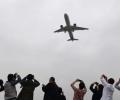
Domestic air traffic in India experienced a nearly 12 per cent decline in June, falling to 1.35 crore passengers from 1.53 crore in May, with IndiGo increasing its market share to 66.3 per cent.

Indian Hotels Company (IHCL) reported a healthy 14.6 per cent consolidated revenue growth in Q1 FY27, largely driven by a robust 17.6 per cent increase in domestic operations, offsetting geopolitical disruptions. Brokerages anticipate sustained growth, with Motilal Oswal Research projecting 12-14 per cent growth in FY27, supported by strong leisure demand and an asset-light expansion pipeline.

Airlines are cutting not only international services but also domestic flights, especially on routes projected to remain unprofitable in the coming weeks due to weak demand and high fares.
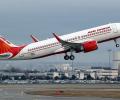
Air India has temporarily reduced its domestic flights by 22 per cent due to the impact of high fuel prices, following a previous reduction in international flights. The airline is offering re-accommodation, date changes, or refunds to affected passengers.

India has significantly reduced Aviation Turbine Fuel (ATF) prices for international airlines by 27% due to easing global fuel benchmarks, while simultaneously increasing commercial LPG and 5-kg cylinder prices to record highs.

Domestic airlines flew 1.29 crore passengers in April, a rise of more than 22 per cent compared to the year-ago period, according to official data released on Friday. However, the domestic air traffic number last month at 128.88 lakh was marginally lower than the 128.93 lakh recorded in March. In April 2022, the number of passengers carried by airlines stood at 105.47 lakh.

Aviation fuel prices for domestic airlines remain unchanged, providing stability for local carriers, while commercial LPG and 5-kg cylinders see a significant rate hike due to rising international energy costs.

The support will be provided to oil-marketing companies (OMCs) in the form of interest-free advances through the ministry of petroleum and natural gas. The OMCs, in turn, will use the fund to provide ATF price stabilisation support to Indian carriers operating domestic and international flights.

Civil Aviation Secretary Vumlunmang Vualnam on Thursday said the number of planes with domestic airlines will increase to 1,400 in the next five years as he highlighted the growth potential of the country's aviation space. Currently, the fleet is around 800 aircraft and leading carriers IndiGo and Air India have placed significant plane orders.

Due to airspace restrictions resulting from the conflict in the Middle East, Indian domestic carriers have cancelled 278 international flights. Some airlines are operating limited services and special flights to assist stranded passengers.

Civil Aviation Minister K Rammohan Naidu announced that public sector oil marketing companies will implement a partial and staggered increase in jet fuel prices for domestic airlines, aiming to protect passengers from steep fare hikes.

Air India, IndiGo and SpiceJet have told the government that the country's airline industry is under extreme stress and on the verge of "stopping operations", as they sought revision in ATF pricing and financial support.

At a panel discussion at the Centre for Asia Pacific Aviation's summit in Mumbai on Tuesday, Gopinath also said that airlines should price fares so as to maximise loads.

Indian Hotels Company (IHCL) reported a 20.8 per cent year-on-year rise in net profit for Q1 FY27, reaching 357.9 crore, despite macroeconomic headwinds like geopolitical tensions in West Asia impacting international travel and airline catering business.

India is the third-largest domestic airline market in the world, up from number five position a decade ago, according to analysis based on OAG data. The data shows India's domestic airline capacity doubling in a decade from 7.9 million in April 2014 to 15.5 million in April 2024. In reaching the third slot, India has replaced Brazil (pushed to fourth place with 9.7 million) and Indonesia (relegated to fifth in the rankings with 9.2 million).
This means a passenger flying between Delhi and Mumbai will now know that the minimum fare in the route will be Rs 95 (as being charged by SpiceJet) and can go up to a maximum of Rs 22,800 (as being levied by GoAir), plus around Rs 3,000 as components like passenger fees.
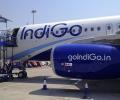
The country's largest airline IndiGo, which faced massive operational disruptions earlier this month, saw its domestic market share slide to 63.6 per cent in November, according to official data. Air India Group, comprising Air India and Air India Express, and SpiceJet had their respective market shares in November rise to 26.7 per cent and 3.7 per cent, respectively.
IndiGo, India's largest airline, reported a net loss of Rs 238 crore for the June quarter, primarily attributed to a significant surge in fuel prices and operational constraints stemming from the West Asia conflict.
Aviation Turbine Fuel (ATF) prices have more than doubled to a record high, impacting airlines and consumers, while commercial LPG rates also see a significant increase.
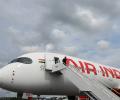
Loss-making Air India has introduced a new 'Basic Fare' category for select domestic flights, which does not include complimentary meals, as part of its efforts to trim expenses amid rising operational costs.

In the past, Qatar Airways has repeatedly expressed a desire to invest in IndiGo, the country's largest domestic airline.

The broader conflict in West Asia, the largest international market for Indian carriers, has forced a sharp reduction in daily flights relative to the summer schedule.

'We may be able to wind back some of the schedule reductions we'd taken in recent months.'

In November alone, year-on-year growth in flight bookings for the season was almost 40 per cent, said Ranjeet Oak, senior vice-president (flights), MakeMyTrip, a leading Indian online travel agency.
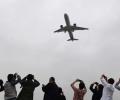
Two new airlines -- Al Hind Air and FlyExpress -- are set to take to the skies, with the carriers receiving their no objection certificates from the civil aviation ministry.

The Adani Group-owned Navi Mumbai International Airport is slated to commence international passenger and freighter operations from July 15. This marks a significant expansion for the airport, which began domestic services last December. Air India Express and IndiGo are expected to operate international flights, with customs readiness reviews already completed. The airport anticipates a substantial increase in daily passenger footfall and air traffic movements by the year-end.
Air India, IndiGo, and Air India Express are temporarily reducing their domestic flights due to surging jet fuel prices and lower travel demand. The airlines are cutting flights by 10 to 22 per cent in the coming months.

Indian wedding bookings to Sri Lanka are projected to grow 20-25 per cent annually over the next few years.

IndiGo has the lowest pilots-to-aircraft ratio among domestic airlines in India, according to data presented in Parliament. SpiceJet and Akasa Air have the highest ratios. Air India Express employs the most expat pilots.
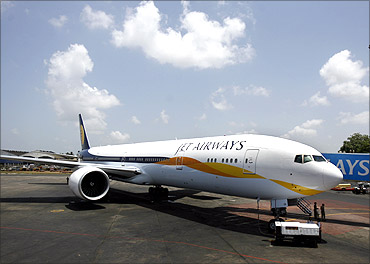
The airlines have waived charges for transport of relief cargo to Chennai.
Domestic airlines are preparing to offer lower fares for passengers without check-in bags in a move to improve seat occupancy and market share. IndiGo chief executive officer Ronojoy Dutta indicated the airline's interest to offer zero bag fares in an interaction with Bloomberg. Regulatory caps on fares and capacity related to Covid-19 have prevented IndiGo from taking a decision and the airline is discussing the issue with the government, he said.
Indian carriers have cancelled over 10,000 flights since the onset of the West Asia conflict, as escalating tensions and airspace restrictions disrupted international operations, a senior government official said.
IndiGo, India's largest airline, reported a net loss of Rs 2,536.9 crore in the March quarter of fiscal year 2025-26, primarily attributed to a significant foreign exchange loss of approximately Rs 8,100 crore, the impact of December flight disruptions, and expenses related to new labour laws.

Indian airlines are expected to cancel 444 international flights due to airspace restrictions in the Middle East following attacks on Iran by Israel and the US. The civil aviation ministry is closely monitoring the situation and coordinating with airlines to ensure passenger safety and minimize disruptions.

Air India and Air India Express are introducing a fuel surcharge on domestic and international flights due to rising jet fuel prices, impacting travel costs for passengers.

Not a single retail outlet ran dry. Every household that wanted a cylinder got one. India faced neither a 1991 moment nor a 2013 one. Macroeconomic stability held. This was not an accident, and it was not luck alone. It was the work of a government that chose to act as it had during the pandemic -- deliberately and gradually, building one measure upon another rather than reaching for a single dramatic lever, explains V Anantha Nageswaran, chief economic advisor to the Government of India.

Despite reporting a weaker-than-expected net loss of Rs 2,536 crore for Q4FY26, largely due to a significant non-cash forex loss, analysts remain optimistic about IndiGo's long-term prospects, citing strong demand trends, a favourable pricing outlook, and strategic cost-control measures.

Airports across the country have been placed on operational alert to manage potential flight diversions, unscheduled landings and passenger facilitation requirements.

The Competition Commission of India, following its preliminary inquiry, said the airline appeared to have caused an appreciable adverse effect on competition by restricting its services.
The airline should have an accident/serious incident free record of operation.
