
Describing the mission as a "major milestone" in the development of BrahMos, the sources said that the air version of the missile was test-fired from supersonic fighter aircraft Sukhoi 30 MK-I at 10.30 am.
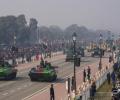
The Republic Day parade, which will begin at around 1030 am, will be a unique mix of the country's military prowess and cultural diversity, depicting the country's growing indigenous capabilities, Nari Shakti and emergence of a 'New India'.

The VL-SRSAM, which DRDO developed for the Indian Navy, was fired from a warship at a high-speed aerial target mimicking incoming enemy aircraft.

The laser-guided anti-tank guided missile is likely to significantly enhance the fire-power capability of the Indian Army particularly along the frontiers with Pakistan and China, the officials said.

The BrahMos export order would be the biggest for the country in this field and is likely to propel India amongst arms exporting countries as more orders for the missile are expected from other friendly countries.

On both the occasions, the missiles intercepted the simulated targets with pinpoint accuracy. The missiles were tested for minimum and maximum range.

India has not only been decked in tricolour hues in the lead up to the 76th Independence Day celebrations, but also put under a heavy security blanket, right from Delhi, the epicentre of the mega celebrations, to Jammu and Kashmir.

The IED that triggered a low-intensity explosion in courtroom number 102 on December 9 had left a person injured.

During the meeting, Gantz emphasised the opportunity to invest further in defence cooperation between the two countries.
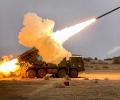
The rocket systems that were tested at Pokharan field firing ranges were manufactured by a private industry following transfer of technology by the Defence Research and Development Organisation.
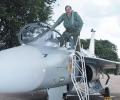
Indian Air Force chief Air Chief Marshal RKS Bhadauria flew a Tejas single-seater light combat aircraft MK1 FOC fighter during his visit to IAF and flight test establishments and facilities of Defence Research and Development Organisation (DRDO) and Hindustan Aeronautics Limited (HAL) in Bengaluru.
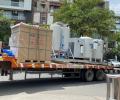
The Indian Army's Base hospital in Delhi is facing shortage of medical oxygen following a substantial cut in its supply by the Delhi government, military sources said.

In a major boost to its military might, India on Wednesday successfully test-fired surface-to-surface strategic missile Agni-5 that can strike targets at ranges up to 5,000 km with a very high degree of accuracy, officials said.
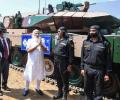
The tank, designed, developed, and manufactured by the Defence Research and Development Organisation's Combat Vehicles Research and Development Establishment and made in Tamil Nadu, will be used to protect northern borders.
'Russia has got inherent military strength, they have a very good military equipment manufacturing infrastructure and by and large they are self-sufficient in their production capabilities'
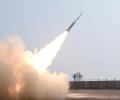
The Integrated Test Range of Defence Research and Development Organisation (DRDO) has taken various measures to protect its facilities at Chandipur and Abdul Kalam Island in Odisha, which are likely to be affected by cyclone 'Yaas', an official said.

The missile was fired from a ground mobile launcher at launch pad number-1 of the Integrated Test Range (ITR) near here at 3.55 pm, and it hit the target with accuracy, the sources said.

The company will supply the drug to major government as well as private hospitals across India, Dr Reddy's said in a regulatory filing.

Indian Army has deployed Pinaka and Smerch Multiple Rocket Launcher Systems (MRLS) at forward position near the China border to counter any threat arising across on the Line of Actual Control (LAC).
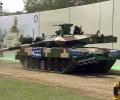
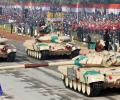
The defence ministry on Thursday sealed a contract to procure 118 main battle tanks Arjun for the Indian Army at a cost of Rs 7,523 crore, in a major move to boost its combat capabilities.
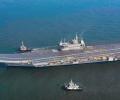
INS Vikrant is being delivered about six years late and at a cost of about Rs 20,000 crore instead of the sanctioned Rs 3,261 crore.
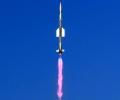
The quick reaction surface-to-air-missile missile developed by DRDO was test launched from the Integrated Test Range at Chandipur near here at about 3.08 pm from a vertical launcher against an electronic target at a very low altitude.
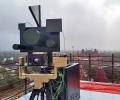
In order to have protection against drone attacks, all the three defence forces including the Army, Navy and Air Force have signed contracts for acquiring DRDO-developed anti-drone systems.

The army has long been deficient in artillery, the modern battlefield's most lethal killer, says Ajai Shukla.
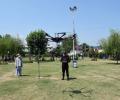
India and the United States have signed an agreement for cooperation in the development of Air-Launched Unmanned Aerial Vehicle (ALUAV), in yet another step to further expand bilateral defence and military cooperation.

It said clinical trials of the drug 2-deoxy-D-glucose (2-DG) showed that it helps in faster recovery of hospitalised patients and reduces supplemental oxygen dependence.

Python-5 missile live firing was conducted to validate target engagement from all aspects as well as beyond visual ranges. In all the live firings, missile hit the aerial target.
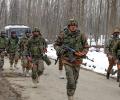
The ministry said the 'multi-mode' hand grenades will replace the "World War II vintage" grenades being used by the Indian Army.

Nearly a decade ago, the first fully electric vehicle (EV) caught fire on the road in the US. It was a model from Tesla, the world's most admired EV maker. A metal fragment punctured the underbelly of the vehicle, penetrating its battery pack, leading to a fire. Indian lawmakers and automakers have had nine years to study the incident (in fact, three Tesla Model Ss caught fire in two months in 2013) but seem to have learnt little.

The missile has been developed to engage highly fortified enemy tanks in day and night conditions.

India on Friday successfully test-fired indigenously-developed anti-tank guided missile systems, 'Helina' and 'Dhruvastra', paving their induction into the Army and the Indian Air Force respectively, officials said.

It said the ATGM has been developed with a capability to launch from multiple platforms and is currently undergoing technical evaluation trials from 120 mm rifled gun of MBT Arjun.
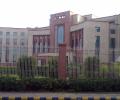
In the QKD technology, encryption keys are sent as qubits in a fibre optic cable. Quantum computing uses qubits as basic resources, similar to how bits are used as basic resources in classical computing.
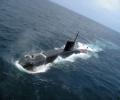
In what would be a major boost for the submarine building capability within the country, the first three nuclear attack submarines to be built indigenously would be having 95 per cent 'Made in India' content in them and it would further go up in the next three.

In a boost for the country's surveillance capabilities to monitor activities of both military warships and merchant shipping in the Indian Ocean Region (IOR), the 'Sindhu Netra' satellite developed by a team of young scientists from Defence Research and Development Organisation (DRDO) was successfully deployed in space on Sunday.
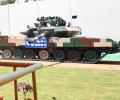
Sources said of the 13,700 crore, Rs 8,300 crore will be for procuring 118 Arjun (Mk-1A).

According to sources in the Bengaluru-headquartered space agency, under the Department of Space, delivery of hardware by the industry was hit due to the lockdown imposed in several States to contain the pandemic in recent months.

As Indian Army chief General Manoj Mukund Naravane inducted the last of the 100 K-9 Vajra guns ordered, three of these howitzers have been deployed for trials in high altitude mountainous area of Ladakh.

Dr Bhabha and Dr Sarabhai didn't feel guilty for their ambitions; it was for those 'mad scientists' that India is a powerhouse -- both at the atomic level and in the vastness of space, observes Kumar Abishek.

The missile is India's first indigenously developed anti-radiation missile that has speed of Mach two or twice the speed of sound.
 © 2026 Rediff.com - Investor Information - Advertise with us - Disclaimer - Privacy Policy - Sitemap - Feedback - About us - Terms of use - Grievances