
A proposal to withdraw the bill was moved by Minister of State for Finance Pon Radhakrishnan and was approved by the House

The failure of SVB was due to idiosyncratic reasons, but shows how higher rates can expose fault lines in unforeseen places, observes Neelkanth Mishra.

The Budget emphasises on capacity building and empowerment of marginalised sections of society including farmers.

The Reserve Bank of India (RBI) on Wednesday allowed payment system providers, prepaid card issuers, card networks and white label ATM operators access to its Centralised Payment Systems (CPS), such as real time gross settlement (RTGS) and National Electronic Fund Transfer (NEFT) systems in the first phase of its plan bring non-banks in the same platform. "Direct access for non-banks to CPS lowers the overall risk in the payments ecosystem.

'The money is readily available to the depositors.'

With disruptions continuing, the productivity of Rajya Sabha fell to 13.70 per cent during the second week of the ongoing monsoon session from 32.20 per cent during the first week, resulting in an overall productivity of 21.60 per cent for the first two weeks.

'Clearly, the depositors of cooperative banks need the maximum protection.'

Kumar said the Commission will follow the time-tested methods of consultations and consensus building in bringing about any reforms and will not shy away from tough decisions, according to an Election Commission (EC) statement.

Reserve Bank of India (RBI) deputy governor M Rajeshwar Rao on Wednesday defended the central bank's decision of not allowing industrial houses to float banks, and said more deliberations are needed before RBI changes its stance on this issue agreed back in 2001. An internal working group (IWG) of the RBI had recommended allowing industrial groups into banking, but late last month the RBI said it kept on hold the two recommendations of allowing industrial houses and large non-banks to float banks. However, RBI had accepted 21 of the 33 recommendations of the group that submitted its report a year ago.

Prime Minister Narendra Modi on Wednesday said that the country's economic growth is picking up pace again and the domestic industry needs to enhance its risk-taking appetite. Noting the recent reforms taken by the government, the Prime Minister said that bringing reforms is a matter of conviction for his government, which is ready to take all risks in the national interest. "We have taken bold decisions. Reforms continued even during pandemic. "The government is doing reforms not out of compulsion but out of conviction," he said while addressing the CII's annual meeting.

'What is critical today in India is confidence of depositors.' 'If you have these kinds of problems spreading like this, the confidence level of a lot of people in the system gets shaken.'

Suitors for Punjab and Maharashtra Co-operative Bank (PMC Bank) may have to infuse additional capital of nearly Rs 750 crore so that the payout per depositor is more than the Rs 5 lakh sum assured by the Deposit Insurance and Credit Guarantee Corporation (DICGC). The Reserve Bank of India (RBI) has also slotted its board meeting on March 19 in Mumbai - a fortnight short of the current deadline to find a resolution for the beleaguered bank and the moratorium placed on it comes to an end. Sources close to the PMC Bank transaction said that the central bank wants the suitors "to go the extra mile so that depositors can get more than the Rs 5 lakh insured by the DICGC". This is also to ensure that the new owners of the bank - who are to be issued a small finance bank (SFB) licence - are serious and have deep pockets.

Inching closer to resolving the Punjab and Maharashtra Cooperative (PMC) Bank issue, the Reserve Bank on Monday came out with a draft scheme for takeover of the crisis-hit bank by the Delhi-based Unity Small Finance Bank (USFB). The draft scheme of amalgamation envisages takeover of the assets and liabilities of PMC Bank, including deposits, by USFB, thus giving a greater degree of protection for the depositors, the RBI said. In September 2019, the RBI had superseded the board of PMC Bank and placed it under regulatory restrictions, including cap on withdrawals by its customers, after detection of certain financial irregularities, hiding and misreporting of loans given to real estate developer HDIL.
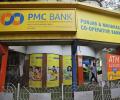
the three investors that have submitted their final bids are not commercial banks. Among the three, one is a non-banking financial company. Another distinctive feature of the revival is that PMC may lose its cooperative bank characteristic after its reconstruction.

Parents should opt for a combination of mutual funds and fixed deposits.

Will the Financial Resolution and Deposit Insurance Bill endanger our bank deposits?

The economy is gaining traction with gradual pick up in manufacturing activity and moderation in contraction of services, spurred by comfortable liquidity conditions, an RBI article on Tuesday said. Observing that the retreat of the second wave of coronavirus pandemic has been slow, the RBI in an article on the 'State of Economy' said, the aggregate demand conditions are buoyed by the release of pent-up demand post unlock, while the supply situation is improving with the monsoon catching up to its normal levels and sowing activity gaining pace. "Reaffirming the traction that the economy is gaining, the manufacturing activity is gradually turning around, while contraction in services has moderated.

Finance Minister Nirmala Sitharaman presented her third Budget on February 1.
The draft amalgamation scheme of Punjab and Maharashtra Co-operative (PMC) Bank with Unity Small Finance Bank (SFB) allowed quick relief to depositors with savings of up to Rs 5 lakh, but a long wait for those who had their nest egg with the scam-tainted bank. If the scheme gets approved, 96 per cent (or 880,000 of 924,000) depositors will get their full money straightaway after PMC is merged with Unity SFB. According to the draft scheme, retail investors may get up to Rs 5 lakh from the Deposit Insurance and Credit Guarantee Corporation (DICGC) instantly, and then some more in phases till they can recall their full deposits after 10 years.

Large urban co-operative banks may come to be solely under the provisions of the Banking Regulation Act, even as the smaller among them are to remain within the exclusive fold of the Registrar of Co-operative Societies. The upcoming changes will bring the curtains down on the vexed issue of dual control of UCBs, which has been in vogue for 54 years. The new framework will affect 1,551 UCBs in the country, which had a total business of Rs 7.36 trillion.

India borrows ideas that we don't need, like the FRDI Bill, and ignores the ones we need, like rewarding whistleblowers such as the ones who want to save Bombay Mercantile Bank, says Debashis Basu.

Noted banker Uday Kotak said the country's financial system is currently in a Darwinian mode as only the fittest lenders are able to survive. Kotak also said that historically, whenever there has been a problem with a private sector lender, it has been merged with a state-run bank.

Shashank Rai, 30, allegedly sought millions of dollars in forgivable loans guaranteed by the Small Business Administration (SBA) under the Coronavirus Aid, Relief, and Economic Security (CARES) Act from two different banks by claiming to have 250 employees earning wages when, in fact, no employee worked for his alleged business.

The global financial crisis that started in the later part of 2008 following the collapse of the Wall Street investment bank Lehman Brothers may be over but the cleaning up process is still on, said Chairman of Federal Deposit Insurance Corporation Sheila Bair on Tuesday.

Attributing to people familiar with the situation, the Wall Street Journal said that some officials at the agency have expressed doubts about the rigour of the report, which was based partly on interviews of Citi executives who were asked to rate the effectiveness of their colleagues.

Moreover, about 21 million people in the US rely on alternative financial services, despite having bank accounts.
The acquisition would create largest US depository institution with over $900 billion of customer deposits, financial services firm, a JPMorgan statement said. However, the transaction excludes senior unsecured debt, subordinated debt and preferred stock of Washington Mutual's banks, it added.

Your money is protected by the Deposit Insurance and Credit Guarantee Corporation.
In another sign of deepening financial crisis, Stearns Bank will acquire the failed Georgia-based Alpha Bank and Trust, making it the 16th American bank to fall this year. On Friday, the US authorities seized the operations of Alpha Bank.

The system envisaged under the FRDI Bill, if implemented properly, would help improve the efficiency of capital allocation without harming consumers, and without risking the stability of financial firms, says Ajay Shah.
In one of the biggest bank failures in the United States in 2009, Florida-based BankUnited has been shut down by the authorities, pushing the total number of such collapses to 34 so far this year.

Mutual funds, bonds, PPFs, equity and real estate are some options which offer varying rates of return.

The government on Friday notified the rules for insolvency and liquidation proceedings of financial service providers (FSPs). These rules, notified by the ministry of corporate affairs, will not be applicable to banks, reports Ruchika Chitravanshi.

The banking regulator is seeking an early exit mechanism for private banks under Prompt Corrective Action.
Banks and saving institutions in the US appear headed for their first overall quarterly loss since 1990, as troubled loans pile up faster than the federal government's unprecedented efforts to aid the battered industry, a media report said.
The Federal Deposit Insurance Corp, a government agency that tracks and is often named receiver for distressed banks, said the number of insured institutions on the its 'problem list' increased from 117 to 171, and the assets of 'problem' institutions rose from $ 78.3 billion to $ 115.6 billion during the quarter. This is the first time since the middle of 1994 that assets of 'problem' institutions have exceeded $ 100 billion, it noted.

There will be different ways of returning the money, depending on the profile of the depositors and the amount, predicts Tamal Bandyopadhyay.

Bank, bankruptcy reforms, Nabard Bill amendment on agenda.

In the aftermath of the PMC Bank mess which was in the RBI's highest rating of 'A' category, trustworthiness of these ratings may be up for a review.
 © 2026 Rediff.com - Advertise with us - Disclaimer - Privacy Policy - Sitemap - Feedback - About us - Terms of use - Grievances