
Robin Liu steps down as India CEO of OnePlus. The company shares key updates on its India operations and future strategy. Here's what it means for the brand and market.
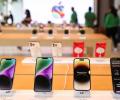
Apple's iPhone supplies in India grew 25 per cent year-on-year in March quarter 2025, capturing 8 per cent market share, a CyberMedia Research report said on Monday.

US President Donald Trump's announcement of 25 per cent tariff on all goods coming from India starting August 1, plus an unspecified penalty, is expected to impact Apple's plans to expand iPhone manufacturing in India as well as export of other electronics to the US. The move comes at a time when Indian electronics production is reeling under pressure due to restrictions imposed by China on supply of several critical components, capital goods and even skilled technology professionals.

Shipments of 5G smartphones spurted by 74 per cent in 2022 even as overall mobile phone shipments declined by 8 per cent in the year, CyberMedia Research said on Tuesday. According to the CyberMedia Research (CMR) report, Xiaomi led the overall smartphone market with a 21 per cent market share while Samsung led in the shipment of 5G smartphones with a 23 per cent market share. Driven by a resilient consumer appetite to switch and upgrade, the premium smartphone market continued to gain traction, the report said.

Apple will next week open its first retail store in India, in signs of importance the iPhone manufacturer attaches to the world's fastest growing smartphones market. The company will open its first official store in Mumbai on April 18 and the second in Delhi on April 20. The company at present sells its products in India through exclusive Apple Premium Reseller (APR) stores, large format retail chains like Reliance Digital, Croma etc, mutli-brand retail stores and through e-commerce platforms.

Apple's decision to launch the eSIM-only iPhone 14 series in the US has American buyers puzzled. Surprisingly, it stumped some Indian folks, too, despite the availability of a physical SIM slot in the India-centric iPhone 14 series. This is because a large number of Apple consumers in India get their iPhones at considerably cheaper rates from the US through visiting relatives, friends, family, et al. Their apprehensions are mostly about compatibility with Indian networks and eSIM availability in India.

Total India smartphone sales touched 2.7 million units during January-March 2012. Samsung emerged as the leader in the smartphone segment with a 40.4 per cent share, followed at number two and number three by Nokia with 25.5 per cent and RIM with 12.3 per cent share.
'IIT-ians want to contribute to nation building and the Pan IIT meet provides a channel to do that. We want to move beyond words and set up an action plan for this,' says Pradeep Gupta.

Samsung has priced the S8 competitively at Rs 57,900, while the S8+ is available for Rs 64,900.

Apple was a fringe player in all key categories like smartphones, notebooks, and tablets till recently. But with the last quarter's record-breaking performance, the brand has established itself in the country's price-sensitive consumer electronics market.

Shipment of 5G smartphones in the country continues to gain traction and such devices accounted for 22 per cent market share in the third quarter of 2021, according to CMR. As per CMR's India Mobile Handset Market Review Report for Q3 2021, more than 20 5G-capable smartphones were launched over the course of the quarter.
Indians are going to invest in 12 million smartphones this year.

Around 83 per cent people in a survey in India shared that 5G is one of the factors they consider while buying a new phone and nearly three in every five existing premium smartphone users are looking to upgrade their device to the next generation technology, according to a report released by Cybermedia Research. According to the survey, 81 per cent respondents prefer Oppo for 5G smartphone and 79 per cent opted for Samsung. The global survey conducted in India, China and West Europe found that 5G users, where the service is available, have experienced better video calls, faster downloads and ability to stream ultra high definition videos and satisfaction level from 5G services is around 80 per cent.
Get contemporary as well as classic books for free at these websites.

Start your digital detox today before irreversible damage to health and mental complications stalk your life, advises Ramesh Menon.
Samsung leads the India Tablet market (five-inch screen size and above) for CY 2012 and Q4 2012, followed by Micromax.

A report titled 'India Monthly Mobile Handsets Market Review', CMR claims that November last year was the third consecutive month when smartphone shipments in India crossed one million units and saw the launch of 23 smartphone models.
With the launch of low-cost devices running on Google Inc's Android platform by local firms, sales of tablets and smartphones have grown rapidly in the last two years.
The second half of CY 2012 continues to see launch of a number of high value, aspirational smartphone models.

Micromax has the highest tablet sales in the second quarter of the financial year 2012, ahead of Samsung and Apple.

In CY2010, 9.9 million PCs were shipped, a growth of 30% over 2009, while in CY2011 total shipments went up by just 7.3%
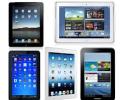
CyberMedia Research's India Tablets Consumer Usage and Adoption Trends 2013 study said that 3 out of every 4 users claimed mobility as a major reason to purchase a tablet with accessing social networking sites and entertainment, on the go, being their preferred activities.
India's mobile-phone market grew to 183 million handsets in 2011.
The Indian mobile handset market saw a drop of 5 per cent in revenues in FY 2011-12.
The growth is a significant recovery for the industry, which recorded just 8 per cent growth in 2009-10.
The revenues do not include their business process outsourcing revenues. Which is exactly why Infosys Technologies is not included in the top 20 list.
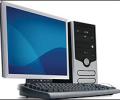
The current installed base of personal computers translates into one computer for every 25 Indians.
The top 200 IT companies in India posted the highest growth in four years.

The two-day conference begining March 8 is being held in India for the second year in succession in association with CyberMedia.

E-learning and work from home have forced a section of feature phones users to shift to smartphones.
The telecommunications industry in India is one of the fastest growing sectors in the world. The booming telecom industry has been attracting large amount of investments in the country.
Unfazed by the global economic slowdown, the top 20 Indian BPO firms grew their exports earnings by 15% in 2009-10 to touch revenues of $6.1 billion.
The 24th annual survey saw the Top 20 IT companies -- from both IT services export and domestic IT sector -- post a mixed performance, with the 8 fastest growing companies recording double digit growth.
India's representation in the top 50 Emerging Global Outsourcing cities has grown to four, from last year's three, with the addition of Jaipur to the list at number 31. The other Indian cities in the list include Kolkata at number six, Chandigarh at 12 and Coimbatore at 17, says the study.

Even as most manufacturers are still assessing the overall impact on their businesses, early projections suggest the market may grow at its lowest ever rate, in 2020.
Mid-sized IT services and BPO companies are vulnerable to the adverse impact of US slowdown due to exchange rate volatility, slower deal closures, inflation and low billing rates than their bigger counterparts, a study said.
29 India-based IT firms have figured in the world's best 100 list of IT service providers.Tata Consultancy Services, HCL Technologies, Genpact, WNS Global Services are few of the companies named.
Infosys chief mentor N R Narayana Murthy has been given the 'Lifetime Achievement Award' by IT magazine Dataquest for building an institution that has changed the IT scenario in the country.
India boasts of the largest number of cities (6), which figure among the top-50 emerging cities, followed by China (5), Brazil (3), the Philippines (3) and the US (3), among others.
After three years of strong growth, top 20 IT companies in India, a majority of them engaged in IT services exports, recorded a revenue growth of 24 per cent in 2007-08, recording a sharp drop from 41 per cent in the previous financial year, according to a survey.
