
The Indian government has marginally exceeded its indirect tax collection target for fiscal year 2025-26, with strong performances in customs, excise, and GST revenues.

The Indian Textile Industry is currently one of the largest and most important industries in the Indian economy in terms of output, foreign exchange earnings and employment.
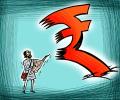
The Centre is staring at a combined shortfall of up to Rs 1 trillion in excise and Customs revenues in the current financial year (FY23) compared to the Budget estimates (BE), mainly because of duty cuts on edible oil and petroleum products. The government set a target of Rs 3.35 trillion for excise and Rs 2.13 trillion for Customs mop-up for FY23 while presenting the Budget in February. "As excise duty collection is mainly driven by diesel volumes, we might see a clear gap in the level budgeted for FY23, following the reduction in cesses on petrol and diesel in May. We are expecting somewhere between Rs 80,000 crore and Rs 1 trillion dip in excise and customs duty collections," a senior government official told Business Standard.

The syndicate used "stooge" bank accounts and shell companies to transfer the largest amount linked to a single case recorded in the city, the Customs and Excise Department of Hong Kong said.
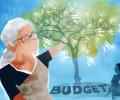
Finance Minister Nirmala Sitharaman will present the Union Budget for 2023-24 in Parliament on February 1. The Budget is a statement of the government's estimated receipts and expenditures for a fiscal year (April 1 to March 31). It's divided into Revenue and Capital Budget. The Revenue Budget includes the government's revenue receipts and expenditures while the Capital Budget includes its capital receipts and payments.

A three judge bench headed by Justice Altamas Kabir said the main object of Custom and Excise Acts was the recovery of excise duties and not really to punish for infringement of its provisions.
Over 300 life-saving medicines may become cheaper by at least 25 per cent, if the finance ministry considers a proposal by its chemicals and fertilisers counterpart to provide customs and excise duty waivers on all drugs that are part of the National List of Essential Medicines. The chemicals and fertilisers ministry proposal has been supported by pharma companies, who have also agreed to pass on the benefits of such waivers by slashing retail prices.
While the two-phased assembly polls voting has concluded in Assam, in West Bengal two phases have completed while four more remain.
The Election Commission has deployed 36 observers for monitoring the flow of illegal cash and other inducements during the upcoming assembly polls in Meghalaya, Nagaland and Tripura. The officials have been deputed by the Central Board of Direct Taxes (Income Tax department) and Central Board of Excise and Customs (Customs and Excise department) and will act as Election Expenditure Observers, a senior Revenue department official said.
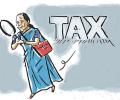
The net indirect tax collection in 2020-21 grew 12.3 per cent annually to Rs 10.71 lakh crore, thereby exceeding the target set in revised estimates, the Finance Ministry said on Tuesday. The mop-up through indirect taxes, which include GST, Customs and excise duties, was Rs 9.54 lakh crore in 2019-20. In the Revised Estimates (RE) for 2020-21, the target was set at Rs 9.89 lakh crore. Net collections from Goods and Services Tax (GST) stood at Rs 5.48 lakh crore during 2020-21, an eight per cent drop compared to Rs 5.99 lakh crore in the previous fiscal year.
Out of the total of 25,359 complaints received during 2010, the highest of 8,330 were against Railways, 6,520 against banks, 1,836 against petroleum department and 1,572 were against telecom officials.
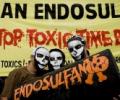
The Supreme Court on Friday allowed export of nearly 1100 metric tonne of unused Endosulfan from the country, while retaining its earlier order banning the use and production of the controversial pesticide.
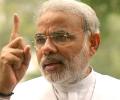
Taking strong exception to complaints and grievances of people concerning the customs and excise sectors, Prime Minister Narendra Modi on Wednesday said strict action would be taken against erring officials.

Finance Minister Arun Jaitley did a balancing act in the Union Budget 2015.

The company's net loss widened to Rs 444.26 crore (Rs 4.44 billion) for the quarter ended December 31, 2011, due to high fuel costs and weaker rupee from Rs 253.69 crore (Rs 2.53 billion) in the October-December quarter in the last fiscal.
Amidst sweeping changes expected in the customs and excise duties, the entire industry was glossed over by the Union Budget 2011-12.

The central government will lose about Rs 24,000 crore (Rs 240 billion) of revenue during the current fiscal on account of reduction in customs and excise duties on petroleum goods.
Petroleum Minister Jaipal Reddy said these measures would cost the government Rs 49,000 crore in the current financial year.

Reversing a concession given by the commerce ministry to the embattled exporters in the midst of recession in the West last year, the Central Board of Excise and Customs has directed chief commissioners of customs and excise to recover the drawbacks from exporters who have not realised their proceeds.

Prakash Karat, general secretary of Communist party of India-Marxist, termed the Budget 'flawed'. While speaking to rediff.com, he said, "The increase in indirect taxes will add to inflation. The government is neither going to achieve growth nor it will be able to contain inflation with this budget."

Exemption of excise and customs duty on liquid fuels, abolition of service charge, rescheduling of loans for all textiles and clothing units will reduce pressure on the industry and will help to improve liquidity.
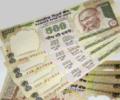
The government on Monday said the total tax revenue in 2011-12 would be up 18.50 per cent at Rs 9,32,439.88 crore, on the back of projected rise in revenue from taxes on income, services, customs and excise duties.
Excise duty on petrol will remain at Rs 14.35 a litre and diesel at Rs 4.60 per litre.

Outlay for infra is also expected to see a significant increase in view of the government's Rs 111-trillion investment plan under the national infrastructure pipeline to develop social and economic infrastructure over five years.

While the Left parties are in talks with secular Opposition parties on a joint strategy during voting on the Budget in the budget session resuming from April 15, they are not not averse to BJP and its allies supporting a joint opposition cut motion.

The hike in Custom and Excise duty on crude oil and petroleum products will be passed on by the refineries as well as oil marketing companies

Petrol and diesel prices will go up by Rs 2.67 a litre and Rs 2.58 per litre, respectively, after Finance Minister Pranab Mukherjee on Friday raised customs and excise duties on the two, virtually putting the Kirit Parikh Committee report on fuel price in cold storage.
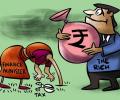
While the tax-to-GDP ratio of 9.88 per cent has been assumed for FY21, the same as last year, when it touched a decadal low, for FY22 a ratio of 10.7 per cent has been assumed, an average of the last five years.
An airlines industry body has sought reduction in customs and excise duties on aviation turbine fuel and allowing private firms to supply it to bring down prices.
The petroleum ministry has sought a Rs 10 per litre increase in petrol and Rs 5 a litre hike in diesel prices, along with a cut in customs and excise duties, to offset the impact of surge in crude oil prices that have touched $135 per barrel.
Customs and excise tariff reforms are still pending.
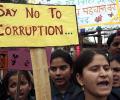
There has been a quantum jump in the number of complaints of corruption received by the Central Vigilance Commission last year as against those in 2011.
Fuelled by growing markets and a liberalised economy, the Indian biotech industry is set to witness an exponential growth with an estimated turnover of $4,500 million by 2010.

The EC has asked all departments to deploy round-the-clock flying squads, quick-response teams, and high-tech machinery to check money inflow. They are also to examine vehicles passing though check-posts, reports Shrimi Choudhary.
They will be honoured for showing exceptional commitment and devotion to duty on a sustained basis while achieving goals set for their organisations.
With taxes making up more than half of the selling price of petrol and one-third of diesel, a parliamentary panel has asked the government to reduce rates of duties and taxes on the two fuel.
 © 2026 Rediff.com - Advertise with us - Disclaimer - Privacy Policy - Sitemap - Feedback - About us - Terms of use - Grievances