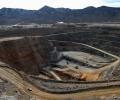
Union Mines Minister G Kishan Reddy announced that the Indian government is intensifying its support for private mining entrepreneurs seeking critical mineral opportunities abroad, working with the Ministry of External Affairs and appointing mineral officers in embassies to facilitate these efforts.
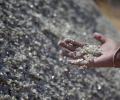
Hyderabad-based Midwest Ltd has become the first Indian private company to secure overseas critical mineral mines, sealing a deal with Indonesia's state-run PT Perusahaan Mineral Nasional (PERMINAS) to ensure a long-term supply of rare earths.

A readout by the US said the agreement marked a milestone in the strategic partnership between the two nations to ensure that the foundational elements required for advanced technology and energy are available within trusted networks.
India is planning to amend the Mines and Minerals (Development and Regulation) Amendment Act 2023 to specify the use of funds currently earmarked at 5,600 crore for exploring critical mineral mines overseas, according to a top official. The proposed amendments also aim to introduce a tailings policy and modify the royalty structure to facilitate the extraction of critical minerals from waste materials, the official added.
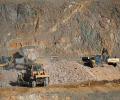
The Centre has increased the area granted to individual players by more than four fold in order to boost mining of critical minerals. Issuing an order on Tuesday, the government said, for mining leases, the area has been expanded from the current limit of 10 sq km to 50 sq km. For prospecting licences (granted in the case of composite licence), the limit has been increased from 25 sq km to 100 sq km.
In June last year, India unveiled its first list of 29 critical minerals open for private sector exploration and mining. Since then, 38 critical mineral blocks have been auctioned, but only 14 - less than 37 per cent - have found bidders. This modest achievement was secured only after the Centre conducted a second round of auctions when the first round fell flat, failing to attract the minimum required bidders.
The government on Tuesday proposed to launch a mission to give fillip to the domestic output of critical minerals like copper and lithium, their recycling as well as acquisition of such assets abroad. Presenting Union Budget for 2024-25, Finance Minister Nirmala Sitharaman also said the government will launch the auction of the first round of offshore mining blocks.

Finance Minister Nirmala Sitharaman on Saturday announced the removal of import duties on 12 critical minerals, lithium-ion batteries scrap, cobalt products, LED, zinc and 36 drugs for cancer and rare diseases.
Following the disruption in the supply of rare earth or permanent magnets after China's notification on April 4, the mines ministry is planning to introduce a Rs 1,500 crore incentive scheme to recycle critical minerals, according to a top official.
India on Monday announced the results for the country's first critical mineral auction. Amid the tepid response from big players, the list of successful bidders included some lesser known names. A total of five companies secured bids for six critical mineral blocks of graphite, manganese, phosphorite, lithium, and rare earth elements with auction premiums ranging from 13.05 per cent to 400 per cent.
In a significant move to enhance its strategic resource security, India has officially released its first-ever critical minerals list, identifying 30 key critical minerals crucial to the nation's economic growth and technological development. This pioneering step aims at reducing import dependence, enhancing supply-chain resilience, and supporting the country's net-zero objectives. Union Minister Parliamentary Affairs, Coal and Mines Pralhad Joshi, while releasing the Critical Minerals for India report in New Delhi on Wednesday, said, "India is readying for an Atmanirbhar Bharat."

MiniMines Cleantech Solutions has secured an Indian patent for its Hybrid Hydrometallurgy technology, which efficiently recovers critical minerals like lithium, cobalt, and nickel from end-of-life lithium-ion batteries and electronic waste. This innovative process, developed in India, supports sustainable battery recycling and strengthens resource security for the nation's growing demand for critical minerals.

The highlight of the successful BRICS Summit was its ability to deliver a joint statement that all members, including Iran and the United Arab Emirates, embroiled in the war in West Asia, signed.
The maiden, critical mineral auction in India has failed to enthuse the mining industry, with the first tranche achieving less than a 50 per cent success rate and the auction of several mines was cancelled owing to low response. The results, announced by the Ministry of Mines on Monday, showed that six lesser-known companies emerged as preferred bidders. Among these were Agrasen Sponge, Kundan Gold Mines, Dalmia Bharat Refractories, Sagar Stone Industries, and Maiki South Mining.
The government will put on sale around 20 critical mineral blocks in the fourth round of auction by the end of June, mines secretary V L Kantha Rao said on Monday. Rao further said that the auction process for seven critical mineral blocks put on sale in the first round is almost complete and the result would be declared in a month's time. Critical minerals such as copper, lithium, nickel, cobalt and rare earth elements are essential components in many of today's rapidly growing clean energy technologies -- from wind turbines and electricity networks to electric vehicles.

One of the important topics of discussion between the two leaders is expected to be the Northern Sea Route and the Chennai-Vladivostok Maritime Corridor.

Prime Minister Narendra Modi cautioned against the 'weaponisation' of technology and critical minerals at the BRICS summit, advocating for cooperation to foster shared prosperity. Concurrently, Chinese President Xi Jinping announced plans for an open-source AI ecosystem for BRICS nations, positioning Beijing as a key technology partner amid global AI competition.

Prime Minister Narendra Modi's state visit to the US is expected to see discussion on India's possible entry into a US-led global alliance on critical minerals, officials told Business Standard. In June last year, the US, the European Union, and other G7 partners launched the Minerals Security Partnership to ensure that China did not further strengthen its grip on supplies of critical minerals the world over. Various ministries, including the Ministry of Finance, have communicated to the Ministry of External Affairs to explore the possibility of India joining the partnership, officials said.

Metals and mining conglomerate Vedanta aims to achieve $10 billion in group Ebitda by FY27, a significant increase from $6 billion in FY26, and plans to reduce its overall debt by more than 20,000 crore during the same period, according to CFO Ajay Goel.

Senior Indian officials highlight the indispensable role of the private sector in translating India-US cooperation in AI, semiconductors, quantum technologies, and critical minerals into tangible outcomes. The collaboration aims to build trusted, resilient technology ecosystems and position India as a global electronics and semiconductor hub.

US President Donald Trump has threatened the European Union with "very heavy tariffs" if he perceives their actions as hostile, specifically in response to Canada's efforts to deepen economic and strategic ties with the EU. This comes as European Commission President Ursula von der Leyen invited Canada to become the EU's first "associate member" to strengthen resilience amid global trade uncertainties and US trade policies.
India needs to recognise and address challenges posed by its dependence on China for critical minerals and examine the implications of phasing down coal on bank balance sheets as it accelerates its green transition, the government's Economic Survey 2023-24 tabled in Parliament on Monday said. As part of its national plan to contribute to meeting the global goal of limiting the average temperature rise to 1.5 degrees Celsius, India has committed to reducing emissions by 45 per cent below 2005 levels by 2030, achieving 50 per cent cumulative electric installed capacity from non-fossil fuel-based energy resources, and creating a carbon sink of 2.5 to 3 gigatons of CO2 equivalent through additional forest and tree cover.

India and Australia have signed significant agreements covering civil nuclear energy, maritime security, and critical minerals, reinforcing their partnership's role in ensuring a peaceful Indo-Pacific. The pacts facilitate uranium supply from Australia to India and enhance cooperation in defence, cyber, and critical technologies.

US Vice President JD Vance and Prime Minister Narendra Modi held a phone call to discuss expanding the India-US comprehensive global strategic partnership, focusing on trade, defence, energy security, emerging technologies, and critical minerals. The discussion comes amidst rising tensions in West Asia and recent regional realignments, with both leaders reaffirming their commitment to strengthening cooperation.
TEXMiN Foundation, IIT (ISM) Dhanbad has signed an agreement with the University of Pretoria, South Africa, for research collaboration in critical minerals, rare earth element processing, recycling, extraction technologies and advanced mining innovation.
Indian Institute of Technology Bombay has signed a technology licensing agreement with Evergreen Lithium Recycling to improve the extraction of critical minerals from battery reprocessing, aiming to enhance efficiency and reduce costs in battery recycling operations.

Prime Minister Narendra Modi and Russian President Vladimir Putin held extensive discussions to strengthen bilateral trade, defence, and energy cooperation, while also addressing the ongoing Ukraine conflict and exploring avenues for peace and resolution, with Modi reiterating India's call for dialogue and diplomacy.
The US and India are collaborating to de-risk global supply chains for artificial intelligence technologies, particularly in semiconductor manufacturing and critical minerals processing. This partnership is facilitated through the US-led Pax Silica initiative, which aims to address over-concentration issues and single points of failure in supply chains, fostering a resilient global economy.
Hyderabad-based Nexon Geochem has partnered with Russia's Giredmet to establish integrated rare-earth processing and downstream facilities in India. This collaboration aims to bridge critical gaps in India's rare earth value chain, focusing on producing NdFeB permanent magnets essential for electric vehicles, wind turbines, and defence systems, reducing reliance on imports.

'The large number of tariff lines in the 90-99 per cent band highlights how deeply embedded Chinese sourcing has become in India's electronics imports.'

Prime Minister Narendra Modi and Indonesian President Prabowo Subianto have significantly advanced the India-Indonesia Comprehensive Strategic Partnership, securing crucial agreements on defence, critical minerals, and maritime security, including BrahMos missile supply and Sabang port development.

'The Chinese military cannot advance much in Ladakh, even if they want to.' 'Similarly, in Arunachal Pradesh, they can rename a village or two, intrude here or there, but cannot do much more realistically.'

Coal inventories at India's thermal power stations have fallen to 22.9 million tonnes, providing only a seven-day fuel cover and affecting 74 out of 190 plants, a situation last seen in October 2023.

Prime Minister Narendra Modi has highlighted the risks posed by the 'weaponisation' of resources and strategic sea routes, urging India to achieve greater self-reliance in energy to mitigate vulnerabilities to overseas supplies and geopolitical tensions.

A Parliamentary Standing Committee on Commerce has urged the Indian government to swiftly conclude the proposed India-US Bilateral Trade Agreement (BTA), while ensuring India's interests are protected, recommending complete exemption for key export products like generic medicines and smartphones from future US tariff increases.

Xi brought in asymmetrical power play by stating that India should have 'strategic cognition' and 'strategic judgement made on the basis of the stage of development the two countries are at'. This is a very nuanced way of asserting China's coercive diplomatic posture and reflects Beijing's penchant to unleash border instability at will, restrict rare earth metal exports, exert pressure on India at global and regional orders, asserts China expert Srikanth Kondapalli.

The Quad grouping has expanded cooperation in critical minerals and energy, while unveiling new measures to boost maritime surveillance and port infrastructure across the Indo-Pacific. This move comes against the backdrop of China's growing military posturing in the region, with ministers reiterating strong opposition to destabilising actions and expressing serious concerns over militarisation of disputed features.
Increasing cooperation in critical minerals will top Prime Minister Modi's agenda during his discussions with leaders of Ghana, Argentinia, Brazil and Namibia.
Western Coalfields Limited (WCL) has discovered significant concentrations of rare earth elements and critical minerals in its mines in Maharashtra, potentially transforming waste material into revenue-generating resources and diversifying the company's business.

Notwithstanding the economic complementarities and the host of agreements for deepening economic relation on a host of areas, both sides share common viewpoints on the foreign policy domain and seek common grounds to serve as a counterweight to China, notes Dr Rajaram Panda.
