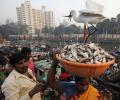
Food prices, which have contributed to a large part of inflation over recent years, have remained benign, despite unseasonal rain.

The rates of price rise in many services used by the common man, including hospital and nursing, cook, domestic help and bus (fare), among others, have also touched double digits during the last four years, putting a burden on disposable income.

The forthcoming Budget is likely to make a provision of Rs 64,000 crore (Rs 640 billion) for the Mahatma Gandhi National Rural Employment Guarantee Scheme in 2011-12, against Rs 40,100 crore (Rs 401 billion) in the current fiscal.
An appropriate policy response always warrants a correct diagnosis of the problem. That is why the recent trend in inflation and its causes, and the inflation outlook take on exceptional importance ahead of the RBI's policy review on January 25.
The Reserve Bank of India kept interest rates unchanged at 8.0 percent on Tuesday as widely expected, staying focused on containing inflation while adopting a more dovish tone in response to the government's call for help to revive economic growth.
Expensive food and clothing pushed up the Consumer Price Index (CPI) by 1.18 per cent in August vis-a-vis the previous month, but experts said too much should not be read into the numbers, as the data on retail prices is yet to stabilise.

Falling food prices notwithstanding, consumer inflation will remain high during the current fiscal because of high cost of housing and services as well as the increasing inflationary pressures from smaller cities, Goldman Sachs said in a report on Tuesday.
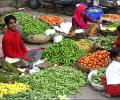
The country saw two straight years of deficient monsoons.

ICICI Bank, HDFC Bank, IndusInd Bank down between 0.2%-1.4% each.

The CPI, based on retail prices, stood at 108.8 points in June.

Credit ratings agency Moody's on Monday said the Reserve Bank of India's recent move to hike short-term borrowing and lending rates to tame inflation will put pressure on overall deposit and interest rates.
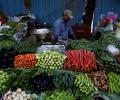
For protein rich items such as meat and fish, eggs as well as milk and products, the inflation in May slowed compared to last month

An expected withdrawal of FIIs from the market likely to weaken the rupee against the dollar.
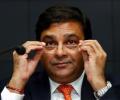
RBI retained the GDP growth for the financial year 2018-19 at 7.4 per cent.
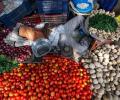
It would also be the last policy of Rajan
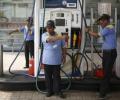
CARE Ratings, in a report, said it foresees an increase in the retail prices of petrol and diesel in the coming few days, depending on how the oil markets react in the reduction in supply from the cartel.

Subramanian's paper comes at a time when concerns have been raised in various quarters about the official economic growth numbers. The Economic Advisory Council-PM said the Base Year of India's income calculations were shifted to 2011-12 on the basis of recommendations of several committees with experts in national income accounting.
The Reserve Bank of India is highly concerned with soaring inflation and the crushing impact of the weight of rising prices of food items and other essential commodities on the common man.

Indian households database Consumer Pyramids answers why two years of high inflation did not matter to the consumers of the country.

To cut interest rates, the central bank head has to open up a debate on inflation target revision.
However, some analysts say RBI Governor Raghuram Rajan may delay the rate cuts amid mounting concerns over the government's fiscal health.
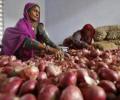
In case of onions, inflation skyrocketed to 127.04 per cent, while for the eggs, meat and fish segment the rate of price rise was 5.76 per cent.

The industrial production grew by two per cent in September, mainly on account of better performance by power and mining sectors.
The Consumer Price Index hit the lowest in six months in March at 4.83 per cent.
The Delhi government rolled back the hike in value added tax (Vat) on diesel, bringing down the price by Rs 2.50 a litre. Following the reduction in the levy, the price of diesel will be Rs 37.60 with effect from July 20, lower than the Rs 38.10 that prevailed before the recent increase of June 25.the Goa Cabinet also approved a partial roll back of Vat that would reduce prices of a cooking gas cylinder by Rs 15, petrol by 88 paise and diesel by 70 paise.

The internals of the food inflation are worrying, given a broad-based uptick across categories that tend to be sticky, such as proteins, and a narrower-than-expected reduction in inflation for vegetables.

'We plan to touch Rs 1 trillion of Amul brand's turnover in the next five years.'

As per the recommendations of the 2nd National Commission on Labour, the ministry is codifying existing 44 central labour laws into four codes by simplifying, amalgamating and rationalising the relevant provisions of the legislations.

'The 5.3% growth in wages per employee is the lowest growth in nine years,' points out Mahesh Vyas.

A United Nations expert body on Thursday said surge in food prices in India is a matter of concern, but retail price inflation will cool down to 7.5 per cent this year from around 12 per cent last year.

And why markets could give up 25 per cent of all these gains made since March 2020

'The slide in growth has arisen primarily because we have an NBFC crisis on top of a banking crisis,' points out T T Ram Mohan.
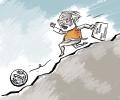
'Without bold action to deal with our banking crisis, count on the economy's doldrums to continue for much longer than most of us anticipate,' says Rahul Jacob.

RBI watchers are going to be on tenterhooks for the next 3 weeks.
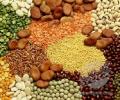
Finance Minister Pranab Mukherjee attributed the 4.78 per cent spurt in inflation in November to rising prices of food articles. "Inflation has risen high mainly because prices of food articles have gone up," Mukherjee said.

Economic affairs secretary S C Garg said that all macroeconomic parameters are performing well.
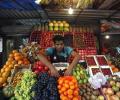
The annual consumer price inflation eased more than expected to a 24-month low of 8.79 percent in January, helped by moderating food prices, government data showed on Wednesday.
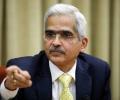
RBI governor Das flags growth slowdown, deputy raises alarm on inflation

India's consumer inflation should ease in the next two months, and will fall to 8 per cent by the end of the year, says RBI Governor Raghuram Rajan.

RBI Governor Raghuram Rajan will announce the monetary policy on April 1 and expectations of a status quo are rising ever since the official data on consumer price inflation for February pointed to a cool down to 8.1 per cent.
 © 2026 Rediff.com - Investor Information - Advertise with us - Disclaimer - Privacy Policy - Sitemap - Feedback - About us - Terms of use - Grievances