A two-judge bench of the top court in 1981 questioned the correctness of the 1967 verdict holding Aligarh Muslim University not to be a minority institution since it was created by a central law and referred the issue to a larger bench for decision.
The Supreme Court of India has scheduled a hearing on February 19 for pleas challenging the appointment of the Chief Election Commissioner and Election Commissioners under the 2023 law. The court emphasized the potential consequences if any action is taken before the hearing. The pleas argue that the 2023 law, which excludes the Chief Justice of India from the selection panel, undermines the independence of the Election Commission and allows for undue influence from the executive branch. The court's earlier verdict in March 2023 called for an independent selection panel comprising the Prime Minister, Leader of the Opposition, and the Chief Justice of India to ensure the integrity of the Election Commission. The case highlights concerns about the independence of India's electoral process and the potential for political influence in the appointment of key election officials.

A three-judge bench headed by Chief Justice Dipak Misra framed several questions to be dealt with by the Constitution Bench, including whether the temple can restrict women's entry.
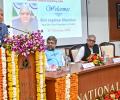
Vice President Jagdeep Dhankhar has questioned the Chief Justice of India's involvement in executive appointments, specifically citing the selection of the CBI director. He believes this practice undermines democratic principles and calls for revisiting the existing norms. Dhankhar also raised concerns about the "doctrine of basic structure", suggesting it has a debatable jurisprudential basis. He emphasized the importance of each institution operating within its constitutional boundaries and highlighted the need for coordinated autonomy. The vice president also discussed the need for a balanced approach to judicial review and the importance of judges focusing on judgments rather than other forms of expression. He stressed the need to revisit the current state of affairs to restore the judiciary's sublimity.

On February 1, grappling with the intractable issue of the AMU's minority status, the top court said the 1981 amendment to the AMU Act, which effectively accorded it a minority status, only did a "half-hearted job" and did not restore the institution the position it had prior to 1951.

During the hearing, Solicitor General Tushar Mehta, appearing for the Centre, said that meaning of Sanskrit 'shlokas' is a universal truth and merely because it is written in Sanskrit, it does not make it communal.
The Supreme Court on Friday deferred the question of Aligarh Muslim University's minority status to a fresh bench and overruled the 1967 judgment that said the university cannot be considered a minority institution since it was created by a central law.
Swamy Shraddananda, jailed for 30 years for killing his wife, has moved the Supreme Court seeking authorities to decide his mercy plea before the President in December, 2023.

The judge further underlined that the minorities of the country had not only joined the mainstream but also were an important facet of it.
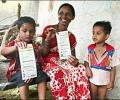
A three-judge bench framed various questions, including as to whether right to privacy is a fundamental right, to be decided by the larger Constitution Bench.
The Supreme Court on Wednesday referred to the constitution bench a plea raising questions whether the apex court was exempted from disclosing information on appointment of judges and other matters under the Right to Information Act.
It will be court's opinion versus the legislative power to enact law, the Supreme Court on Wednesday said as it posted the pleas challenging the appointment of the chief election commissioner and election commissioners under the 2023 law on February 4.

Solicitor General G Vahanvati pleaded that the two-judge bench cannot adjudicate the matter as it involved substantive question of Constitutional law.

The Supreme Court is scheduled to consider in-chambers on Tuesday a batch of pleas seeking review of its judgment which held that states are constitutionally empowered to make sub-classifications within the Scheduled Castes, which form a socially heterogeneous class, for granting reservation.

Justice Sanjiv Khanna, who has been part of several landmark Supreme Court judgements such as scrapping the electoral bonds scheme and upholding abrogation of Article 370, will be sworn in as the 51st Chief Justice of India on Monday.

The SC said 'the issues are very important. These issues cannot be scuttled'.

None of the four judges -- Justices J Chelameswar, Ranjan Gogoi, M B Lokur and Kurian Joseph -- feature in the list of members of the 5-judge constitution bench.
The Supreme Court of India is scheduled to hear a batch of petitions challenging the validity of certain provisions of the Places of Worship (Special Provisions) Act, 1991, which prohibits lawsuits to reclaim a place of worship or change its character from what prevailed on August 15, 1947. The pleas, including one filed by Ashwini Upadhyay, argue that these provisions violate the right to judicial remedy and create an arbitrary cut-off date. The matter will be heard in the backdrop of several ongoing cases related to places of worship, including the Gyanvapi Mosque in Varanasi and the Shahi Idgah Mosque in Mathura. The Muslim side has cited the 1991 law to argue that such suits are not maintainable. The Supreme Court had previously sought the Centre's response to Upadhyay's petition, which alleged that the law creates an "arbitrary and irrational retrospective cut-off date" for maintaining the character of places of worship.
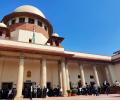
A seven-judge Constitution bench comprising Chief Justice DY Chandrachud and Justices BR Gavai, Vikram Nath, Bela Trivedi, Pankaj Mithal, Manoj Misra and Satish Chandra Sharma said there is no error apparent on the face of the record.
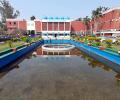
The Aligarh Muslim University's minority status issue will have to wait to reach a logical end after the Supreme Court majority verdict on Friday asked a regular bench to decide the issue.

The judgment from a five-judge Constitution bench, led by Chief Justice DY Chandrachud, offers clarity on licensing regulations and is expected to prevent insurance companies from rejecting claims based on the type of licence of drivers involved in accidents.
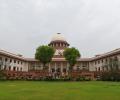
A judgment of a Constitution bench would be "binding" on benches of lesser strength, the Supreme Court has said while recalling an April 2022 verdict delivered by it.
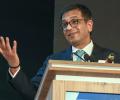
India's anti-corruption ombudsman, the Lokpal, has dismissed a complaint alleging corruption against former Chief Justice of India (CJI) DY Chandrachud, citing a lack of jurisdiction. The complaint, filed in October 2024, alleged abuse of office, corruption, and favoritism by Chandrachud while he was CJI. The Lokpal, in its order, concluded that sitting judges of the Supreme Court, including the CJI, are not subject to its jurisdiction under the Lokpal and Lokayuktas Act. The Lokpal stated that the Supreme Court was established by the Constitution of India, not an Act of Parliament, making it outside the scope of its jurisdiction.
The Attorney General said whatever is being said by this court is sent before the United Nations.

The Supreme Court on Monday reserved its verdict on whether to refer the matters pertaining to the ban on entry of women aged between 10 to 50 years at Kerala's Sabrimala temple to its constitution bench.
The observations came while upholding the constitutional validity of Section 6A of the Citizenship Act which grants Indian citizenship to immigrants from Bangladesh who entered Assam on or after January 1, 1966 but before March 25, 1971.
The Supreme Court on Thursday upheld the constitutional validity of Section 6A of the Citizenship Act related to the grant of Indian citizenship to illegal immigrants in Assam by a majority verdict of 4:1.

He could have blazed a trail that few Indian judges had. It was a missed opportunity of a lifetime, notes Ramesh Menon.

The Supreme Court on Friday refused to tinker with the move to do away with the use of now-defunct high-value currency notes for public utilities, in government hospitals and for rail tickets.
A group of Dawoodi Bohra Muslim community members had earlier told the apex court that the female circumcision is practised by a few sects of Islam.

It is significant that the matter has not been listed before the judges who are number two to five in the seniority.

The SC tagged the issue along with a similar pending matter for hearing by a three-judge bench later this month.
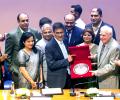
While that created a stir so did the decision on his penultimate day at work with the Supreme Court rechristening its summer vacation "partial court working days", an issue that has led to criticism that the apex court judges enjoyed long breaks.

Along with the triple talaq matter, the Supreme Court will also hear cases related to Aadhaar and WhatsApp during the nearly 50-day summer vacation.

Senior-most Supreme Court judge Sanjiv Khanna on Wednesday recused himself from considering pleas seeking review of the apex court's judgment last year declining legal recognition to same-sex marriage, sources said.
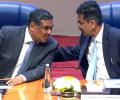
Chief Justice of India-designate Sanjiv Khanna on Friday lauded CJI D Y Chandrachud for his "monumental" contribution, saying he worked on a mission to improve the apex court and pursued his goal of making it "a sanctuary of inclusivity", which was accessible to all.
Justice Gavai, who wrote a 281-page separate but concurring verdict, said it is the duty of the State to give preferential treatment to the backward class of citizens who are not adequately represented in government jobs.
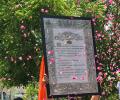
The Supreme Court on Friday observed the 1976 amendment to the Constitution adding terms 'socialist', 'secular' and 'integrity' to the Preamble underwent judicial reviews and it cannot say whatever Parliament did during the emergency period was all nullity.
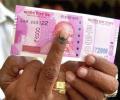
Following is the chronology of events in the case related to validity of the electoral bonds scheme, a mode of funding to political parties, in which a five-judge Constitution bench of the Supreme Court on Thursday delivered a landmark verdict annulling it.

Justice Khanna, who will serve as CJI for a little over six months, will demit office on May 13, 2025.
 © 2026 Rediff.com - Investor Information - Advertise with us - Disclaimer - Privacy Policy - Sitemap - Feedback - About us - Terms of use - Grievances