
Indian-origin tech executive Uday Ruddaraju has been appointed Chief Technology Officer, Compute at OpenAI, a year after leaving Elon Musk's xAI. Ruddaraju, an alumnus of Hyderabad's Chaitanya Bharathi Institute of Technology, announced his new role on LinkedIn, highlighting OpenAI's mission to build the world's largest compute footprint for frontier AI.

Global semiconductor giant AMD projects the overall market for compute infrastructure, driven by artificial intelligence, to reach USD 2 trillion by 2030 from USD 365 billion in 2025. The company unveiled new products and its Helios AI infrastructure, emphasising an open ecosystem and significant performance gains over competitors, with India playing a key role in its global rollout.
Global semiconductor giant AMD projects the overall market for compute infrastructure, driven by artificial intelligence, to reach USD 2 trillion by 2030 from USD 365 billion in 2025. The company unveiled new products and its Helios AI infrastructure, emphasising an open ecosystem and significant performance gains over competitors, with India playing a key role in its global rollout.
Gautam Adani emphasised the importance of energy security and digital infrastructure in shaping geopolitical power, urging India to develop sovereign capabilities across the AI value chain.

UK-based Gorilla Technology Group is expanding its AI infrastructure collaboration with Yotta Data Services in India, deploying additional GPU cards to support large-scale AI compute infrastructure.

This is one of the coldest temperatures achieved in a research facility in India with more than 80 per cent domestically sourced components.
Infrastructure major Larsen & Toubro (L&T) has secured a mega order, valued between Rs 10,000 and Rs 15,000 crore, to construct India's largest single-cluster artificial intelligence (AI) infrastructure facility. This strategic move marks L&T's entry into the AI Factory business, aiming to establish an NVIDIA B300-based AI Factory in Chennai to power the AI-native cloud platform of US-based Together AI, thereby strengthening India's AI ecosystem and supporting global innovation.
SEBI Chairman Tuhin Kanta Pandey stated that cybersecurity is now a board-level concern, not just an IT challenge, emphasising the need for caution when deploying artificial intelligence in critical infrastructure. He highlighted that AI for cybersecurity must be secure, governed, and accountable, and also addressed the emerging risks from quantum computing, urging collective resilience and sharing of best practices among regulators.
HCLTech, India's third-largest IT services company, announced plans to establish a global technology centre and an AI-optimised data centre in Bhubaneswar, Odisha, with a total investment of approximately Rs 15,000 crore, marking its entry into the AI infrastructure business.

High-performance computing server maker Netweb Technologies reported a more than twofold increase in net profit to Rs 85.32 crore for the first quarter ended June 30, 2026. This significant growth was primarily driven by its AI Systems segment, which contributed over 62% of the revenue. The company also saw its revenue from operations more than double to Rs 819.6 crore, reflecting strong demand and disciplined execution, with a robust order book of Rs 2,507 crore.

Andhra Pradesh is set to inaugurate India's first indigenously developed, open-access quantum computer test beds, Amaravati 1S and 1Q, at SRM University, marking a significant advancement in the nation's quantum computing capabilities.
Tata Consultancy Services (TCS) is focusing on building AI infrastructure, including India's first AI-focused data centre, as AI becomes a core operating foundation for enterprises globally.

Hundreds of students at Sarvodaya Inter College in Kishanpur, Uttar Pradesh, staged a five-hour demonstration demanding basic facilities like safe drinking water, clean toilets, and functional fans, leading to the administration's assurance of immediate action.
India's indigenous Dilution Refrigerator, developed by AQV, has successfully reached four Kelvin (-269C) at the Quantum Reference Facility in Amaravati, marking a significant milestone in the country's quantum technology development and cryogenic engineering capabilities.
Chinese President Xi Jinping has called for global collaboration in Artificial Intelligence development, stating it should be a "symphony" rather than a "solo performance." His remarks came at the World Artificial Intelligence Conference (WAIC) in Shanghai, where 29 countries also signed an agreement to establish the World Artificial Intelligence Cooperation Organisation (WAICO), an independent intergovernmental body headquartered in Shanghai. China also pledged 5,000 AI research projects and training for developing nations.
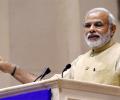
Prime Minister Narendra Modi, in his Independence Day address, highlighted technology and innovation as central to India's goal of becoming a developed nation by 2047. He called for India to lead in emerging technologies like AI, quantum computing, and space, announcing a massive AI skilling initiative for one crore youth. Modi stressed the importance of becoming a global innovation hub, bolstering energy security with nuclear power, and strengthening cybersecurity.
Nvidia CEO Jensen Huang has publicly endorsed Marvell Technology as a potential 'trillion-dollar company,' citing its crucial role in developing advanced connectivity solutions for next-generation artificial intelligence infrastructure. This endorsement, made at Computex 2026, follows a significant Nvidia investment in Marvell and highlights the industry's shift towards optical interconnects to meet the demands of large-scale AI systems.
The ACSEL Technology Forum, a Karnataka government Centre of Excellence in AI, has launched Tathyakosh.in, a digital public good designed to make India's extensive public data more accessible. This platform consolidates over 1.5 million datasets from 458 sources, addressing the challenge of fragmented data discovery across various government and research portals. It aims to benefit researchers, startups, and technology teams in sectors like healthcare, agriculture, and financial inclusion by providing a structured and discoverable data infrastructure.

Generative artificial intelligence (AI) is beginning to alter hiring patterns in South Asia, with multinational companies (MNCs) and firms integrated into global value chains (GVCs) reducing recruitment more sharply than domestic firms, signalling the technology's early impact on the region's export-oriented services sector, according to the World Bank's World Development Report 2026.

Chinese President Xi Jinping called for global collaboration in artificial intelligence development, emphasising a "symphony of global collaboration" over a "solo performance" by any single nation. Speaking at the World Artificial Intelligence Conference in Shanghai, Xi highlighted the need for ethical AI governance, shared prosperity, and addressing challenges like the widening digital divide. He also announced China's commitment to support developing countries with 5,000 AI research projects and training programmes. The event also saw 29 countries sign an agreement to establish the World Artificial Intelligence Cooperation Organisation (WAICO) in Shanghai.
Andhra Pradesh and Punjab National Bank (PNB) have signed an MoU to establish the PNB Quantum Finance Hub at Amaravati Quantum Valley. This initiative aims to foster innovation and adopt next-generation technologies like AI and Quantum Computing in the banking sector, focusing on cybersecurity, fraud detection, and customer experience.

A Goldman Sachs report indicates that US and Indian equity markets are becoming less attractive due to lower free cash flow (FCF) yields as valuations rise, while European markets offer significantly higher yields. Concurrently, India's top-listed residential real estate developers experienced a moderation in pre-sales in Q1FY27, attributed to delayed project approvals, limited launches, and high year-ago bases, though underlying housing demand remains healthy.

IIT Madras is hosting the 3rd Digital India RISC-V (DIR-V) Symposium 2026 in partnership with the Ministry of Electronics and Information Technology and RISC-V International. The symposium aims to unite stakeholders from government, industry, and academia to advance India's semiconductor innovation, focusing on indigenous processor technologies, secure computing, hardware innovation, and AI, aligning with the government's vision for India as a global semiconductor hub.

Dr Lovi Raj Gupta, pro vice-chancellor, Lovely Professional University, explains how aspiring professionals can equip themselves for a competitive AI-driven job market.

Mukesh Ambani announced a 10 lakh crore investment by Reliance Industries to revolutionize artificial intelligence in India, focusing on building sovereign compute infrastructure and making AI accessible and affordable for all.

The Karnataka government has announced the installation of a 25-qubit quantum computing system at the Indian Institute of Information Technology (IIIT), Dharwad and IIIT-Raichur, enhancing the state's quantum computing ecosystem.

'From day one, our vision has been to build a company that develops and owns the technologies defining the future of space.'

Crypto can rise or fall for many reasons. Here's a simple guide to what gives digital assets value and drives their prices.
NVIDIA CEO Jensen Huang argues that Artificial Intelligence is driving the largest infrastructure buildout in human history, requiring trillions of dollars in investment and creating significant demand for skilled blue-collar labour.

Andhra Pradesh is set to launch India's first indigenously built, open-access quantum computers, marking a significant step towards building a sovereign quantum hardware ecosystem. The initiative aims to position the state as a global hub for quantum technology and enable applications in various sectors.

'There is no college that can guarantee a Rs 14 lakh per annum (LPA) package,' clarifies rediffGURU Chocko Valliappa.

'PowerBank-50 is now space proven, made in India, and ready for every satellite builder in the world.'

Nearly one in two children still leave the school system before completing higher secondary education.

Larsen & Toubro (L&T) is investing Rs 5,000 crore over five years to enter the automotive components sector, focusing on electric vehicle (EV) motors, safety systems, and connected-vehicle technologies, aiming to become a Tier-I auto supplier.

Karnataka Chief Minister D K Shivakumar announced the establishment of India's first government-driven Artificial Intelligence University and an AI Hub in Bengaluru. This initiative aims to position Karnataka as a global leader in responsible AI innovation, fostering talent, research, and collaboration. The state seeks to become an AI-native state, leveraging AI to improve governance and daily life across various sectors.

The Indian government has informed the Lok Sabha that the income-tax return (ITR) e-filing portal is functioning in a 'largely stable and efficient manner' despite a significant increase in traffic during the peak filing season. However, it acknowledged transient technical issues and disclosed that contractual penalties have been imposed on Infosys for project delays and service-level agreement failures.
An industry-led AI curriculum taskforce has recommended shifting the present lecture-based teaching system for technical education to learning from real industry use cases and enhancing practical exposure of students.

A NITI Aayog report outlines India's potential to scale its bioeconomy to USD 691 billion by 2035 and USD 2.6 trillion by 2047, creating over 30 million high-value jobs. The report stresses the need for coordinated national execution, regulatory reforms, a strengthened talent pipeline, and a significant BioEconomy Growth Fund to achieve this vision, positioning India among the top biotechnology powers globally.
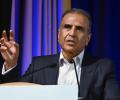
Bharti Airtel is strategically shifting its focus towards data centres, cloud services, and financial services as key drivers for its next phase of growth, leveraging significant past investments in digital infrastructure, as outlined by Chairman Sunil Mittal in the company's Annual Report for 2025-26.
India's digital economy is projected to constitute nearly 20 per cent of the nation's GDP by 2030, fuelled by a growth rate twice as fast as the overall economy, according to a senior government official.
