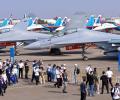
China has announced a 7.2 percent increase in its national defence budget, bringing the total to USD 249 billion for the year. This rise comes amidst China's ongoing efforts to modernize its armed forces, including the development of new warships and fighter jets. The budget increase, exceeding last year's 7.2 percent rise, reflects China's commitment to bolstering its military capabilities. Chinese Premier Li Qiang emphasized the importance of the Communist Party's leadership in guiding the military, with President Xi Jinping at the helm of the Central Military Commission. China's defence spending is now three times that of India's and is viewed by critics as a sign of the country's growing military ambitions.
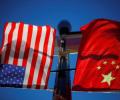
China on Tuesday retaliated US President Donald Trump's imposition of 2nd round of ten per cent tariffs on its export by slapping an additional 15 per cent tariffs on American goods and initiated legal action against Washington in WTO while leaving the door open for talks to address each other's concerns.
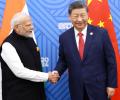
Chinese Foreign Minister Wang Yi said on Friday that India-China relations have made positive strides and achieved a series of encouraging outcomes at all levels after last year's breakthrough ending the over four-year-long military standoff in eastern Ladakh. Wang's remarks came during his annual press conference as he replied to a question on how Beijing views the course of bilateral ties after the two countries ended the prolonged stalemate in the ties.
China has toned down its rhetoric on fighting a trade or any other type of war with the US, saying that no such wars should be fought because they cannot be won. Foreign Ministry spokesman Lin Jian responded to US Secretary of Defence Pete Hegseth's remarks that his country doesn't seek a war with China, but will rebuild the military and prepare for war. However, on Tuesday, Lin had said that China is ready to fight till the end if the US wants a trade war or any other type of war. Hegseth said on Wednesday that the US is not actively seeking conflict with China, but is rebuilding its military and establishing deterrence.
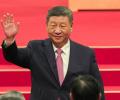
President Xi Jinping has said that no one can ever stop Taiwan's reunification with China as he signed off 2024 amid growing anxieties in the country over the continued slowdown of the economy and the return of Donald Trump, who has threatened to impose punitive tariffs and trade measures against Beijing in his second term.

The National People's Congress -- China's annual political gathering known as the Two Sessions -- brought leaders and lawmakers this week to set the Chinese Communist party's agenda for domestic economic and social development for the year.

From Covid to climate change, Shankar Acharya's look at some of the trends and events that might shape 2022.

The new law permits for the first time Chinese security agencies to open their establishments and operate in Hong Kong.

Exports form a major part of some countries economy.

According to the WHO, countries should join the COVID-19 Vaccine Global Access Facility (COVAX Facility) by September 18 but not later than October 9 with upfront payments.
China's annual automotive event, Auto China 2012, saw a record numbervisitors.

Chian it was open to international efforts to identify the source of the deadly virus.
An economic superpower, China is marching ahead to become the world's largest economy.
With domestic production of milk and dairy products in China not being able to meet the rising demand, India can step in to capture this fast growing market, a Confederation of Indian Industry report said.

Retail inflation has eased from double digits in 2013.

China must maintain medium-high growth for the next five years.
India's service sector proportionately much larger than China's, while its investment and industrial-production shares are much lower
The rise in US interest rates and associated change in the direction of capital flows, the fall in oil prices and the slowdown in China will dominate the markets, say Abheek Barua and Bidisha Ganguly
As the United States and China joust for supremacy, India might remain on the sidelines with its limited resources.

The 30-share Sensex closed up 34 points at 27,831 and the 50-share Nifty ended up 15 points at 8,356.

Tax demands and regulatory hassles, coupled with low internet density and sundry other problems, would have kept Mr Ma awfully busy - and small.

The India that needs strategic alliances, defence cooperation and engaging meaningfully with neighbouring countries is quietly moving ahead with confidence, says Tarun Vijay
 © 2026 Rediff.com - Advertise with us - Disclaimer - Privacy Policy - Sitemap - Feedback - About us - Terms of use - Grievances