
Japanese automaker Honda plans to introduce over 10 new models, including electric vehicles and compact SUVs, in India by 2030, identifying India as one of its three key markets for future growth.

koda Auto Volkswagen India aims to capture a 5 per cent share of India's passenger vehicle market by 2030, driven by new product launches, including alternate fuel vehicles, and a potential entry into the high-volume sub-4 metre SUV segment.

Network scale seen as central to tapping smaller markets.

After a record-breaking year, India's automobile industry is entering 2026 on a relatively strong footing, with sales growth expected in the 6-8 per cent range. The outlook is underpinned by policy support, including GST rationalisation, easing monetary conditions, and income tax relief, which together are likely to improve affordability and sustain consumer demand across vehicle segments.

Japanese auto major Honda considers India a key market for its future growth alongside the US and Japan, according to Honda Cars India President and CEO Takashi Nakajima. The Tokyo-headquartered automaker, which operates in India through a wholly owned subsidiary, plans to drive in more SUVs in the country, as the segment continues to see robust sales across varied price points.

Companies with "gas guzzlers" are trying to set up the wrong narrative against small cars getting relaxation in the proposed corporate average fuel efficiency (CAFE-III) norms on the basis of weight, Maruti Suzuki senior executive officer corporate affairs Rahul Bharti said on Monday, bringing to the fore deep division among carmakers regarding the upcoming rules.

Electric vehicle (EV) manufacturers breathed a sigh of relief after the GST Council on Wednesday night retained the concessional 5 per cent rate on EVs, though they now face competition from small petrol and diesel cars, which will attract a lower 18 per cent levy.

Manufacturers of passenger vehicles (PVs) in the first half of the calendar year (2025) reported a modest 0.5 per cent year-on-year increase in wholesale dispatches, while retail sales grew 2.5 per cent for the same period, reflecting a calibrated approach by automakers amid elevated dealership inventories and cautious consumer sentiment. According to the Society of Indian Automobile Manufacturers (Siam), dispatches rose marginally to 2.16 million units, up from 2.15 million units a year earlier.
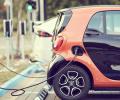
Despite the benefits of hybrid technology, a lack of government backing and few launches have kept the segment from gaining ground.

Hyundai Motor India and Honda Cars India on Wednesday joined the list of automakers planning to hike prices of vehicles from April, second time this year, to partially offset the impact of rising input costs and higher operational expenses. In a statement Hyundai Motor India Ltd (HMIL) said it will hike prices of its vehicles by up to 3 per cent effective in April 2025.

'From the Indian perspective, young customers with more disposable income will also drive the growth.'

Maruti Suzuki India and Tata Motors on Monday announced plans to increase vehicle prices from April, the second time in this year, in order to partially offset the impact of rising input costs. Maruti Suzuki said it plans to hike prices of its entire model range by up to 4 per cent from next month.
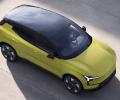
Swedish luxury car maker Volvo is planning to launch its fullly electric small SUV EX30 in India this year as part its plans of launching one electric model in the country every year in line with its global ambition of achieving 90-100 per cent sales from electrified cars by 2030, according to a senior company official. Besides, Volvo Car India is also looking at bringing the new XC60 SUV in India this year, its Managing Director Jyoti Malhotra told PTI.

Two Japanese auto giants, Honda and Nissan, are moving towards a potential merger, but it remains unclear how their Indian operations will be immediately impacted.

Prices of various car models -- ranging from entry-level hatchbacks to high-end luxury offerings -- are set to rise as automakers have announced price hikes with effect from January. Carmakers cite an increase in input costs and operational expenses as the main reason to implement price increases from the next month. Industry experts, however, note that the exercise is also undertaken by automakers every year in December to shore up sales volume in the last month of the year, as customers postpone buyouts to later months to get the new year manufactured units.

Honda Cars India (HCIL) net profit dropped by 52.8 per cent year-on-year (Y-o-Y) to Rs 661.4 crore in 2023-24 (FY24), primarily due to deferred tax of Rs 359.8 crore, according to the annual results submitted to the Registrar of Companies (RoC) and reviewed by Business Standard. In FY24, the company's production increased by 16 per cent Y-o-Y to 134,807 units.

Disha gets a tattoo... Kajol's killer smile... Sobhita visits a temple...

...But sales of domestic passenger vehicles dropped 2% to 3% year-on-year in August owing to low demand.

Volkswagen Passenger Cars is targeting a volume sales growth of about 15 per cent in the country in 2024, even as it expects the Indian passenger vehicle (PV) industry to grow by 5-7 per cent in the current year, its India brand director, Ashish Gupta, said on Thursday. This means the company is expecting to grow 2-3 times faster than the Indian PV industry in 2024. But globally, the German automaker is expecting just 3 per cent rise in sales this year, down from 12 per cent last year.

Japanese auto major Honda has changed the name of its Indian operations to Honda Cars India Ltd following the break up of its joint venture with Usha International of the Shriram Group.

'Nearly all companies are extending festival offers for entry-level, sedan, and hatchback segments.'
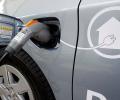
At a time when consumers increasingly embrace green mobility solutions, it is not electric cars but hybrids that are taking the lead, as automotive sales data indicate. Since January, 64,097 electric cars have been sold compared to 266,465 hybrids, according to data from the ministry of road transport and highways' Vahan dashboard. Hybrid car sales have surged from 4.42 per cent of the 4.1 million cars sold in calendar year 2022 to 7.2 per cent this year.
At a time when consumers increasingly embrace green mobility solutions, it is not electric cars but hybrids that are taking the lead, as automotive sales data indicate. Since January, 64,097 electric cars have been sold compared to 266,465 hybrids, according to data from the Ministry of Road Transport and Highways' Vahan dashboard. Hybrid car sales have surged from 4.42 per cent of the 4.1 million cars sold in calendar year 2022 to 7.2 per cent this year.

The limited availability of flexible (flex)-fuel vehicles in the Indian market and the slow rollout of ethanol-blended petrol by oil-marketing companies (OMCs) remain major obstacles to achieving widespread use of biofuels in the transportation sector in India. Recently, two Union ministers have emphasised India's biofuel potential, arguing that it has the capacity and potential to lead a transition towards widespread biofuel adoption. Road Transport Minister Nitin Gadkari signalled that this transition is well underway and urged car manufacturers to quickly adapt and introduce new biofuel-run vehicles, lest the government resort to taxing diesel vehicles.

US chipmaker Advanced Micro Devices (AM) on Friday announced a $400 million investment in India over the next five years and said it will build its largest design centre in Bengaluru. AMD chief technology officer Mark Papermaster made the announcement at the annual semiconductor conference in the presence of Prime Minister Narendra Modi. Undeterred by Taiwan's Foxconn pulling out of his group's $20 billion semiconductor-making venture, mining baron Anil Agarwal said the first phase of Vedanta's chip-making project will be ready in two-and-a-half years.

In their asset declarations, Indian ministers reveal the cars they dig.
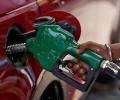
Petrol doped with 20 per cent ethanol was rolled out on Monday at select petrol pumps in 11 states and union territories as part of a programme to increase use of biofuels to cut emissions as well as dependence on foreign exchange-draining imports. At present, 10 per cent ethanol is blended in petrol (10 per cent ethanol, 90 per cent petrol) and the government is looking to double this quantity by 2025. Prime Minister Narendra Modi launched the higher 20 per cent ethanol blended petrol two months ahead of the planned rollout in April, at the India Energy Week (IEW) 2023 in Bengaluru.

Buying a car, particularly a diesel-powered one, is set to pinch the customers' pockets even more from the next financial year, as the second phase of Bharat Stage VI (BSVI) emission norms kicks in. The rules require cars to be compliant with real driving emission (RDE) norms, which measure pollutants emitted by cars while they are being driven on the road, unlike in a laboratory test. The norms may increase the cost of producing diesel vehicles by nearly Rs 75,000 to Rs 80,000, and petrol-powered ones by Rs 25,000 to Rs 30,000, analysts said.

Major carmakers, including Maruti Suzuki, Hyundai, Tata Motors on Friday reported growth in their passenger vehicle sales in June as semiconductor shortage woes showed gradual signs of easing out. Other manufacturers, Kia India, MG Motor India and Skoda Auto India also reported robust sales growth last month. Maruti Suzuki India (MSI) reported 5.7 per cent increase in total wholesales at 1,55,857 units in June as compared to 1,47,368 units to dealers in June 2021.
Leading carmakers Maruti Suzuki, Hyundai and Tata Motors reported robust dispatches to dealers in May on the back of strong demand for passenger vehicles across regions, even as the global semiconductor shortage continued to impact production. Mahindra & Mahindra, Kia India, Toyota Kirloskar Motor, Honda Cars and Skoda also witnessed strong demand for their models last month. The month of May also witnessed Tata Motors race ahead of Hyundai in terms of domestic wholesales.

These companies join the likes of other global firms Hyundai, Suzuki, Toyota, KFC, and Pizza Hut which have also apologised for social media posts by their business associates in Pakistan supporting Kashmir Solidarity Day following backlash in India and call for boycott of their products.
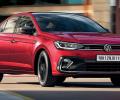
Amid a rush of sport utility vehicle sales, Volkswagen is betting on its premium mid-sized sedan - the Virtus - to gain market share in India. The Volkswagen Virtus is the second product under the India 2.0 project being developed on the MQB-A0 IN platform, with up to 95 per cent localisation levels. In February, the company registered an 84 per cent year-on-year growth in sales, primarily driving on the Taigun it launched last year.

Passenger vehicle market leaders Maruti Suzuki and Hyundai on Saturday reported a decline in wholesales in December 2021, although homegrown majors Tata Motors and Mahindra & Mahindra reported growth, amid semiconductor shortage continuing to impact production. Other manufacturers Nissan and Skoda also reported an increase in December 2021 sales although Honda Cars India witnessed a decline last month. The country's largest carmaker Maruti Suzuki India (MSI) reported a 4 per cent fall in wholesales to 153,149 units in December 2021 as against 160,226 units a year ago.

The country's largest carmaker Maruti Suzuki India (MSI) on Monday reported a 11.8 per cent increase in wholesales to 164,469 units in February. The company had sold 147,110 units in February last year, Maruti Suzuki India (MSI) said in a statement. Domestic sales increased 11.8 per cent to 1,52,983 units last month, as against 1,36,849 units in February 2020, it added.

Japanese auto major Honda Cars on Thursday unveiled its new offering for the Indian market -- City e:HEV sedan, marking its foray into the mainstream strong hybrid electric vehicle segment in the country. The company, which is present in India through a wholly-owned subsidiary, has commenced the bookings of the model and plans to introduce it in the market next month. As per the company, the model, an extension of its City model range, would feature self-charging two-motor strong hybrid system connected to a 1.5 litre petrol engine, entailing a peak power of 126 PS and fuel efficiency of 26.5 km per litre.
With an annual production of about 2,632,694 cars in 2009, India is now the seventh largest vehicle producing nation in the world. It is a milestone the country achieved six years ahead of the set target.
With an annual production of about 2,632,694 cars in 2009, India is now the seventh largest vehicle producing nation in the world. It is a milestone the country achieved six years ahead of the set target.
Here is a look at all those brand new cars that will soon set Indian roads ablaze.

Leading carmakers Maruti Suzuki and Hyundai witnessed a double-digit drop in sales in October on account of the global semiconductor shortage impacting production. Kia India, Honda Cars and MG Motor also saw a fall in dispatches last month as compared with October 2020. However, companies like Tata Motors, Mahindra, Nissan and Skoda managed to post positive numbers last month despite the supply chain challenges.
Through a combination of local manufacture and imported CBU models, the company makes and sells four SUVs, one hatchback, and one sedan.
 © 2026 Rediff.com - Advertise with us - Disclaimer - Privacy Policy - Sitemap - Feedback - About us - Terms of use - Grievances